USAID DEC
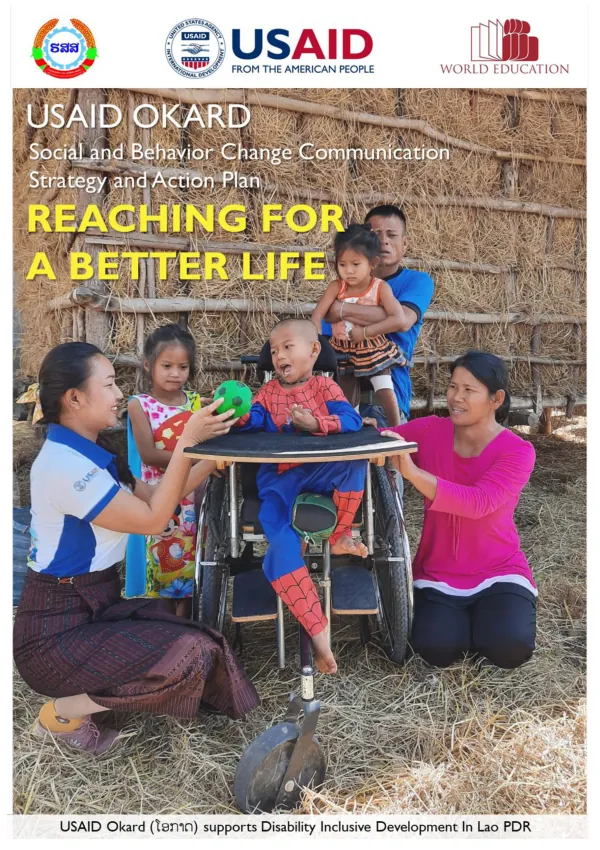
Social and Behavior Change (SBCC) Strategy and Action Plan: Reaching for a Better Life
Sign inHUMANITY AND INCLUSION
Social and Behavior Change (SBCC) Strategy and Action Plan: Reaching for a Better Life
The Social and Behavior Change (SBCC) Strategy and Action Plan aims to enhance and empower individuals with disabilities to participate fully in family and social life, education, employment, and employment activities on an equal basis with others.
2021 · 98 pages
Sign in to readA free account is required to download.
Abstract
The strategy is based on evidence from a comprehensive review of literature and incorporates testimonies from a diverse representation of Lao society. The Lao PDR Ministry of Labour and Social Welfare, the Secretariat of the National Committee for Persons with Disabilities and Elderly, the Ministry of Health's Department of Health Care and Rehabilitation, the Centre of Medical Rehabilitation, the Organization of Persons with Disabilities, and International Non-Governmental Organizations collaborated to develop this strategy. Chitoor Yegnanarayan, SBCC Consultant, contributed to the development of this document and provided innovative ideas on SBCC tools and methods. The strategy focuses on addressing attitudinal barriers, which are perceptions, assumptions, and assumptions that discriminate against individuals with disabilities. These barriers often arise from a lack of understanding, leading to misconceptions and judgments about individuals with disabilities. The strategy aims to promote empathy, dignity, equity, and non-discrimination through the lens of human diversity. The SBCC Strategy and Action Plan is titled "Reaching for a Better Life" and is based on evidence from a comprehensive review of literature and testimonies from a diverse representation of Lao society. The strategy aims to help stakeholders understand and celebrate human diversity, access services, and promote empathy, dignity, equity, and non-discrimination. The strategy has several key objectives, including promoting inclusive education, employment, and employment activities, and enhancing access to health and rehabilitation services. The strategy also aims to promote social and behavior change communication (SBCC) as a cross-cutting approach to disability-inclusive development (DID). The strategy employs SBCC as a cross-cutting approach to DID, focusing on promoting inclusive education, employment, and employment activities, and enhancing access to health and rehabilitation services. The strategy also aims to promote social and behavior change communication (SBCC) as a cross-cutting approach to disability-inclusive development (DID). The strategy has several key audiences, including individuals with disabilities, caregivers, and caregivers of individuals with disabilities. The strategy also aims to promote social and behavior change communication (SBCC) as a cross-cutting approach to disability-inclusive development (DID). The strategy has several key partners, including the Lao PDR Ministry of Labour and Social Welfare, the Secretariat of the National Committee for Persons with Disabilities and Elderly, the Ministry of Health's Department of Health Care and Rehabilitation, the Centre of Medical Rehabilitation, the Organization of Persons with Disabilities, and International Non-Governmental Organizations. The strategy also aims to promote social and behavior change communication (SBCC) as a cross-cutting approach to disability-inclusive development (DID).
Related documents