INTERNATIONAL SCIENCE AND TECHNOLOGY INSTITUTE, INC. (ISTI). CENTER FOR DEVELOPMENT TECHNOLOGY
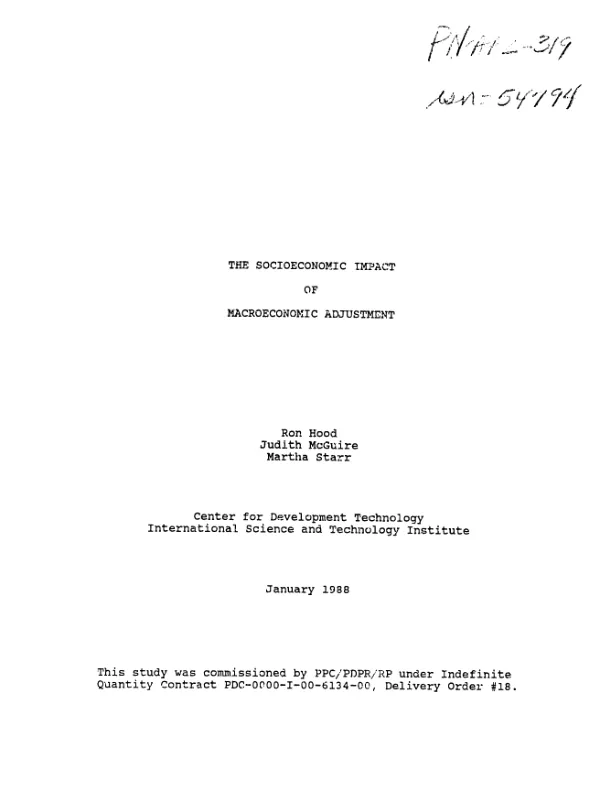
Socioeconomic impact of macroeconomic adjustment
Macroeconomic adjustment programs have been prescribed for many developing countries whose economies have experienced persistent difficulties.
Hood, Ron; McGuire, Judith +1 more · 1988
Sign in to readA free account is required to download.
Abstract
This report analyzes the socioeconomic impact of such programs based on (a) examination of the linkages between adjustment measures and specific groups" living standards, (b) review of empirical studies of changes in income, employment, and consumption during periods of adjustment, and (c) case studies of Sri Lanka, Morocco, Costa Rica, and the Ivory Coast. The study finds that, while the socioeconomic effects of adjustment vary widely across countries due to differences in problems and strategies, economic structures, and levels of development, in general certain socioeconomic groups are most vulnerable to reductions in living standards during macroeconomic adjustment. Such reductions are not always serious or persistent, but careful ex ante analysis of likely effects on these groups can ease the transition without compromising the objectives of the adjustment program. Vulnerable groups are landless and food-deficit rural families and the urban poor, especially those in industries with cyclical employment; the best protected groups include food-surplus rural families, those in export-related industries, and, to some extent, urban informal sector workers. The study also examines the more specific impacts of particular adjustment strategies (e.g., changes in food subsidies, exchange rates, government expenditures, etc.) and enumerates the implications for donors. Includes references (1976-87). (Author abstract, modified)
Related documents