COLORADO STATE UNIVERSITY
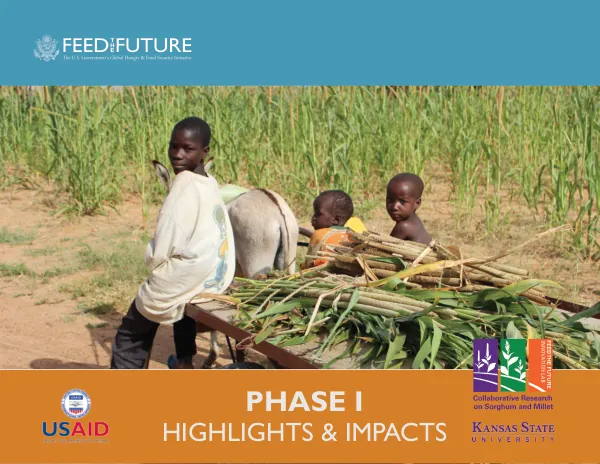
Sorghum and Millet Innovation Lab Annual Performance Report – FY 2021
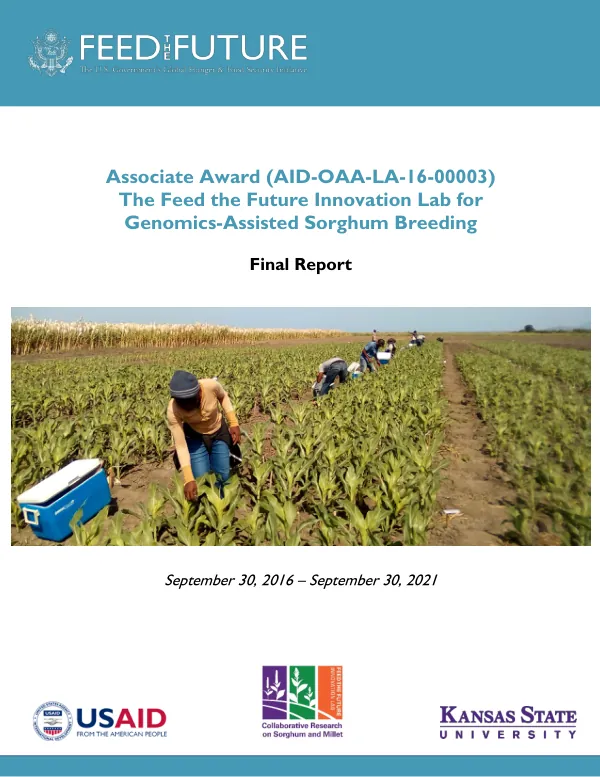
The Feed the Future Innovation Lab for Genomics-Assisted Sorghum Breeding was a collaborative research project led by Dr.
2021 · 12 pages
Sign in to readA free account is required to download.
Abstract
Geoffrey Morris of Kansas State University, Dr. Gael Pressoir of the CHIBAS Foundation, and Dr. Ed Buckler of Cornell University. The project aimed to determine whether small countries with limited plant genomics experience could use state-of-the-art breeding approaches to increase the pace and success of new variety generation. The project was conducted in Haiti, where a network of scientists was established to develop a novel approach to breeding sorghum. The Genomics-Assisted Sorghum Breeding Lab developed a small network of scientists in Haiti, at Cornell University, and at Kansas State University. Each member of the network had a well-defined role in the process: phenotyping was centered in Haiti, tools for genomic selection were developed at Cornell, and bioinformatics were conducted at Kansas State University. This approach was successful in identifying genomic regions of sorghum that confer genetic resistance against the sugarcane aphid, a widespread pest in Haiti and other regions around the world. The project also focused on improving the pace of genetic progress and tolerance against drought stress. The results of the project showed that the use of genomics-assisted breeding approaches can hasten the pace of genetic progress and improve tolerance against drought stress. The project's findings have significant implications for small countries with limited plant genomics experience, as they can use state-of-the-art breeding approaches to develop new crop varieties that are more resilient to pests and drought. The project was funded by the United States Agency for International Development (USAID) under Cooperative Agreement No. AID-OAA-LA-16-00003. The project was administered by the Feed the Future Innovation Lab for Collaborative Research on Sorghum and Millet, which is based at Kansas State University. The project's management entity was led by Dr. Timothy J. Dalton, Ph.D., who was assisted by a team of staff members, including Nathanael D. Bascom, Benjamin E. Kohl, Ph.D., and Kimberly A. Suther. The project's External Advisory Board played a key role in ensuring that the research and management practices of the project were of high quality and relevant. The board consisted of six members, including Dr. Faith B. Tarr, Dr. Brhane Gebrekidan, Prof. Bettina Haussmann, Mr. Timothy Lust, Dr. Peter Matlon, and Prof. Barbara Stoecker. The project's financial management was handled by the Kansas State University Sponsored Programs Accounting (SPA) department, which submitted the final SF425 quarterly financial statement to USAID. The department also provided additional financial information requested by USAID. The project's equipment was not purchased under the Associate Award, and a letter stating this was provided in Appendix 1. The project's reporting deliverables were submitted to USAID, including the Performance Management Plan, Annual work plans, Annual narrative performance reports, and datasets uploaded to the Development Experience Clearinghouse (DEC). The project's final report was also submitted to USAID and is presented in this document.