U.S. FOREST SERVICE
South Asia DRR Fact Sheet #1 - FY 2011
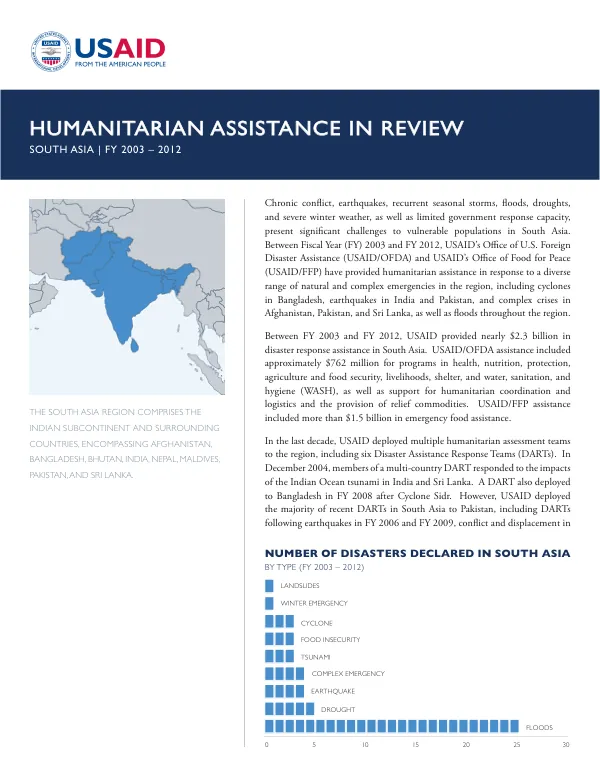
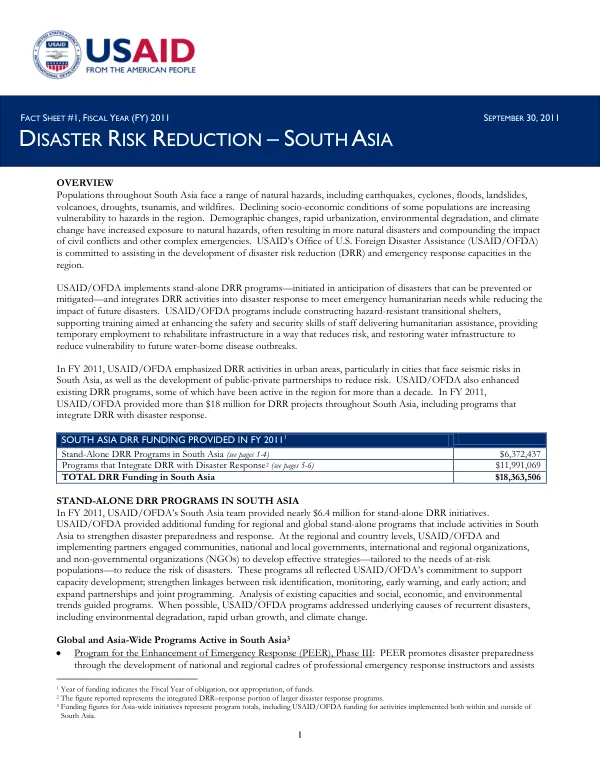
Populations throughout South Asia face a range of natural hazards, including earthquakes, cyclones, floods, landslides, volcanoes, droughts, tsunamis, and wildfires.
2011 · 7 pages
Sign in to readA free account is required to download.
Abstract
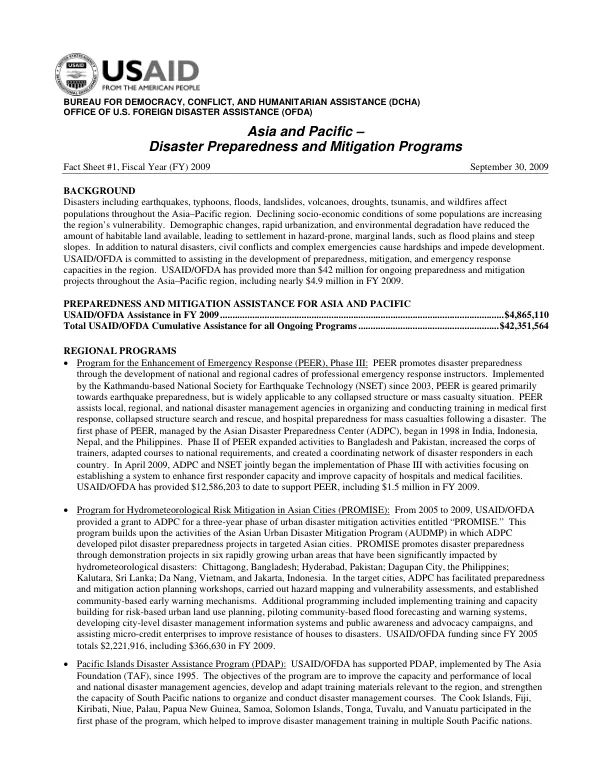
Declining socio-economic conditions of some populations are increasing vulnerability to hazards in the region. Demographic changes, rapid urbanization, environmental degradation, and climate change have increased exposure to natural hazards, often resulting in more natural disasters and compounding the impact of civil conflicts and other complex emergencies. USAID's Office of U.S. Foreign Disaster Assistance (USAID/OFDA) is committed to assisting in the development of disaster risk reduction (DRR) and emergency response capacities in the region. USAID/OFDA implements stand-alone DRR programs, initiated in anticipation of disasters that can be prevented or mitigated, and integrates DRR activities into disaster response to meet emergency humanitarian needs while reducing the impact of future disasters. Programs include constructing hazard-resistant transitional shelters, supporting training aimed at enhancing the safety and security skills of staff delivering humanitarian assistance, providing temporary employment to rehabilitate infrastructure in a way that reduces risk, and restoring water infrastructure to reduce vulnerability to future water-borne disease outbreaks. In FY 2011, USAID/OFDA emphasized DRR activities in urban areas, particularly in cities that face seismic risks in South Asia, as well as the development of public-private partnerships to reduce risk. USAID/OFDA also enhanced existing DRR programs, some of which have been active in the region for more than a decade. In FY 2011, USAID/OFDA provided more than $18 million for DRR projects throughout South Asia, including programs that integrate DRR with disaster response. Stand-alone DRR programs in South Asia received nearly $6.4 million in funding from USAID/OFDA in FY 2011. These programs aimed to strengthen disaster preparedness and response capacities at the regional and country levels, engaging communities, national and local governments, international and regional organizations, and non-governmental organizations (NGOs) to develop effective strategies tailored to the needs of at-risk populations. The programs also addressed underlying causes of recurrent disasters, including environmental degradation, rapid urban growth, and climate change. Several global and Asia-wide programs were active in South Asia in FY 2011, including the Program for the Enhancement of Emergency Response (PEER), which promotes disaster preparedness through the development of national and regional cadres of professional emergency response instructors. PEER has been active in the region since 1998 and has expanded to include new countries and activities. USAID/OFDA provided nearly $1.9 million for PEER Phase III in FY 2011. Other programs active in South Asia in FY 2011 included the Flash Flood Risk Reduction: Strengthening Capacity in the Hindu Kush-Himalayas program, which aimed to reduce the risk of flash flooding in the region by building and strengthening the capacity of communities and key stakeholders. The Asia Flood Network (AFN) also aimed to strengthen the capacity of regional and national hydrometeorological institutions in climate, weather, and hydrological forecasting, while directly involving at-risk communities in reducing vulnerability to hydrometeorological hazards. In addition to these programs, USAID/OFDA also supported the Mainstreaming DRR in Asia: Moving Faster from Policy to Practice Conference, which aimed to advance disaster preparedness and risk reduction across Asia. The conference brought together leaders from Asian countries and global donors to discuss ways to mainstream DRR into longer-term policy and planning. Regional programs in South Asia also received funding from USAID/OFDA in FY 2011, including the Incident Command System (ICS) Training for South Asia program, which aimed to institutionalize systems for disaster response and to implement disaster management capacity building programs internationally. The program provided training to senior emergency response managers from national disaster management offices (NDMOs) of South Asian Association for Regional Cooperation (SAARC) member countries.