DELOITTE CONSULTING, LLP
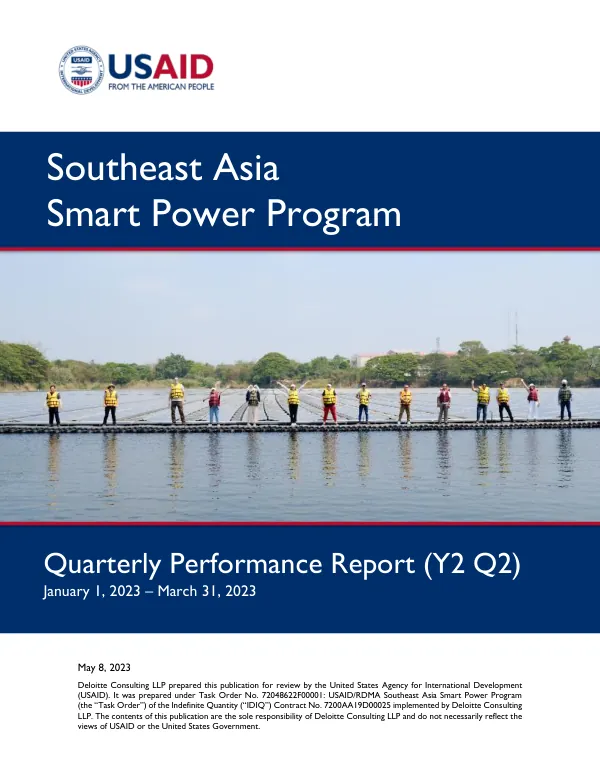
Southeast Asia Smart Power Program Quarterly Performance Report (Y2 Q2)
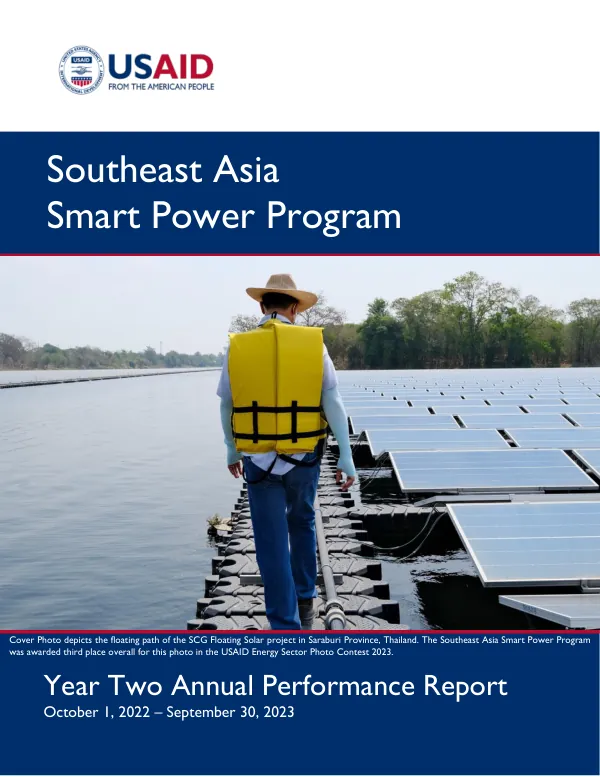
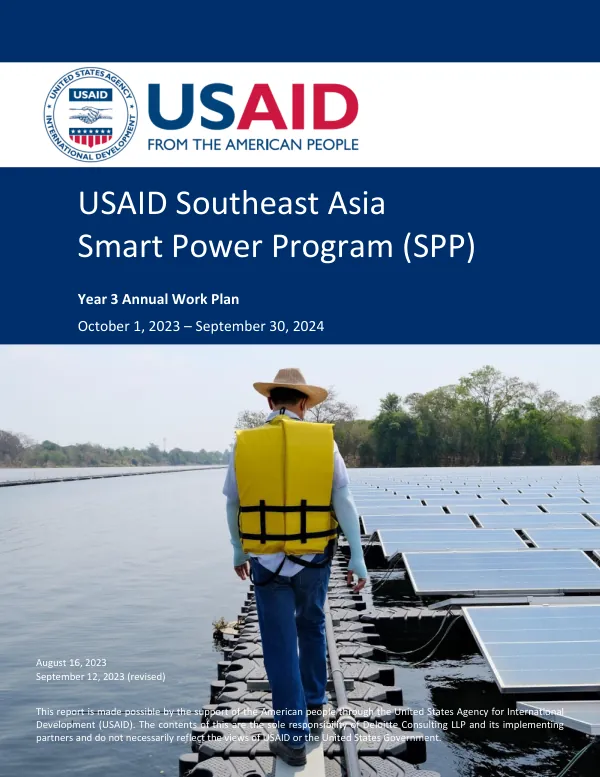
The Southeast Asia Smart Power Program (SPP) is a flagship clean energy program of the United States Agency for International Development (USAID) Regional Development Mission for Asia (RDMA).
2023 · 75 pages
Sign in to readA free account is required to download.
Abstract
The program aims to promote the development and use of clean energy in Southeast Asia, with a focus on reducing greenhouse gas emissions and improving energy access. The program is implemented by Deloitte Consulting LLP, with a total estimated cost of $2 billion and a performance period from December 10, 2021, to September 30, 2026. The SPP has seven target countries: Burma, Cambodia, Indonesia, Laos, Philippines, Thailand, and Vietnam. The program's goals include mobilizing $2 billion in investment for clean energy, deploying 2,000 megawatts (MW) of advanced energy systems, and increasing energy traded in Southeast Asia by 5%. However, as the program is in its second year, performance against these goals will be captured beginning in the Year Two annual report and quarterly afterwards. The SPP has a strong focus on collaboration and partnership, with a range of implementing partners and subcontractors, including Deloitte Consulting Ltd., Asian Disaster Preparedness Center (ADPC), Consultants of Technology (COT), Asia Clean Energy Partners (ACE-P), DNV, and Electric Power Engineers (EPE). The program's performance reporting frequency is quarterly, with a Chief of Party (COP) and Deputy Chief of Party (DCOP) leading the implementation. The program's executive summary highlights the importance of clean energy in Southeast Asia, where energy demand is growing rapidly and greenhouse gas emissions are a significant concern. The SPP aims to address these challenges by promoting the development and use of clean energy, improving energy access, and reducing greenhouse gas emissions. The SPP has made significant progress in its first year, with a range of achievements and milestones. However, as the program is in its second year, it is expected to accelerate its progress and achieve its goals. The program's quarterly performance report provides a detailed overview of its progress, achievements, and challenges, and highlights the importance of continued support and collaboration to achieve its objectives. The SPP's quarterly performance report provides a comprehensive overview of the program's progress, achievements, and challenges. The report highlights the program's strong focus on collaboration and partnership, its commitment to clean energy, and its efforts to improve energy access and reduce greenhouse gas emissions in Southeast Asia. The report also provides a detailed overview of the program's performance against its goals and objectives, and highlights the importance of continued support and collaboration to achieve its objectives. The SPP's quarterly performance report is a critical tool for monitoring and evaluating the program's progress, and for identifying areas for improvement. The report provides a detailed overview of the program's performance, achievements, and challenges, and highlights the importance of continued support and collaboration to achieve its objectives. The report also provides a range of data and statistics on the program's progress, including its achievements in mobilizing investment for clean energy, deploying advanced energy systems, and increasing energy traded in Southeast Asia. The SPP's quarterly performance report is an important resource for stakeholders, including USAID, the U.S. Government, and the program's implementing partners and subcontractors. The report provides a detailed overview of the program's progress, achievements, and challenges, and highlights the importance of continued support and collaboration to achieve its objectives. The report also provides a range of data and statistics on the program's progress, including its achievements in mobilizing investment for clean energy, deploying advanced energy systems, and increasing energy traded in Southeast Asia. The SPP's quarterly performance report highlights the program's strong focus on collaboration and partnership, its commitment to clean energy, and its efforts to improve energy access and reduce greenhouse gas emissions in Southeast Asia. The report also provides a detailed overview of the program's performance against its goals and objectives, and highlights the importance of continued support and collaboration to achieve its objectives. The report is an important resource for stakeholders, including USAID, the U.S. Government, and the program's implementing partners and subcontractors.