USAID DEC
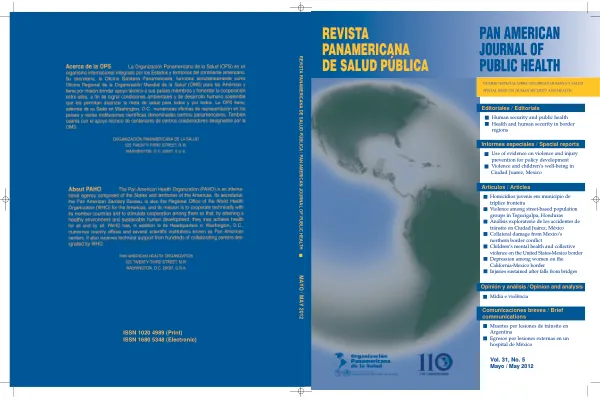
SPECIAL ISSUE ON HUMAN SECURITY AND HEALTH
The concept of human security has evolved significantly over the past two decades, shifting from a traditional notion of national security focused on military preparedness and response to a more comprehensive approach that prioritizes the well-being and safety of individuals and communities.
2012 · 24 pages
Sign in to readA free account is required to download.
Abstract
This paradigm recognizes that a person-centered approach to security is essential for national, regional, and global stability. The Human Development Report 1994 by the United Nations Development Programme (UNDP) marked a significant milestone in the field of human security. The report proposed a key concept, stating that ensuring all individuals have the "freedom to live without misery" and the "freedom to live without fear" is the best approach to addressing global insecurity. The report dedicated a chapter to the need to change the paradigm, moving from a state-centered concept of security to a people-centered one, from nuclear security to human security. The report highlighted the need to overcome the fears created during the Cold War and focus on neutralizing threats that affect daily life through a complementary approach that encompasses three critical, interrelated dimensions: a) human development that allows individuals to choose freely between various personal options to achieve their own development, b) the guarantee by governments that human rights will be exercised and defended, and c) human security that enables individuals to live without constant fears or threats that frustrate both development and the exercise of human rights. In 2005, the Human Security Report by the Centre on Human Security at the Liu Institute for Global Issues, University of British Columbia, Canada, noted a significant decrease in armed conflicts since the end of the Cold War. The report highlighted the notable reduction in the number of inter-state and intra-state wars observed in the Americas and worldwide over the past two decades, allowing attention to be focused on other challenges that affect the security of individuals and making them more visible. The report emphasized that the threats to the security of individuals, particularly women, children, ethnic groups, and other vulnerable sectors, were not valued enough to be considered potential threats to the well-being of society as a whole. Poverty, the spread of diseases, environmental destruction, lack of access to clean water, maternal health deficiencies, and unemployment were not contextualized in the debate on human security, as it was believed that the primary threat was outside national borders and consisted mainly of a distant confrontation between global superpowers. The United Nations proposed modifying the concept of security to make it a broader concept that incorporates as essential components of security equitable access to education, work, and health, as well as respect for human rights. This change of paradigm, although it does not exempt governments from their obligation to ensure national security for their citizens, shifts the focus away from external threats and conflict and towards the internal, peaceful, cooperative, and sustainable development of nations and their peoples. The new paradigm of human security, as part of a broader development process, recognizes the responsibility of governments to protect essential human freedoms. This approach implies protecting the population from risks and threats that can harm their aspirations and quality of life, as well as creating systems that facilitate access to basic rights of survival, dignity, and decent work. In this way, the range of human freedoms and their interrelation become more transparent – freedom from hunger and other basic needs, freedom from fear, and freedom to act on one's own behalf and in one's own name – in a framework that promotes the full realization of human potential. The development of these concepts has provided new opportunities for countries and communities around the world to address the risks and threats related to human development and apply strategies that strengthen human security.