DAI GLOBAL, LLC
Justice, Human Rights, and Security Strengthening (JHRSS) Activity Year 3 Work Plan
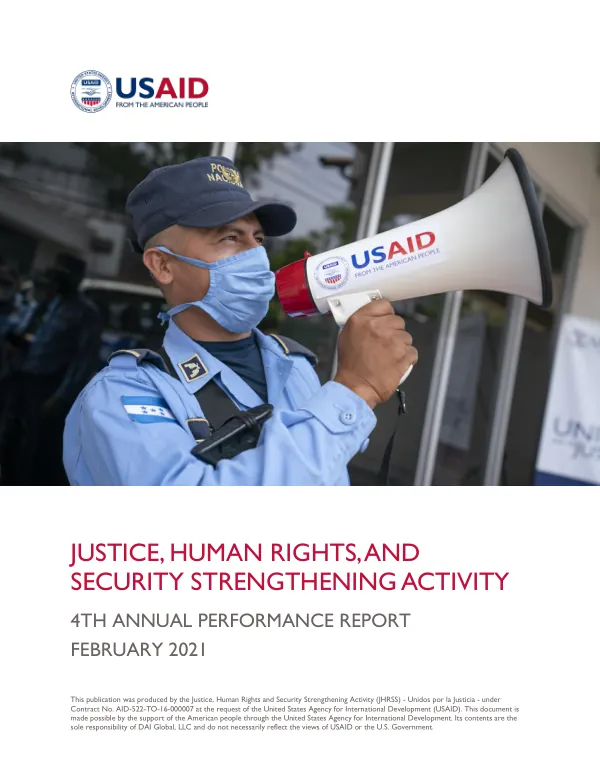
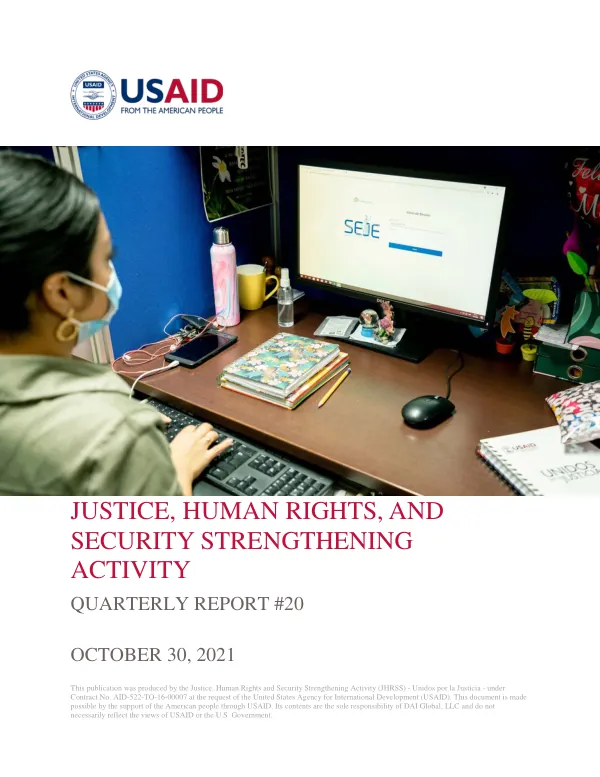
The Justice, Human Rights, and Security Strengthening (JHRSS) Activity, also known as Unidos por la Justicia, is a project sponsored by the United States Agency for International Development (USAID) in Honduras.
2019 · 37 pages
Sign in to readA free account is required to download.
Abstract
The project aims to strengthen the justice, human rights, and security sectors in Honduras, with a focus on improving citizen engagement with the security and justice sectors, increasing the efficiency of security and justice systems, and enhancing the effectiveness of community policing. The project's strategic approach is based on three result areas: Citizen Engagement, Institutional Strengthening, and Citizen Security. The Citizen Engagement result area focuses on strengthening civil society organizations (CSOs) and promoting access to justice for vulnerable groups. This includes activities such as social auditing and political advocacy, as well as promoting human rights. The Institutional Strengthening result area aims to improve the efficiency of security and justice systems by strengthening institutions such as the judicial branch, public defenders office, and public ministry. This includes activities such as judicial reform, public defenders training, and forensic medicine capacity building. The Citizen Security result area focuses on increasing the effectiveness of community policing by promoting key events and rights-based celebrations, as well as conducting monitoring and evaluation (M&E) and learning activities. This includes activities such as community policing training, social media campaigns, and citizen engagement initiatives. The project's methodology is based on a strategic approach that involves working with key stakeholders, including CSOs, government institutions, and community leaders. The project's implementation approach is based on a results-based framework that focuses on achieving specific outcomes and impacts. The project's activities are organized around three result areas, with specific activities and interventions designed to achieve each outcome. For example, the Citizen Engagement result area includes activities such as strengthening CSO capacity, access to justice for vulnerable groups, and promotion of human rights. The Institutional Strengthening result area includes activities such as judicial reform, public defenders training, and forensic medicine capacity building. The project's geographic focus is on Honduras, with a specific emphasis on the regions of Tegucigalpa and San Pedro Sula. The project's timeframes are from March 1, 2019, to February 28, 2020, with a focus on achieving specific outcomes and impacts during this period. The project's recommendations include strengthening CSO capacity, improving access to justice for vulnerable groups, and enhancing the effectiveness of community policing. The project also recommends conducting regular monitoring and evaluation activities to assess progress and identify areas for improvement. The project's staff includes a Chief of Party, Deputy Chief of Party, and program managers, as well as technical experts in areas such as justice, human rights, and security. The project's staffing plan includes a focus on building the capacity of local staff and partners, as well as providing training and technical assistance to support project implementation. The project's work plan includes a range of activities and interventions designed to achieve specific outcomes and impacts. These activities include strengthening CSO capacity, improving access to justice for vulnerable groups, and enhancing the effectiveness of community policing. The project's work plan also includes regular monitoring and evaluation activities to assess progress and identify areas for improvement. The project's learning agenda includes a focus on identifying best practices and lessons learned, as well as conducting research and analysis to inform project implementation. The project's indicators include measures of citizen engagement, institutional strengthening, and citizen security, as well as measures of project implementation and impact. The project's external representation and communication plan includes a focus on building relationships with key stakeholders, including government institutions, CSOs, and community leaders. The project's communication plan includes a range of activities, including social media campaigns, press releases, and stakeholder engagement initiatives.