USAID DEC
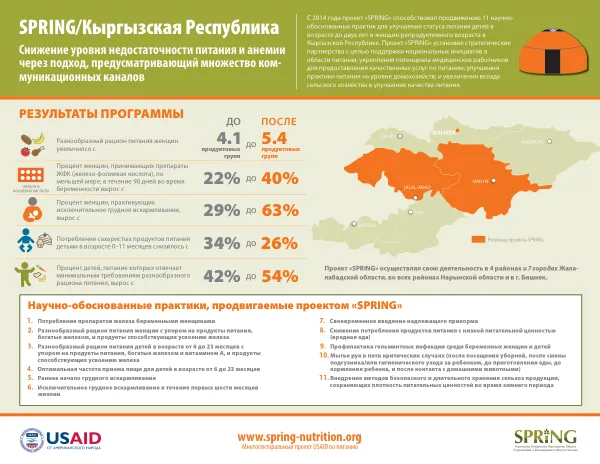
SPRING/Кыргызская Республика. Снижение уровня недостаточности питания и анемии через подход, предусматривающий множество ком-муникационных каналов (МАЙ 2018)
Sign inHELLEN KELLER INTERNATIONAL
SPRING/Кыргызская Республика. Снижение уровня недостаточности питания и анемии через подход, предусматривающий множество ком-муникационных каналов (МАЙ 2018)
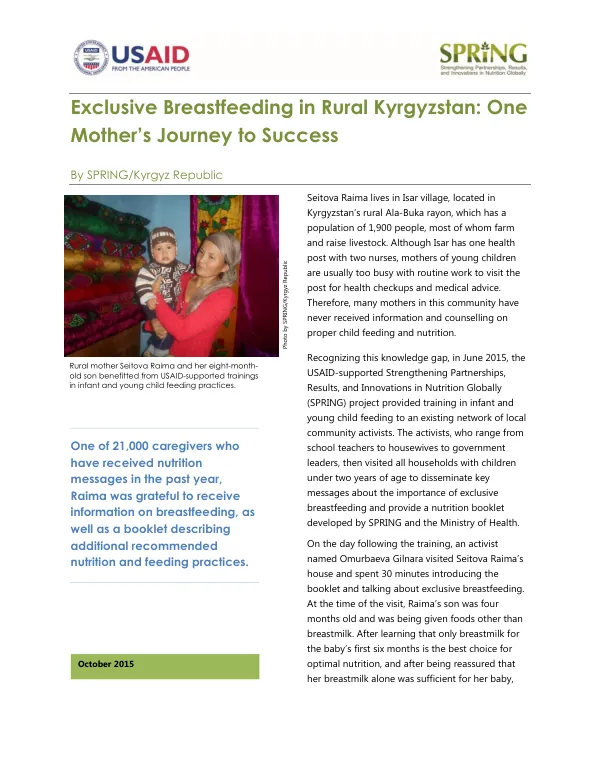
In the Kyrgyz Republic, the SPRING project aimed to improve nutrition and reduce anemia through a multi-channel approach.
2018 · 2 pages
Sign in to readA free account is required to download.
Abstract
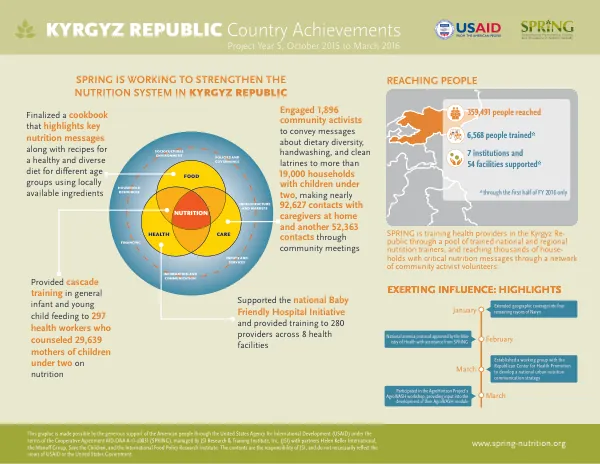
The project was implemented in 4 regions and 7 cities of the Jalal-Abad region, all regions of the Naryn region, and the city of Bishkek. The project focused on 11 evidence-based practices to improve the nutritional status of children under two years and women of reproductive age. The project supported the development of national protocols and guidelines, including the update of clinical guidelines for antenatal care and prevention and treatment of anemia and parasitic infections. The project also strengthened the healthcare system through training of over 7,000 healthcare workers from more than 300 healthcare organizations on key nutrition topics. The project contributed to the initiative "Hospital Friendly to Mother and Child" by conducting training for 27 hospitals and family medicine centers and providing support for the certification process. As a result, 17 healthcare organizations received certificates, and 8 others are undergoing evaluation. The project also prioritized nutrition in the framework of pre-diploma education by revising the nutrition curriculum in medical universities and colleges across the country. Effective use of Facebook and regional TV channels was made to increase coverage with 30 video films broadcast on TV, telling about recipes for preparing nutritious food and proper behavior regarding nutrition and hygiene. The project also organized engaging educational events to promote proper nutrition among urban residents. The project supported projects in the fields of healthcare, education, and agriculture by integrating nutrition elements into their programs to eliminate direct and indirect causes of malnutrition. More than 3,200 community activists were mobilized to disseminate key messages on nutrition and hygiene to over 120,500 caregivers and 20,000 children under two years. A guide on storing food at home and a cookbook with recipes for healthy dishes were published to ensure year-round diverse nutrition. The SPRING project used a multi-channel approach to address malnutrition, including community-based interventions, healthcare system strengthening, education, and advocacy. The project's results showed significant improvements in nutrition indicators, including a 27% increase in household income among program participants compared to the control group.