USAID
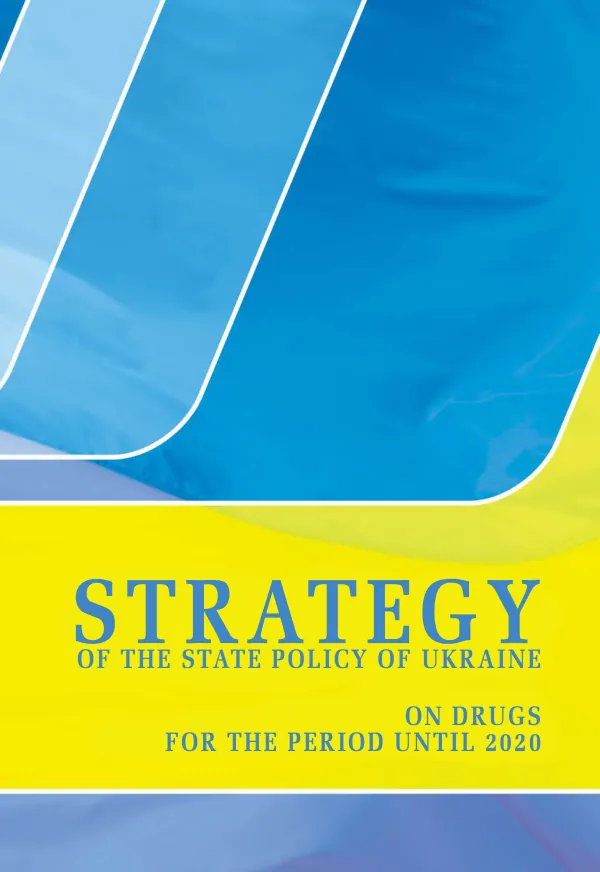
Strategy of the State Policy of Ukraine on Drugs for the Period until 2020
The State Policy of Ukraine on Drugs for the period until 2020 aims to reduce the supply of and demand for illicit drugs, and to control drug abuse as a socially dangerous phenomenon.
2013 · 36 pages
Sign in to readA free account is required to download.
Abstract
The policy is developed on the basis of an integrated and balanced approach, taking into account the current situation and the level of drug-related crime in Ukraine. The policy defines several key definitions, including the concept of "drugs, which refers to chemical substances of natural or synthetic origin that provoke a change in a person's mental condition, and systematic use of which causes dependency." The policy also defines "drug situation, which is a combination of factors and developments that reflect the status and level of legal and illicit drug trafficking, and are taken into account while defining the set of treatment, prevention, social, rehabilitation, and law enforcement measures." The development of the policy is caused by the urgent social problem of drug abuse and related crime in Ukraine. The spread of drug abuse and related crime has become one of the most pressing issues in the country, causing damage to the health of people, negatively affecting the social sector, and posing a threat to national security. The current situation in the area of drug control is characterized by the high prevalence of non-medical use of drugs, with 33 persons per 10 thousand people consuming drugs for non-medical purposes. International drug syndicates are also active in Ukraine, and the country is a transit point for drug trafficking. According to sociological data, 25% of students of higher educational institutions have experience with drug use. The policy aims to reduce the demand for illicit drugs by preventing drug dependence and illicit drug use, overcoming stigmatization, and treating and rehabilitating people with drug dependence disorders. The policy also aims to control the supply of illicit drugs by improving the system of control over licit drugs, ensuring accessibility of narcotic medications, and promoting the development of palliative care. The policy will be implemented through several key interventions, including the development of a draft plan for the implementation of the approved Strategy, the assignment of the State Drug Control Service and relevant central executive government bodies to develop and submit the draft plan, and the approval of the draft plan by the Cabinet of Ministers. The policy will be implemented in several stages, with the first stage focusing on the development of a draft plan for the implementation of the approved Strategy. The second stage will involve the assignment of the State Drug Control Service and relevant central executive government bodies to develop and submit the draft plan. The third stage will involve the approval of the draft plan by the Cabinet of Ministers. The policy will be implemented in several areas, including the reduction of demand for illicit drugs, the control of supply of illicit drugs, and the reduction of harm from the consequences of non-medical use of narcotic drugs. The policy will also involve the implementation of several key measures, including the development of a national strategy for the prevention of drug dependence, the establishment of a system of treatment and rehabilitation of people with drug dependence disorders, and the promotion of the development of palliative care. The policy will be implemented through several key institutions, including the State Drug Control Service, the Ministry of Health, and the Ministry of Education and Science. The policy will also involve the participation of several key stakeholders, including international organizations, international organizations, and non-governmental organizations. The policy will be implemented in several regions of Ukraine, including the Eastern, Central, and Central regions. The policy will also involve the implementation of several key measures in the areas of prevention, treatment, and rehabilitation, and the promotion of the development of palliative care. The policy will be implemented in several stages, with the first stage focusing on the development of a draft plan for the implementation of
Related documents