USAID DEC
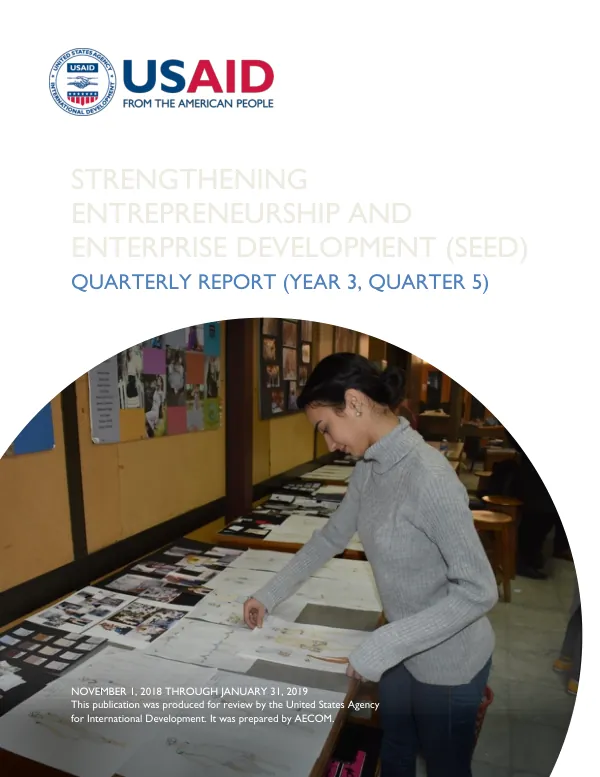
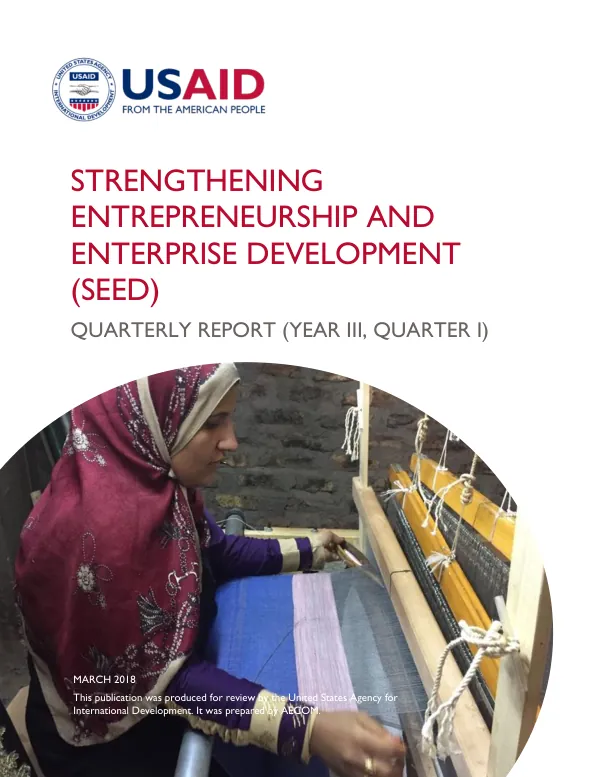
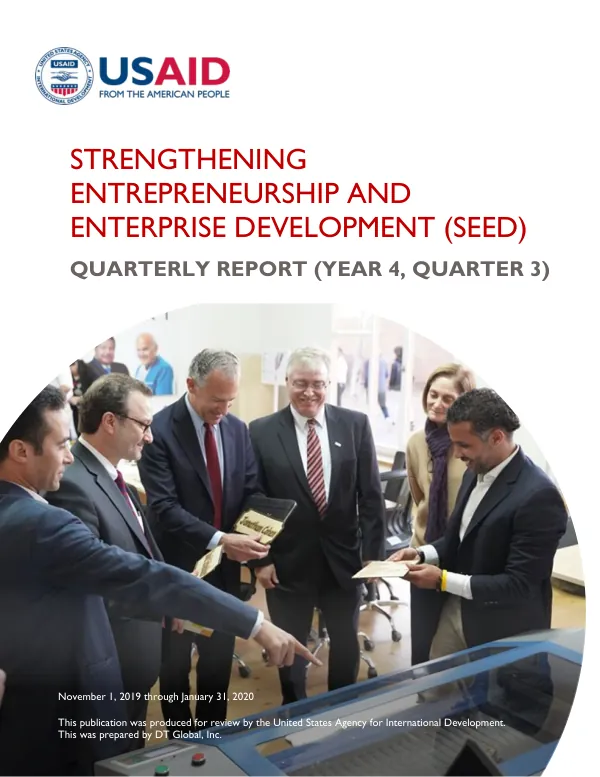
Strengthening Entrepreneurship and Enterprise Development (SEED) Quarterly Report (Year 4, Quarter 3)
Sign inDT GLOBAL
Strengthening Entrepreneurship and Enterprise Development (SEED) Quarterly Report (Year 4, Quarter 3)
The Strengthening Entrepreneurship and Enterprise Development (SEED) project in Egypt aims to enhance the competitiveness of micro, small, and medium-sized enterprises (MSMEs) through various interventions.
2020 · 56 pages
Sign in to readA free account is required to download.
Abstract
The project is implemented by DT Global, Inc. and is funded by the United States Agency for International Development (USAID). During the third quarter of year four, the project achieved several key results. In Component A: Entrepreneurship Skills and Opportunities, the project trained 1,200 MSMEs in entrepreneurship skills, with a focus on women and youth. The training covered topics such as business planning, marketing, and financial management. Additionally, the project established partnerships with 10 business incubators and accelerators to provide MSMEs with access to resources and networks. In Component B: Financial and Non-Financial Services, the project provided financial services to 500 MSMEs, including loans and grants. The project also established a network of 20 business advisory councils to provide MSMEs with access to expert advice and mentorship. Furthermore, the project implemented a customer relationship management system to improve the efficiency of its services. In Component C: Integration of MSMEs in Value Chains, the project worked with 15 MSMEs to integrate them into value chains, with a focus on the textile and apparel sectors. The project also established partnerships with 5 large enterprises to provide MSMEs with access to markets and resources. The project also implemented cross-cutting activities, including gender and youth initiatives. The project trained 200 women and youth in entrepreneurship skills and provided them with access to resources and networks. Additionally, the project established a network of 10 one-stop shops to provide MSMEs with access to a range of services, including business registration, licensing, and tax services. The project's monitoring and evaluation system tracked progress against its indicators, including the number of MSMEs trained, the number of MSMEs provided with financial services, and the number of MSMEs integrated into value chains. The project's management and administrative systems were also in place, including human resources, operations, and procurement. The project's key achievements during the third quarter of year four include: * Training 1,200 MSMEs in entrepreneurship skills * Providing financial services to 500 MSMEs * Establishing partnerships with 10 business incubators and accelerators * Integrating 15 MSMEs into value chains * Training 200 women and youth in entrepreneurship skills * Establishing a network of 10 one-stop shops The project's next steps include continuing to train MSMEs in entrepreneurship skills, providing financial services to MSMEs, and integrating MSMEs into value chains. The project will also continue to implement its cross-cutting activities, including gender and youth initiatives.