USAID DEC
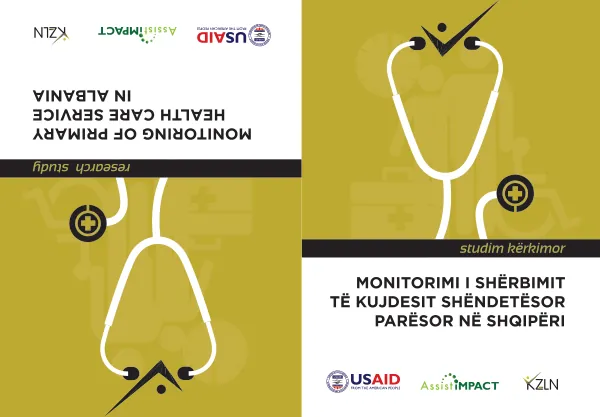
Studim kërkimor për qendrat shëndetësore në Shqipëri
The study on primary healthcare centers in Albania was conducted in 2014 with the support of the American People through the United States Agency for International Development (USAID).
2014 · 106 pages
Sign in to readA free account is required to download.
Abstract
The study aimed to investigate the primary healthcare centers in Albania through a statistically selected sample of centers with a margin of error of 3.6% for major healthcare centers and 4.3% for ambulances. The study involved engaging Albanian citizens in the investigation as the most interested party in ensuring the primary healthcare service is at a high level. A total of 570 observers were trained to complete a questionnaire, which was based on data provided by the Ministry of Health and the Regional Health Directorates in the twelve regions of Albania. The information was collected and processed within one day using a specially created software system, thanks to the commitment of thirty operators installed in Tirana. The study provides significant data on the functioning of primary healthcare centers, analysis of the weaknesses and strengths of the primary healthcare system in Albania, and recommendations for the Ministry of Health, the healthcare centers, the Fund for Mandatory Health Insurance (FSDKSH), and Albanian civil society organizations. The study was conducted by a team of researchers from the Coalition for Free and Fair Elections and Democratic Governance (KZLNDQ), which is an independent, non-partisan coalition established to promote democratic governance in Albania through citizen participation in public dialogue, advocacy, monitoring of public institutions and political processes. The coalition consists of 25 civil society organizations and hundreds of citizens spread across the country. During the election monitoring process, KZLNDQ is guided by international standards for election observation, emphasizing the empowerment of female voters and people with disabilities. The study's methodology involved using the same infrastructure and methodology as the election monitoring process, involving citizens in monitoring public institutions and services, such as the primary healthcare service in this case. By including citizens and analyzing data based on a nationally representative sample selected randomly according to statistical principles, KZLNDQ aims to increase trust in democratic processes and empower citizens to participate in democratic processes by recommending and advocating for improvements. The study's findings and recommendations are intended to contribute to the improvement of the primary healthcare system in Albania, which is a critical component of the country's healthcare system. The study's results are expected to inform policy decisions and guide the development of strategies to address the challenges facing the primary healthcare system in Albania. The study's methodology and findings are based on a comprehensive analysis of data collected from a statistically selected sample of primary healthcare centers in Albania. The study's results provide valuable insights into the functioning of primary healthcare centers, the strengths and weaknesses of the primary healthcare system, and the challenges facing the system. The study's recommendations are intended to inform policy decisions and guide the development of strategies to address the challenges facing the primary healthcare system in Albania.
Related documents