USAID DEC
Success Story: Traditional Dispute Resolution in Shamal, Afghanistan
Traditional dispute resolution in Shamal, Afghanistan, has been improved after local elders attended a training seminar.
2014 · 1 pages
Sign in to readA free account is required to download.
Abstract
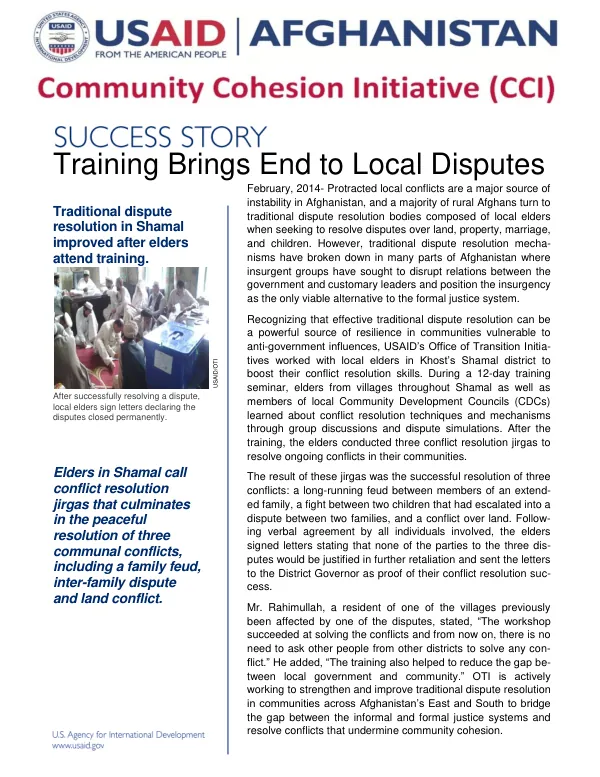
The training, conducted by USAID's Office of Transition Initiatives, aimed to boost the conflict resolution skills of local elders and Community Development Council members. The 12-day seminar covered conflict resolution techniques and mechanisms through group discussions and dispute simulations. The training resulted in the successful resolution of three communal conflicts in Shamal, including a family feud, an inter-family dispute, and a land conflict. The conflicts were resolved through jirgas, traditional conflict resolution meetings, where local elders facilitated discussions and reached verbal agreements among the parties involved. Following the agreements, the elders signed letters declaring the disputes closed permanently and sent them to the District Governor as proof of their conflict resolution success. The resolution of these conflicts has had a positive impact on the community. Mr. Rahimullah, a resident of one of the villages affected by the disputes, stated that the workshop succeeded in solving the conflicts and that there is no longer a need to seek external help to resolve disputes. The training also helped to reduce the gap between the local government and the community, promoting community cohesion. The success of the training in Shamal has led to USAID/OTI's efforts to strengthen and improve traditional dispute resolution in communities across Afghanistan's East and South. The goal is to bridge the gap between the informal and formal justice systems and resolve conflicts that undermine community cohesion. By empowering local elders and communities to resolve disputes effectively, USAID/OTI aims to promote stability and resilience in communities vulnerable to anti-government influences. The training and conflict resolution efforts in Shamal demonstrate the potential of traditional dispute resolution mechanisms to address local conflicts and promote community cohesion. By building on the strengths of local communities and traditional dispute resolution practices, USAID/OTI's initiatives aim to create a more stable and resilient Afghanistan. The success of the training in Shamal serves as a model for future initiatives, highlighting the importance of community-led conflict resolution and the need to support local capacities for resolving disputes effectively.
Related documents