USAID
Summary of Findings Based on Specific Objectives of the Baseline Survey
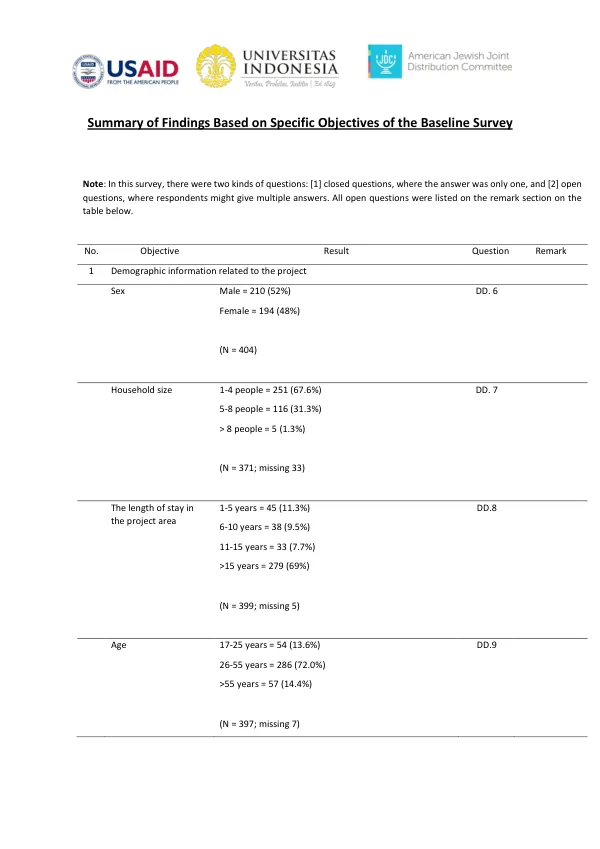
Demographic information related to the project area indicates a predominantly male population, with 52% of respondents identifying as male and 48% as female.
2016 · 8 pages
Sign in to readA free account is required to download.
Abstract
The majority of respondents (67.6%) reside in households with 1-4 people, while 31.3% live in households with 5-8 people, and 1.3% reside in households with more than 8 people. The length of stay in the project area varies, with 69% of respondents having lived there for more than 15 years, followed by 11.3% who have lived there for 1-5 years. The age distribution of respondents shows a majority (72%) between 26-55 years, followed by 13.6% between 17-25 years, and 14.4% above 55 years. Education levels are relatively low, with 43.1% of respondents not having finished elementary school, 49.8% having completed elementary school, and 4.5% having completed junior high school. The majority of respondents (61.4%) earn their income from farming, followed by 9.7% from private employment and 13.9% from entrepreneurship. Risk perception and disaster experience are significant concerns in the project area. A majority (78%) of respondents have knowledge about potential disasters in their area, with landslide being the most commonly known type of disaster (73%). However, only 40% of respondents have experienced disasters in the past year, with landslide being the most common type of disaster experienced (51%). The majority of respondents (42%) reported being survivors of disasters, with 16.7% having been evacuated, 0.6% having suffered death or injury, and 45.6% having experienced property damage. Disaster preparedness at the household level is relatively low, with 83.6% of respondents not participating in disaster risk reduction activities. However, 30% of respondents reported preparing survival equipment, with the most common items being food and beverages (38%), flashlights (50%), and sleeping bags/mattresses (46.3%). A majority (94%) of respondents know the evacuation path, and 60.5% have prepared an evacuation plan for family members. The evaluation of volunteers' performance indicates that 51.7% of respondents believe that there are village volunteers responsible for disaster response, and 53.7% have been helped by volunteers. However, only 17.6% of respondents know how to contact the volunteers. Psychosocial support is also an important aspect, with 63.7% of respondents staying together with family and friends to cope with stress, and 89.1% praying to manage negative emotions.