USAID
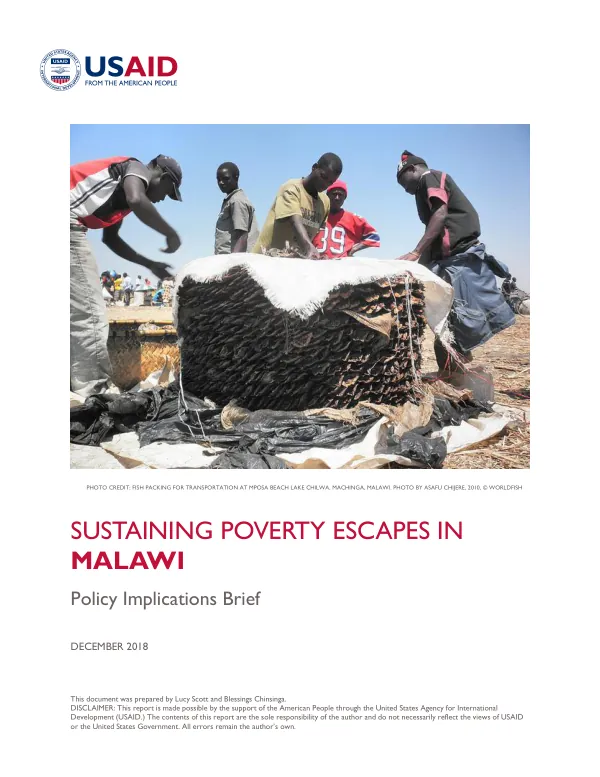
Sustaining Poverty Escapes in Malawi
The research on sustaining poverty escapes in Malawi was conducted by the Chronic Poverty Advisory Network (CPAN) and supported by the United States Agency for International Development (USAID).
2018 · 21 pages
Sign in to readA free account is required to download.
Abstract
The study aimed to understand the sources of resilience that enable people to sustainably escape poverty in complex risk environments. The research drew on data from the Malawi Integrated Household Panel Survey (IHPS), key informant interviews, focus group discussions, and qualitative life history interviews. The study found that sustained escaping households in Malawi concentrated investments in resources associated with non-farm activities, including transport vehicles and properties. Regression results showed that households owning more than the mean number of livestock experienced significant improvements in welfare across urban and rural areas. Households that acquired electricity experienced an increase in per capita expenditures, with a higher improvement in rural areas. Transitory escapers in Malawi were more likely to take loans than sustained escapers, which contributed to their descent back into poverty. Regression results revealed that an increase in household size and dependency ratio was significantly associated with reductions in monetary welfare over time. The study also highlighted the importance of secondary and tertiary education, as well as the costs of educating children in low-quality state schools and high-cost private schools. In rural areas, some farmers sustained their escape from poverty through diversification within farming and avoidance of tobacco farming or quick movement out of tobacco when prices started falling. Regression results showed that ownership of a non-farm enterprise was associated with an increase in monetary welfare, though this was only statistically significant for male-headed households and those in rural areas. The study recommended a portfolio response to poverty reduction that incorporates a sound understanding of poverty dynamics. The three areas of focus were improving agricultural productivity and reducing price volatility, increasing profitable engagement in the non-farm economy, and investing in social protection. The study emphasized the need for a multi-sectoral portfolio response that propels significant improvements in household well-being, while supporting the development of diversified sources of income and livelihoods.
Related documents
Documents in this collection
 2021
2021USAID DEC
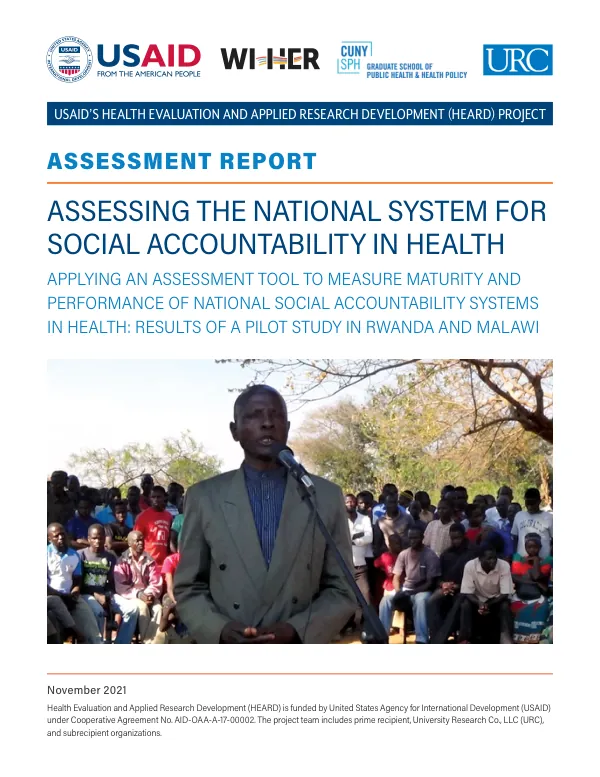
Assessing the National System for Social Accountability in Health: Applying an Assessment Tool to Measure Maturity and Performance of National Social Accountability Systems in Health: Results of a Pilot Study in Rwanda and Malawi
Open record 2021
2021USAID DEC
Language of Instruction Country Profile: Malawi
Open record