GOVERNMENT OF INDONESIA
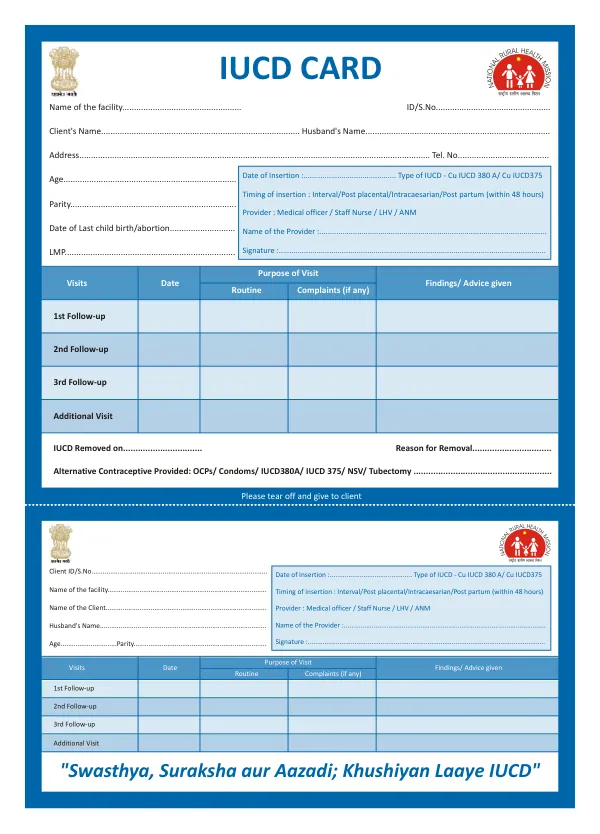
Swasthya, Suraksha aur Aazadi; Khushiyan Laaye IUCD: How to insert IUCD Safely
The IUCD insertion procedure involves a series of steps to ensure safe and effective placement of the device.
2 pages
Sign in to readA free account is required to download.
Abstract
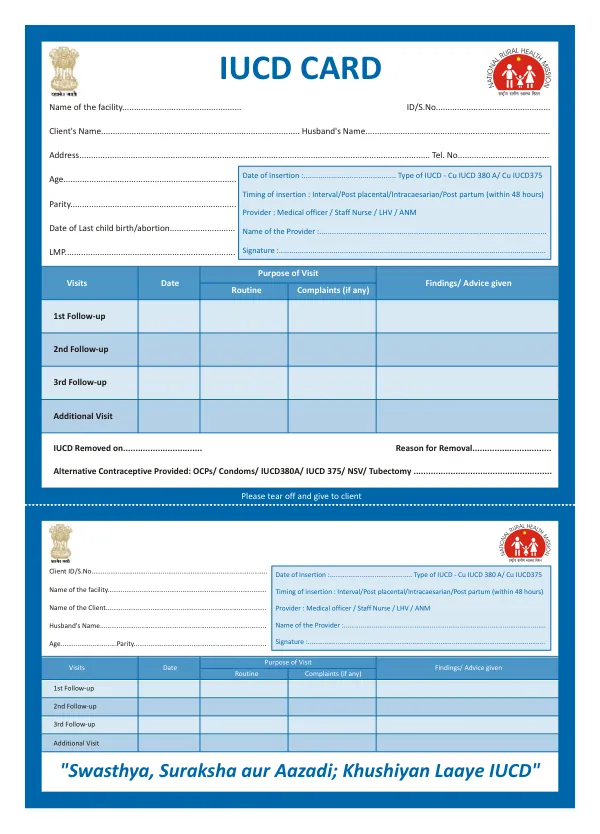
The process begins with client preparation, where the woman is given a brief overview of the procedure, asked to urinate before the procedure, and reminded to let the healthcare provider know if she feels pain. The client is then screened and counseled according to Government of India guidelines on IUCD. The healthcare provider checks for instruments, ensuring that all instruments are sterilized or disinfected, and puts on a pair of new clean or high-level disinfected gloves on both hands. The high-level disinfected or sterile speculum is then inserted to visualize the cervix, and the cervix and vagina are cleansed with an appropriate antiseptic solution. The cervix is gently grasped with the high-level disinfected or sterile volsellum and applied gentle traction. The high-level disinfected or sterile uterine sound is carefully inserted, and the sound is gently advanced into the uterine cavity, stopping when a slight resistance is felt. The angle of the uterine cavity is noted, and the sound is removed to determine the length of the uterus. The loaded IUCD is then carefully inserted, and the blue length-gauge is checked for contact with the cervix or slight resistance. After insertion, the thread is cut, and the volsellum and speculum are removed and disinfected. The woman is then counseled about follow-up, side-effects, and complications. The healthcare provider examines the woman's cervix for bleeding and allows her to rest. The technique for postpartum IUCD insertion is different, and women with certain medical conditions, such as pregnancy, STI, or pelvic inflammatory disease, are not eligible for IUCD insertion. The IUCD is contraindicated in women with certain conditions, including cancer in the female organs, unexplained vaginal bleeding, and STI or pelvic inflammatory disease in the last three months. Women who experience symptoms such as late or missed periods, abnormal spotting or bleeding, abdominal pain, abnormal vaginal discharge, or not feeling well should return immediately to the hospital.