USAID DEC
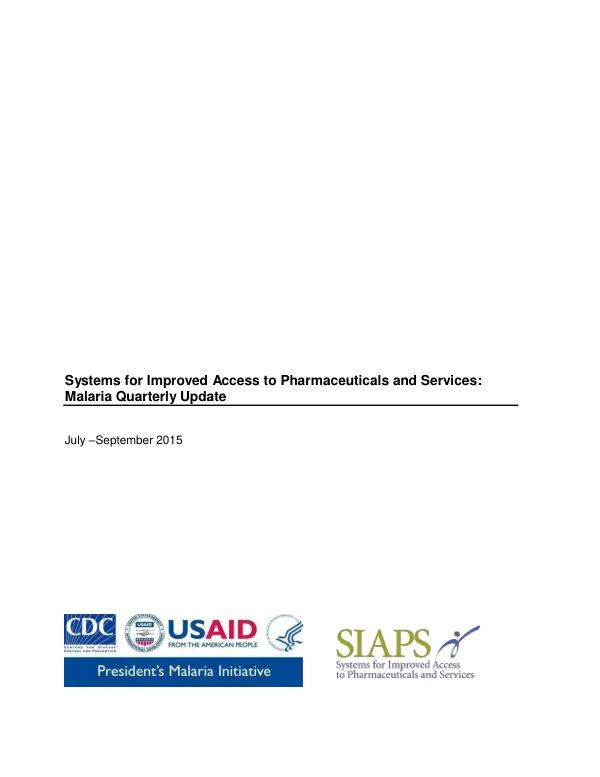
Systems for Improved Access to Pharmaceuticals and Services: Malaria Quarterly Update
Sign inMANAGEMENT SCIENCES FOR HEALTH
Systems for Improved Access to Pharmaceuticals and Services: Malaria Quarterly Update
The Systems for Improved Access to Pharmaceuticals and Services (SIAPS) Program aims to ensure the availability of quality pharmaceutical products and effective pharmaceutical services to achieve desired health outcomes.
2015 · 41 pages
Sign in to readA free account is required to download.
Abstract
The program's result areas include improving governance, building capacity for pharmaceutical management and services, addressing information needed for decision-making in the pharmaceutical sector, strengthening financing strategies and mechanisms to improve access to medicines, and increasing quality pharmaceutical services. SIAPS has been working in several countries to improve access to malaria treatment and prevention services. In Angola, the program has been supporting the implementation of PMI monitoring tools, supply chain management, and support for policies, guidelines, regulations, and partner coordination. In Burundi, SIAPS has been working on implementation of PMI monitoring tools, supply chain management, capacity building, and support for policies, guidelines, regulations, and partner coordination. In the Democratic Republic of the Congo, the program has been focusing on implementation of PMI monitoring tools, capacity building, and support for policies, guidelines, regulations, and partner coordination. In Ethiopia, SIAPS has been working on implementation of PMI monitoring tools, capacity building, rational medicines use, supply chain management, information systems management, and support for policies, guidelines, regulations, and partner coordination. In Guinea, the program has been supporting information systems management, supply chain management, capacity building, and support for policies, guidelines, regulations, and partner coordination. In Kenya, SIAPS has been working on implementation of PMI monitoring tools, supply chain management, and support for policies, regulations, and partner coordination. In Latin America and the Caribbean, the program has been supporting the Amazon Malaria Initiative, focusing on case management and supply chain management, information systems management, and support for policies, guidelines, regulations, and partner coordination. In Mali, SIAPS has been working on implementation of PMI monitoring tools, information systems management, capacity building, and supply chain management. In Niger, the program has been supporting supply chain management, support for policies, guidelines, regulations, and partner coordination. In South Sudan, SIAPS has been working on information systems management, supply chain management, capacity building, and support for policies, guidelines, regulations, and partner coordination. The SIAPS program has been using various tools and strategies to improve access to malaria treatment and prevention services in these countries. These include the implementation of PMI monitoring tools, supply chain management, capacity building, and support for policies, guidelines, regulations, and partner coordination. The program has also been working to strengthen the capacity of national health systems to manage and deliver pharmaceutical services, including malaria treatment and prevention services. The SIAPS program has been making progress in improving access to malaria treatment and prevention services in the countries where it is working. In Angola, for example, the program has been supporting the implementation of PMI monitoring tools, which has helped to improve the tracking and management of malaria cases. In Burundi, the program has been working on supply chain management, which has helped to improve the availability of malaria treatment and prevention commodities. In Ethiopia, the program has been supporting the implementation of PMI monitoring tools, which has helped to improve the tracking and management of malaria cases. The program has also been working on rational medicines use, which has helped to improve the quality of malaria treatment and prevention services. In Guinea, the program has been supporting information systems management, which has helped to improve the tracking and management of malaria cases. The SIAPS program has been working closely with national health authorities, implementing partners, and other stakeholders to improve access to malaria treatment and prevention services in the countries where it is working. The program has been using various tools and strategies to support the implementation of national malaria control programs and to strengthen the capacity of national health systems to manage and deliver pharmaceutical services, including malaria treatment and prevention services.