BANK FOR WEST AFRICAN DEVELOPMENT
Tajikistan Land Reform and Farm Restructuring Project Final Report
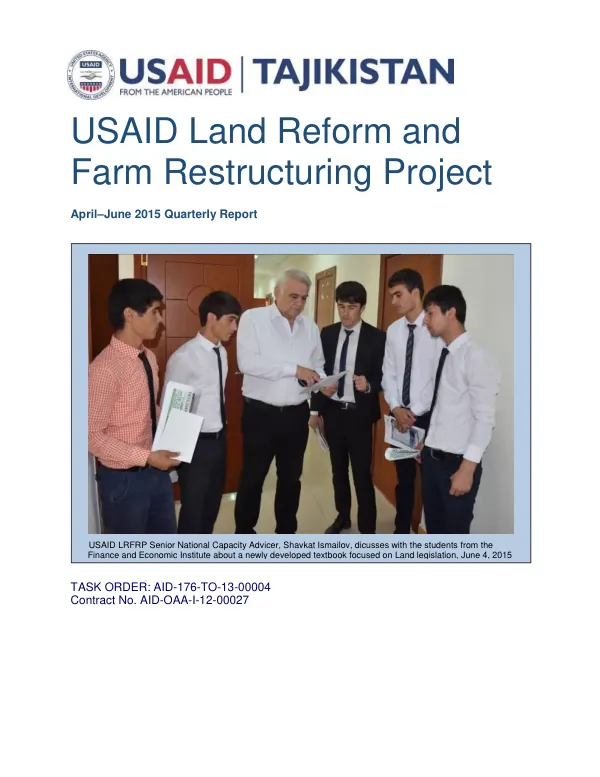
The Land Reform and Farm Restructuring Project in Tajikistan aimed to promote legislative reform, empower stakeholders through capacity building, inform farmers through mass media and public outreach, provide legal advice and assistance, and emphasize the importance of gender and social inclusion.
2013 · 71 pages
Sign in to readA free account is required to download.
Abstract
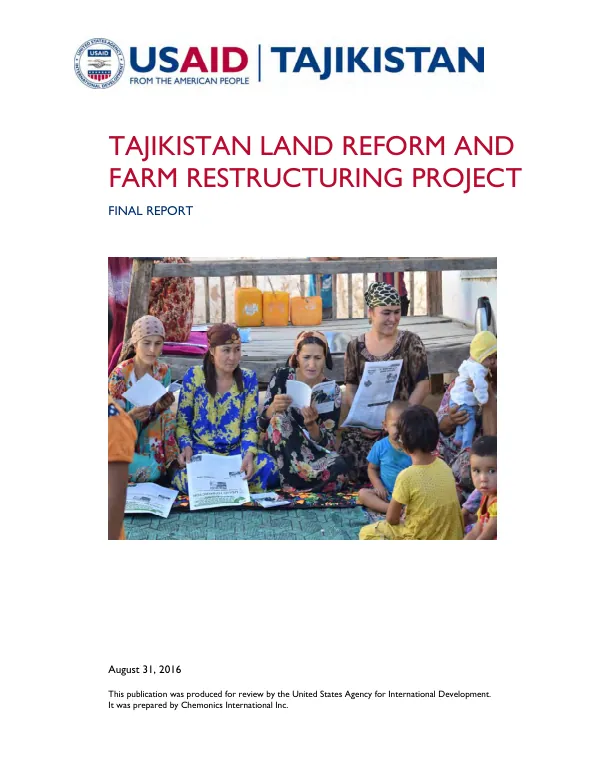
The project was implemented in 12 districts of the Khatlon region, covering 67 jamoats, and was funded by the United States Agency for International Development (USAID) as part of the Feed the Future initiative. Legislative reform was a key component of the project, with LRFRP supporting the creation and amendment of legislation to improve the lives of Tajik farmers. The project staff analyzed and developed 14 pieces of legislation to advance the land reform process, resulting in the signing of the new Law on Dehkan Farms by President Rahmon on March 3, 2016. This law enabled farmers and their dehkan farms to be legally registered, providing better protection under the law. Capacity building was another critical aspect of the project, with LRFRP working to build the capacity of Tajik officials, farmers, rural stakeholders, and civil society. The project provided training and technical assistance to support the development of a market in land-use rights, enabling farmers to put land to its most productive use. Through this effort, rural Tajik farmers were motivated to capitalize on new opportunities and thrive. Public information and awareness were also key components of the project, with LRFRP working to inform farmers through mass media and public outreach. The project supported the development of a newsletter, "Agroinform," which provided important information on land reform, land rights, and farm restructuring to rural farmers. Additionally, the project organized training sessions and forums for farmers, where they could share their experiences and receive advice on how to obtain land rights. The project also provided legal advice and assistance to rural farmers, with LRFRP working to support the development of a legal aid system. The project staff provided training and technical assistance to support the development of a legal aid center, which provided legal advice and assistance to farmers on issues related to land rights and farm restructuring. Throughout the project, LRFRP worked to emphasize the importance of gender and social inclusion. The project recognized that women and other marginalized groups often faced significant barriers in accessing land and other resources, and worked to address these disparities through its activities. The project supported the development of women's dehkan farms, which provided women with the opportunity to own and manage their own land and businesses. The project's results were significant, with LRFRP achieving its objectives and generating lasting effects for generations to come. The project's activities covered 12 districts in the Khatlon region, and reached over 10,000 farmers and rural stakeholders. The project's legislative reforms and capacity building activities supported the development of a market in land-use rights, enabling farmers to put land to its most productive use. The project's public information and awareness activities informed farmers about their rights and opportunities, and the project's legal aid activities provided critical support to farmers in accessing land and other resources. Overall, the Land Reform and Farm Restructuring Project in Tajikistan was a critical component of the country's efforts to reform its land use and promote economic growth. The project's results demonstrate the importance of supporting legislative reform, capacity building, public information and awareness, and legal aid in promoting the rights and opportunities of rural farmers.
Related documents