AIDER
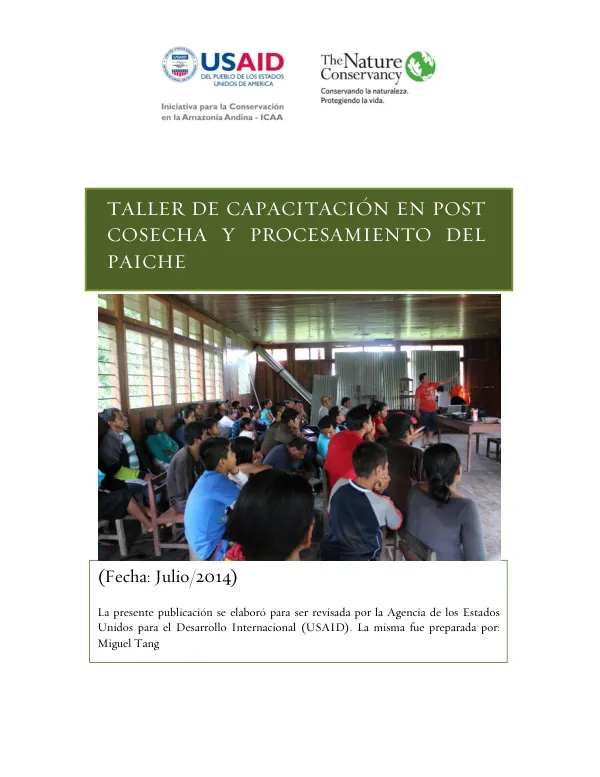
Taller de Capacitación en Post Cosecha y Procesamiento del Paiche
The Taller de Capacitación en Post Cosecha y Procesamiento del Paiche was a training event held in July 2014 in the community of Nuevo Saposoa, Ucayali, Peru.
2014 · 12 pages
Sign in to readA free account is required to download.
Abstract
The event was organized by AIDER, with funding from The Nature Conservancy (TNC) and the USAID's ICAA II project. The purpose of the event was to capacitate members of the paiche management committees from the indigenous communities of Nuevo Saposoa and Callería in aspects related to post-harvest processing of the paiche fish. The event was attended by 30 participants, 63% of whom were men and 37% women. The participants were from indigenous communities and non-governmental organizations (NGOs). The training program consisted of two parts: presentations by consultants and group work, where each group prepared a presentation on the methodology of post-harvest processing of the paiche. The consultants presented on the methodology of post-harvest processing of the paiche, as well as the experience of Pacaya Samiria in Loreto. The participants were surprised by the methodology presented and showed a significant increase in their knowledge of the topic, from 40% to 80%. The participants also demonstrated a good understanding of the procedure for post-harvest processing of the paiche and were in a position to apply the knowledge acquired. The event was considered a success, as it achieved its objective of capacitating the participants in post-harvest processing of the paiche. The participants were able to increase their knowledge of the topic and were in a position to apply the knowledge acquired. The event also laid the groundwork for future events on the topic of post-harvest processing of the paiche. The training program was divided into two parts: presentations by consultants and group work. The consultants presented on the methodology of post-harvest processing of the paiche, as well as the experience of Pacaya Samiria in Loreto. The participants were able to ask questions and provide feedback during the presentations. The group work consisted of dividing the participants into groups, each of which prepared a presentation on the methodology of post-harvest processing of the paiche. The groups presented their findings in plenary, and the participants were able to ask questions and provide feedback. The event was evaluated through oral evaluations, which showed a significant increase in the participants' knowledge of the topic. The participants were also able to demonstrate a good understanding of the procedure for post-harvest processing of the paiche and were in a position to apply the knowledge acquired. The participants were able to apply the knowledge acquired during the event to their daily work, which will have a positive impact on the management of the paiche fish in the communities of Nuevo Saposoa and Callería. The event also contributed to the development of the indigenous communities in the region, as it provided them with the knowledge and skills necessary to manage the paiche fish sustainably. The event was a collaborative effort between AIDER, TNC, and the USAID's ICAA II project. The collaboration between these organizations was essential to the success of the event, as it provided the necessary resources and expertise to capacitate the participants in post-harvest processing of the paiche. The collaboration also demonstrated the commitment of these organizations to the development of the indigenous communities in the region.