FINTRAC
Tanzania Agriculture Productivity Program (TAPP) Monthly Update – January 2010
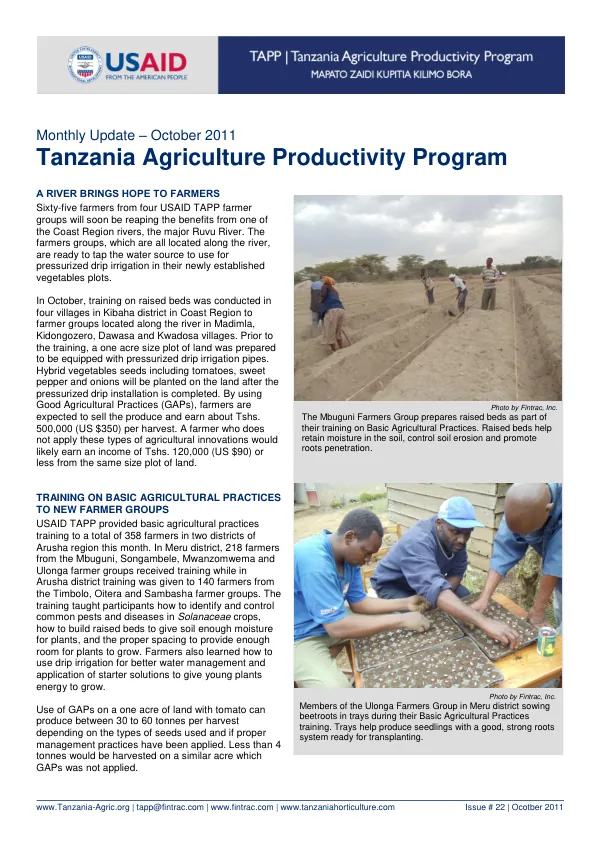
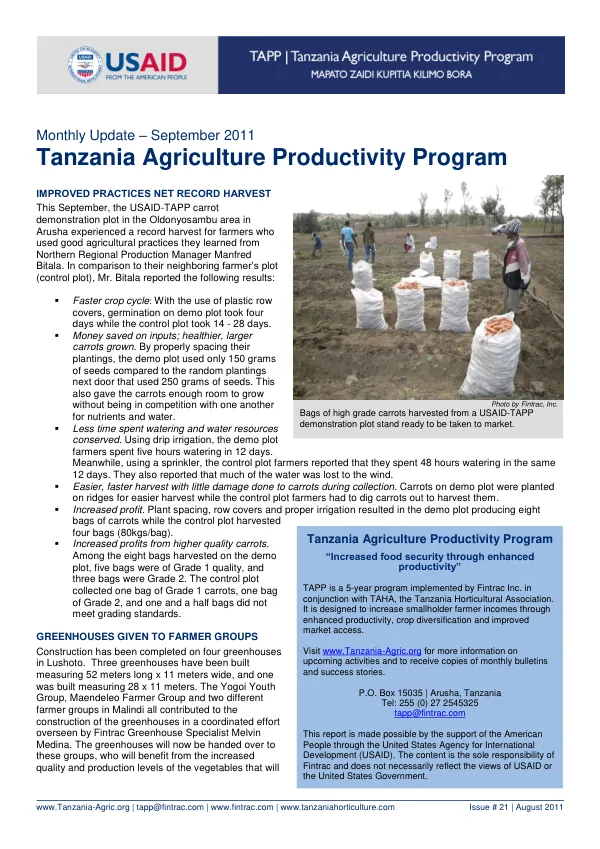
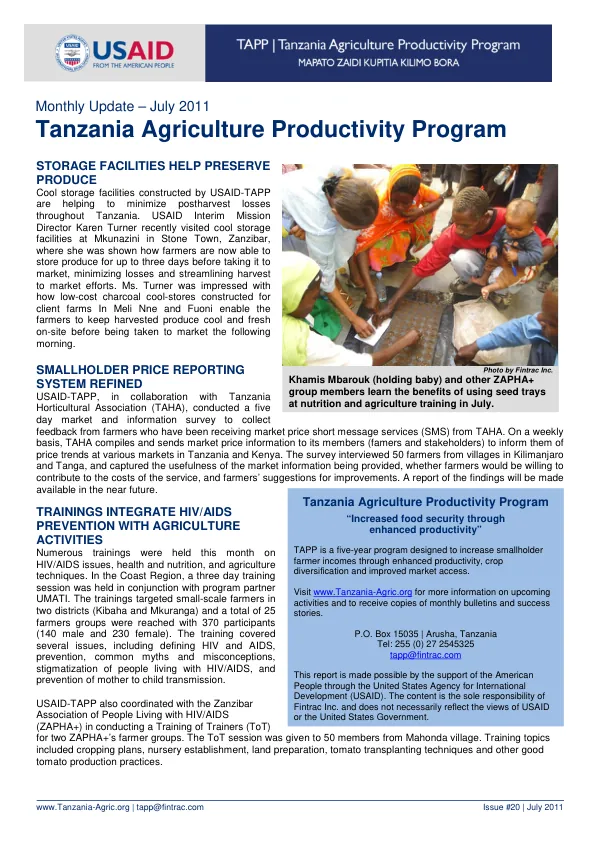
The Tanzania Agriculture Productivity Program (TAPP) is a 5-year initiative aimed at increasing smallholder farmer incomes through enhanced productivity and improved domestic and export marketing of agricultural products.
2010 · 2 pages
Sign in to readA free account is required to download.
Abstract
The program is implemented in various regions of Tanzania, with a focus on the horticulture industry. TAPP's primary objective is to support smallholder farmers in improving their agricultural productivity, thereby increasing their incomes and contributing to the country's economic growth. TAPP's efforts are guided by a partnership agreement with the Tanzania Horticulture Association (TAHA), which represents the interests of the horticulture industry. The association continues to advocate for the sector's interests, including addressing tax-related issues that may impact the industry's growth. For instance, TAHA has been working with the Tanzanian Revenue Authority to address the implementation of an 18 percent Value Added Tax (VAT) on airfreight charges, which has been retroactively assessed from December 1, 2009. The association is also following up on another tax-related issue, namely the application of VAT to irrigation systems, which poses a challenge for smallholder growers. TAPP field personnel have been assigned to their project areas and have introduced the program to regional and district officers. They are identifying and visiting prospective clients, including women and youth groups, and rural HIV/AIDS-affected groups. The program has also started collecting baseline data for new farmer groups and conducting an assessment to ensure adherence to environmental management standards. TAPP is following USAID/Tanzania's lead in establishing environmental best practices and adaptation to climate change as core values for its activities. One of the program's notable achievements is the successful technical assistance provided to Homeveg Ltd., a smallholder vegetable exporter. TAPP worked with AuroraFresh, a European marketing company, to identify technical challenges and improve quality control and cold chain systems. As a result, Homeveg was able to resume exports to European markets without further quality problems. This achievement demonstrates TAPP's commitment to supporting smallholder farmers in improving their agricultural productivity and accessing new markets. The program's monitoring and evaluation specialists have also started collecting data on the impact of TAPP's interventions on smallholder farmers. The data will be used to assess the program's effectiveness and identify areas for improvement. TAPP's efforts are expected to have a sustainable impact on the horticulture sector, contributing to the country's economic growth and poverty reduction.
Related documents