USAID DEC
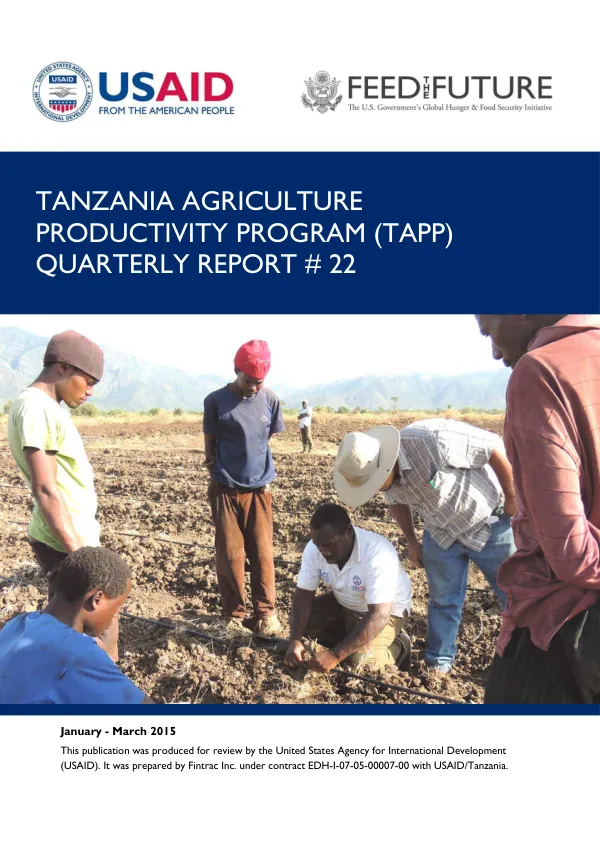
Tanzania Agriculture Productivity Program (TAPP) Quarterly Report #22 January - March 2015
Sign inFINTRAC
Tanzania Agriculture Productivity Program (TAPP) Quarterly Report #22 January - March 2015
The Tanzania Agriculture Productivity Program (TAPP) is a USAID-funded initiative aimed at increasing smallholder incomes, improving nutrition, and expanding markets through agricultural innovation and commercialization.
2015 · 36 pages
Sign in to readA free account is required to download.
Abstract
The program is part of the Feed the Future initiative, a global hunger and food security initiative to break the cycle of hunger and poverty in the developing world. TAPP is focusing efforts on selected crops and regions, including the Southern Agricultural Growth Corridor (SAGCOT), a region identified by the Tanzanian government as the most conducive for agricultural growth. In the second quarter of FY2015, TAPP continued to make significant progress towards both annual and overall program goals. The program reached 39,043 households and will concentrate its last five months on working with existing beneficiary households and partners to strengthen their technical capacities to enable them to maintain sustainable operations beyond project intervention. On December 16th, 2014, USAID-TAPP was extended by six months, with a new end date of August 26th, 2015, providing additional time for beneficiary farmers to apply their newly learned production practices and for partners to complete their activities. The reporting quarter was characterized by high prices for fruits and vegetables due to a limited supply of produce caused by reduced plantings during the dry season. For those with a reliable source of water, this season was ideal for planting, with low pest and disease pressures and a great market window. The majority of TAPP farmers who harvested during this season had very high yields, combined with high prices, resulting in record sales for many farmers. Select highlights for the reporting quarter include a total of 1,159 rural households joining TAPP, with 6,172 unique trainees receiving training on production technologies, business skills, marketing, and nutrition. Market linkages facilitated by TAPP increased considerably, with 184 market linkages facilitated with a value of more than $250,000 from the sale of 614 tons of various horticultural crops. This represents 3.8 times more sales and 2.3 times more volume than those facilitated during the previous quarter. Access to credit was also improved, with 232 farmers receiving access to credit, totaling 202,399,788 TZS ($112,444). Repayments this quarter totaled 65,787,409 TZS ($36,549), with expectations that loan repayment rates will be high. Health and nutrition activities continued, with TAPP staff and program partners enabling farmers to develop home gardens to grow nutritious foods. A total of 265 kitchen gardens were developed this quarter, with 3,998 farmers trained on nutrition basics and the establishment of kitchen gardens. New partnerships were also established, with 28 partners working with TAPP this quarter, of which 25 partners will continue their activities through the next quarter. The project spent $510,755 on partnership programs during this quarter. One of the biggest constraints to smallholder farmers in achieving increased productivity is the lack of access to quality agricultural inputs. To address this, TAPP is partnering with agricultural input companies to improve access to inputs for smallholder farmers. This quarter, through working with partner ZAIDI, TAPP demonstrated the safety and effectiveness of three biological products, contributing to the Tanzanian government's approval for their commercial use. The current status of all project indicators is presented in the Annex section of this report. TAPP is working throughout the line-shaded regions in the following map, focusing efforts on selected crops and regions, including SAGCOT, to help transform the country's food security. The program works to raise rural incomes, improve nutrition, and expand markets, benefiting more than 40,000 rural families by effectively transferring technology and business skills to farmers, attaining sustainable increases in rural incomes, and enhancing institutional capacity in the public and private sectors. To date, TAPP staff have trained a total of 133,910 participants. This quarter, TAPP held 1,146 trainings in all regions of influence, with 8,440 farmers trained, of which 6,172 were trained for the first time this year (59 percent male and 41 percent female). The training and technical assistance topics during this period were diverse, with topics emphasized including soil conservation, crop management, and business skills.