FINTRAC
USAID-TAPP Monthly Bulletin #22
The Tanzania Agriculture Productivity Program (TAPP) is a five-year initiative implemented by Fintrac Inc.
2011 · 2 pages
Sign in to readA free account is required to download.
Abstract
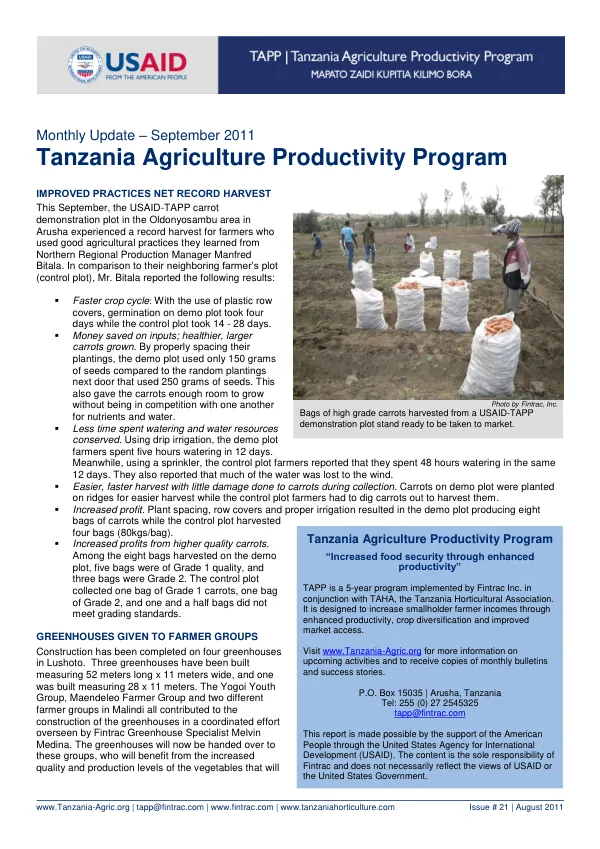
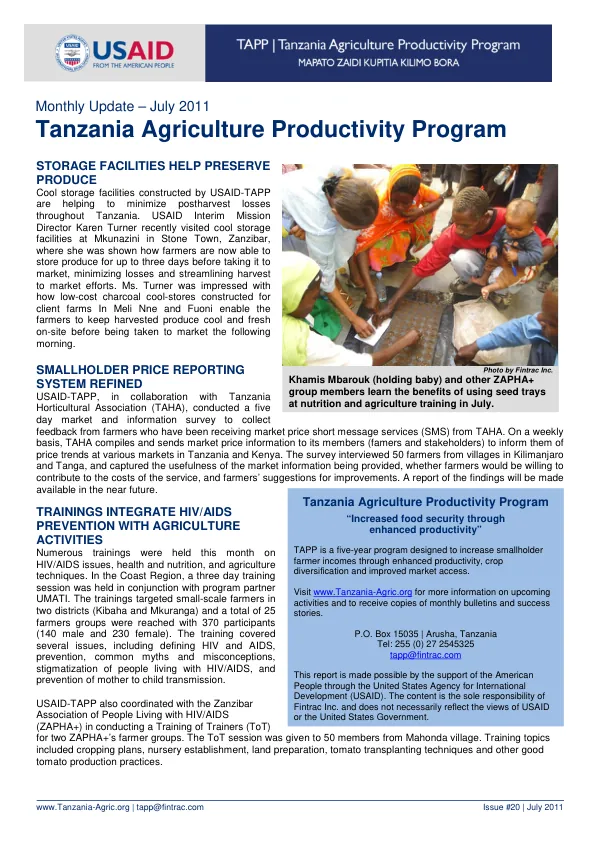
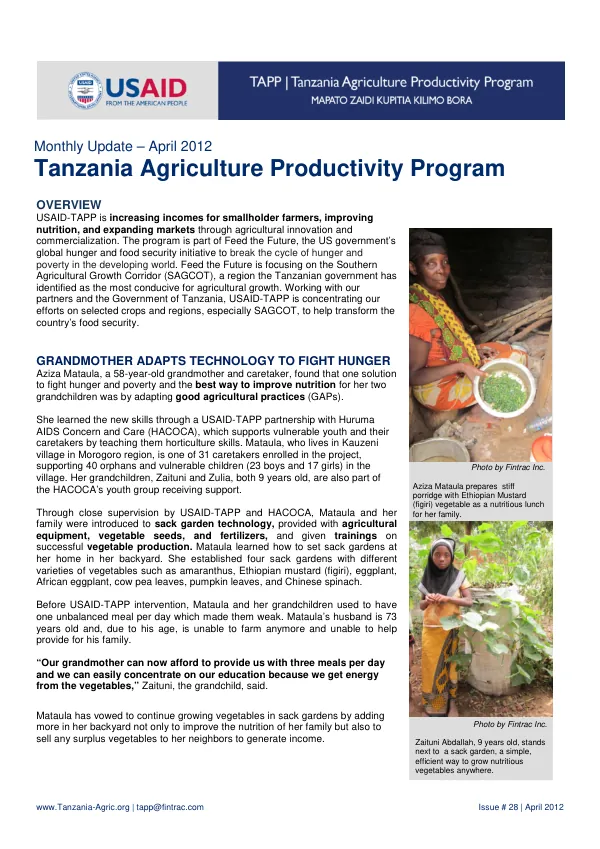
in conjunction with the Tanzania Horticultural Association (TAHA). The program aims to increase smallholder farmer incomes through enhanced productivity, crop diversification, and improved market access. In the Coast Region, 65 farmers from four USAID TAPP farmer groups are set to benefit from the Ruvu River water source. The farmers will use pressurized drip irrigation in their newly established vegetable plots, which will be equipped with hybrid vegetables seeds including tomatoes, sweet pepper, and onions. By applying Good Agricultural Practices (GAPs), farmers are expected to earn approximately Tshs. 500,000 (US $350) per harvest, a significant increase from the Tshs. 120,000 (US $90) or less earned by farmers who do not apply these practices. Training on basic agricultural practices was provided to a total of 358 farmers in two districts of Arusha region. In Meru district, 218 farmers from four farmer groups received training, while in Arusha district, 140 farmers from three groups received training. The training covered topics such as identifying and controlling common pests and diseases in Solanaceae crops, building raised beds, and using drip irrigation for better water management. The use of GAPs on a one-acre plot of land with tomatoes can produce between 30 to 60 tonnes per harvest, depending on the types of seeds used and proper management practices. In contrast, less than 4 tonnes would be harvested on a similar acre without GAPs. Various farmers groups from Unguja learned the importance of record keeping to track crop production and harvesting, as well as crop rotation and integrated pest management. In Zanzibar, a public-private partnership with Barclays Bank is helping to prepare land at the Zanzibar Mental Health Hospital for a vegetable garden. Sorghum plants have been planted as live barriers to break wind patterns and for pest management. The joint effort will provide highly nutritious vegetables for the hospital kitchen and serve as occupational therapy for patients who will learn how to work in the garden and sell the surplus.
Related documents