FINTRAC
USAID-TAPP monthly bulletin #20
The Tanzania Agriculture Productivity Program (TAPP) is a five-year initiative designed to increase smallholder farmer incomes through enhanced productivity, crop diversification, and improved market access.
2011 · 2 pages
Sign in to readA free account is required to download.
Abstract
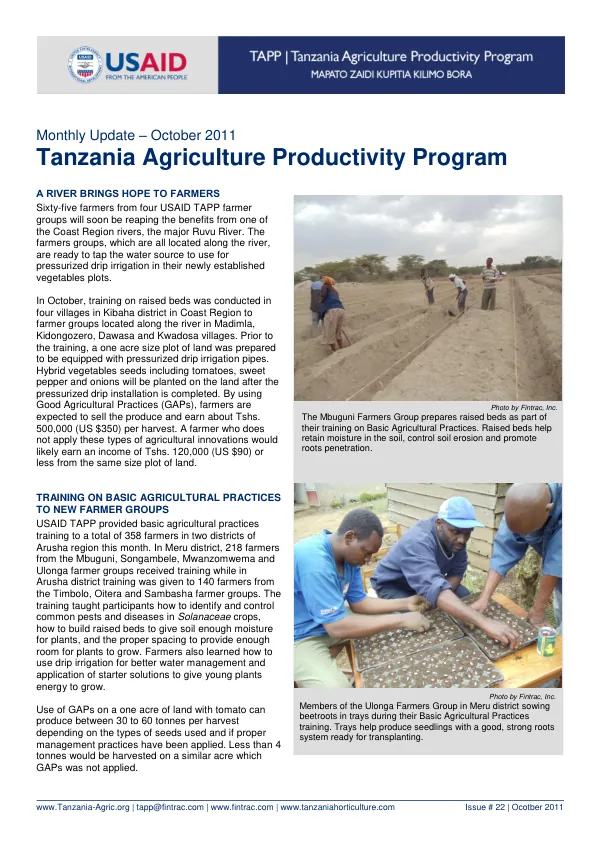
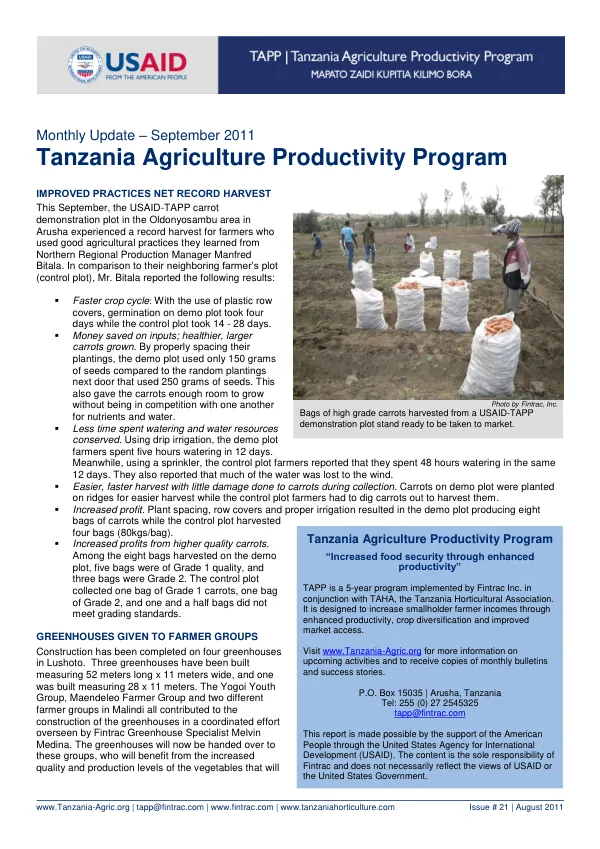
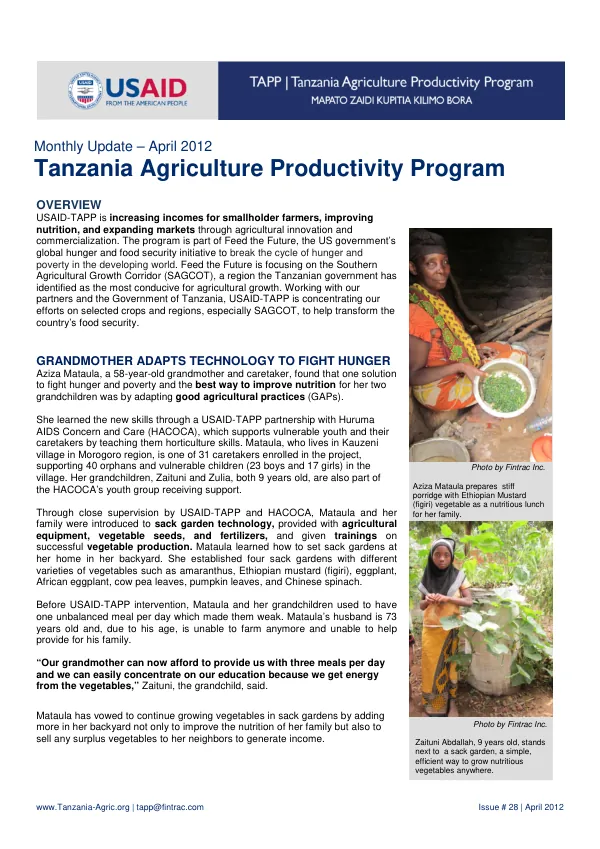
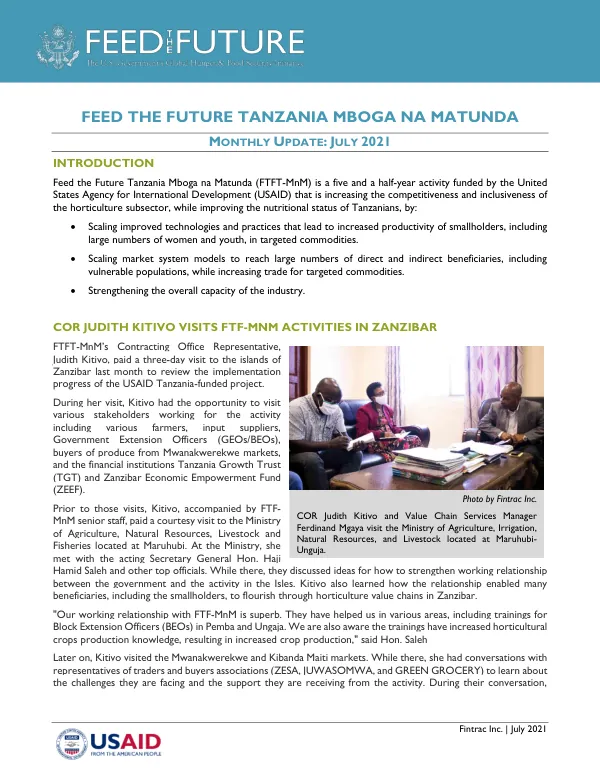
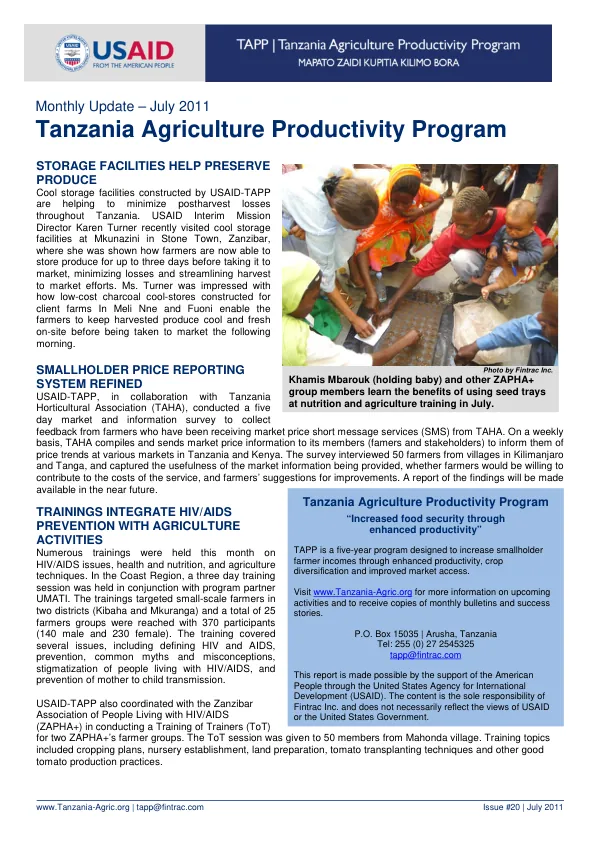
Launched in 2011, the program aims to address the challenges faced by smallholder farmers in Tanzania, including soil degradation, limited market access, and postharvest losses. Cool storage facilities constructed by USAID-TAPP are helping to minimize postharvest losses throughout Tanzania. These facilities, which use low-cost charcoal cool-stores, enable farmers to store produce for up to three days before taking it to market, thereby reducing losses and streamlining harvest-to-market efforts. USAID Interim Mission Director Karen Turner recently visited cool storage facilities at Mkunazini in Stone Town, Zanzibar, where she observed firsthand how farmers are benefiting from these facilities. USAID-TAPP, in collaboration with the Tanzania Horticultural Association (TAHA), conducted a five-day market and information survey to collect feedback from farmers who have been receiving market price short message services (SMS) from TAHA. The survey interviewed 50 farmers from villages in Kilimanjaro and Tanga, capturing the usefulness of the market information being provided, whether farmers would be willing to contribute to the costs of the service, and farmers' suggestions for improvements. A report of the findings will be made available in the near future. Numerous trainings were held this month on HIV/AIDS issues, health and nutrition, and agriculture techniques. In the Coast Region, a three-day training session was held in conjunction with program partner UMATI, targeting small-scale farmers in two districts (Kibaha and Mkuranga) and reaching a total of 25 farmer groups with 370 participants (140 male and 230 female). The training covered several issues, including defining HIV and AIDS, prevention, common myths and misconceptions, stigmatization of people living with HIV/AIDS, and prevention of mother-to-child transmission. USAID-TAPP also coordinated with the Zanzibar Association of People Living with HIV/AIDS (ZAPHA+) in conducting a Training of Trainers (ToT) for two ZAPHA+ farmer groups, covering topics such as cropping plans, nursery establishment, land preparation, tomato transplanting techniques, and other good tomato production practices. New value chains have been identified for smallholder production, with vanilla being an expensive and relatively rare commodity with great international demand. Thanks to efforts made by USAID-TAPP, hundreds of smallholder farmers will soon benefit from their integration in the vanilla production value chain. A cooperation agreement was facilitated between two leading vanilla producing organizations - the Kilimanjaro Vanilla Growers Cooperative Society (CHAWAVAKI) and the Farmers' Development Association (MAYAWA) in Kagera. The goal of the new partnership is for 530 farmers to produce over 98,000kg of vanilla to be processed and sold over the next five years.
Related documents