FEED THE FUTURE
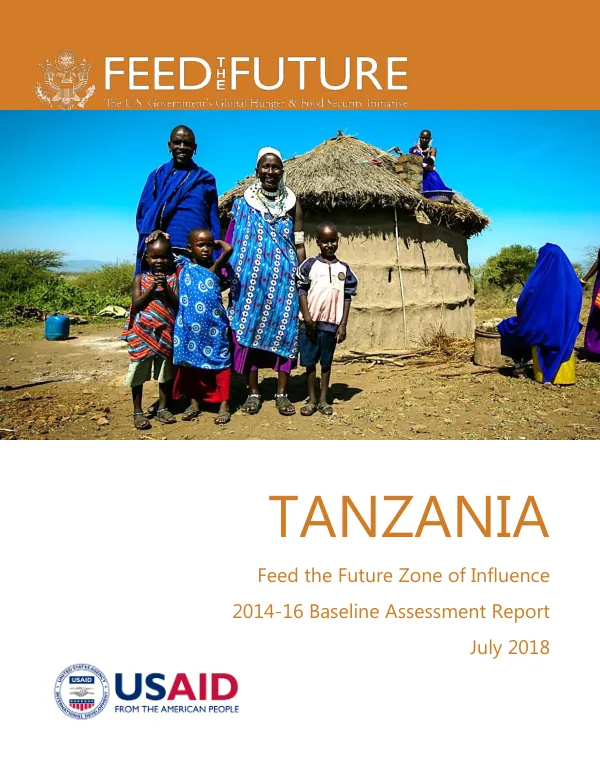
Tanzania - Feed the Future Zone of Influence 2014-16 Baseline Assessment Report
The Feed the Future Zone of Influence in Tanzania is a geographic area targeted by the U.S.
2018 · 87 pages
Sign in to readA free account is required to download.
Abstract
Government's Global Hunger and Food Security Initiative. The initiative aims to improve agricultural productivity, enhance market access, and increase income for smallholder farmers. The Feed the Future Tanzania Baseline Report provides a comprehensive assessment of the zone's baseline conditions in 2014-16. The report highlights the zone's demographic characteristics, including a population of approximately 2.5 million people, with a majority residing in rural areas. The population is predominantly engaged in agriculture, with a significant proportion of households relying on subsistence farming. The report also notes that the zone has a high prevalence of poverty, with over 70% of households living below the poverty line. In terms of agricultural productivity, the report indicates that crop yields in the zone are below regional benchmarks, with maize and beans being the primary staple crops. The report also notes that irrigation is limited, with only a small proportion of households using this technology. The zone's agricultural sector is characterized by a high level of fragmentation, with many smallholder farmers operating on small plots of land. The report highlights the importance of nutrition and dietary diversity in the zone. It notes that a significant proportion of children under the age of 5 suffer from stunting, wasting, and underweight conditions, indicating poor nutritional status. The report also notes that women of reproductive age have a high prevalence of anemia, which is a significant public health concern. The report provides a detailed analysis of the zone's baseline conditions, including data on household demographics, agricultural productivity, nutrition, and dietary diversity. The data are based on secondary sources, including the Tanzania National Panel Survey (TZNPS) and the Tanzania Demographic and Health Survey (TDHS). The report also includes a list of tables and appendices that provide additional data and information on the zone's baseline conditions. The report's findings have significant implications for the design and implementation of Feed the Future interventions in the zone. The data highlight the need for interventions that address the zone's agricultural productivity constraints, improve market access, and enhance nutrition and dietary diversity. The report also notes the importance of targeting interventions towards vulnerable populations, including women and children. Overall, the Feed the Future Tanzania Baseline Report provides a comprehensive assessment of the zone's baseline conditions, highlighting the need for targeted interventions to improve agricultural productivity, enhance market access, and increase income for smallholder farmers. The report's findings have significant implications for the design and implementation of Feed the Future interventions in the zone. The report's methodology involved the collection and analysis of secondary data from various sources, including the TZNPS and TDHS. The data were analyzed to provide a comprehensive assessment of the zone's baseline conditions, including demographic characteristics, agricultural productivity, nutrition, and dietary diversity. The report's recommendations for Feed the Future interventions in the zone include: * Improving agricultural productivity through the introduction of new technologies and practices * Enhancing market access through the development of infrastructure and market linkages * Increasing income for smallholder farmers through the provision of training and support services * Improving nutrition and dietary diversity through the promotion of healthy eating habits and the provision of nutrition education