FINTRAC
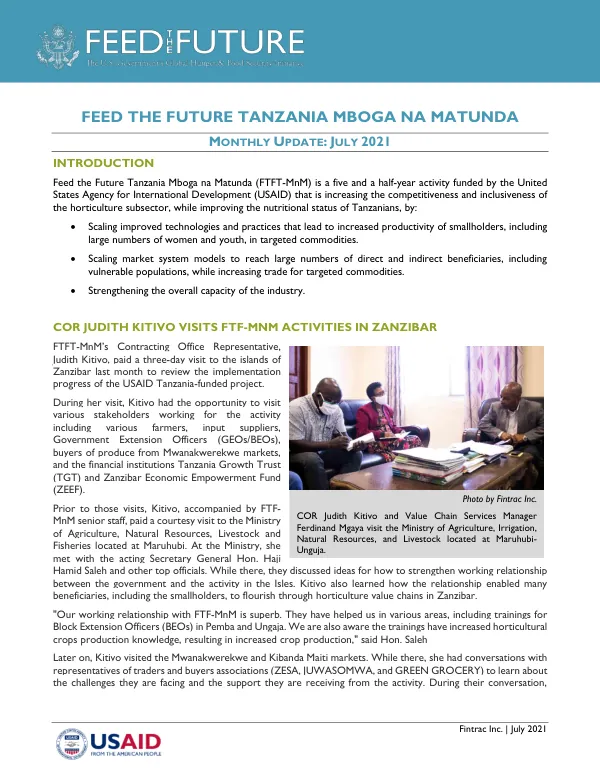
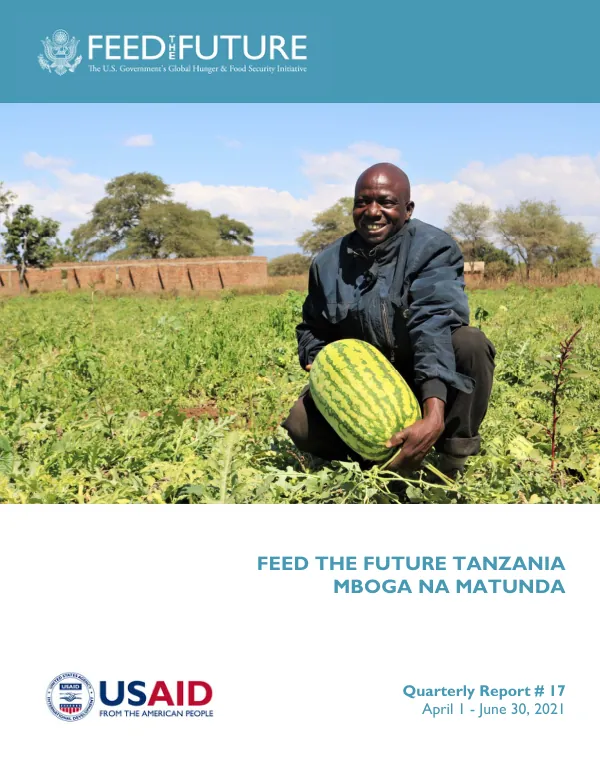
Feed the Future Tanzania Mboga na Matunda | Quarterly Report #17
The Feed the Future Tanzania Mboga na Matunda Activity (FTFT-MnM) is a five-and-a-half-year initiative funded by the United States Agency for International Development (USAID).
2021 · 90 pages
Sign in to readA free account is required to download.
Abstract
The purpose of FTFT-MnM is to increase the productivity and profitability of horticulture value chains while integrating large numbers of women and youth and improving the nutritional status of Tanzanians. The activity achieves this by scaling nutrition-sensitive improved technologies and practices that lead to increased productivity, scaling market system models that serve as platforms for increasing technology, while enabling access to resources needed to improve productivity and profitability, and strengthening the overall capacity of the horticulture subsector through investments along the entire value chain. The activity operates in six regions of Tanzania, including Morogoro, Iringa, Songwe, Mbeya, and Zanzibar, with a focus on improving the productivity and profitability of horticulture value chains. The activity targets smallholder farmers, particularly women and youth, to increase their participation in the horticulture sector and improve their livelihoods. The activity also aims to improve the nutritional status of Tanzanians by promoting the consumption of nutritious fruits and vegetables. The FTFT-MnM activity has made significant progress in achieving its objectives. During the reporting period of April 1, 2021, to June 30, 2021, the activity implemented various interventions to improve the productivity and profitability of horticulture value chains. These interventions included the distribution of improved seeds and fertilizers to smallholder farmers, the provision of training on good agricultural practices, and the establishment of market linkages to increase farmers' access to markets. The activity also made progress in integrating women and youth into the horticulture sector. During the reporting period, the activity trained over 1,000 women and youth on horticulture production and marketing skills, and provided them with access to credit and other financial services. The activity also established a women's cooperative in the Morogoro region, which has enabled women to access markets and improve their livelihoods. In terms of nutritional outcomes, the activity made progress in promoting the consumption of nutritious fruits and vegetables. During the reporting period, the activity distributed over 10,000 kilograms of nutritious fruits and vegetables to smallholder farmers, and provided them with training on how to promote the consumption of these products in their communities. The FTFT-MnM activity has also made progress in strengthening the overall capacity of the horticulture subsector. During the reporting period, the activity provided training to over 500 extension agents on horticulture production and marketing skills, and established a horticulture extension service in the Iringa region. The activity also established a horticulture market information system, which provides farmers with real-time market information and enables them to make informed decisions about their production and marketing activities. Overall, the FTFT-MnM activity has made significant progress in achieving its objectives and improving the productivity and profitability of horticulture value chains in Tanzania. The activity has also made progress in integrating women and youth into the horticulture sector and promoting the consumption of nutritious fruits and vegetables.