USAID DEC
TB Brochure 2017 English
Tuberculosis (TB) is a disease caused by bacteria that commonly affects the lungs, but can also affect other parts of the body.
2017 · 2 pages
Sign in to readA free account is required to download.
Abstract
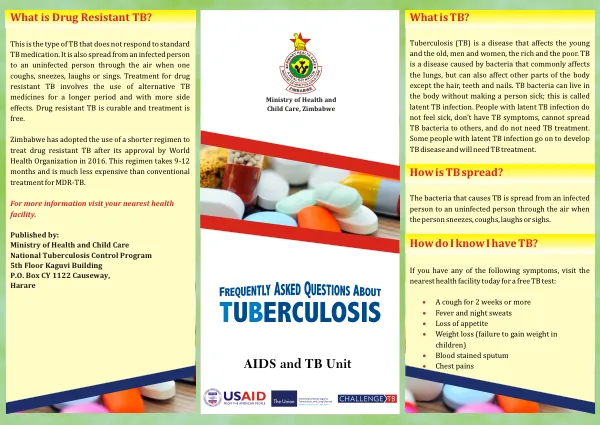
The bacteria can live in the body without making a person sick, a condition known as latent TB infection. People with latent TB infection do not feel sick, do not have TB symptoms, cannot spread TB bacteria to others, and do not need TB treatment. However, some people with latent TB infection go on to develop TB disease and will need TB treatment. TB is spread from an infected person to an uninfected person through the air when the person sneezes, coughs, laughs, or sighs. The disease affects everyone, but certain groups have a greater chance of developing TB, including children, elderly people, healthcare workers, prisoners, miners, diabetic people, people with malnutrition, people living with HIV, and those living and working in poorly ventilated and overcrowded places. TB can be diagnosed using various tests, including sputum microscopy, GeneXpert, chest x-ray, and the TB skin test (Mantoux test). The treatment for TB is provided free of charge at all public health facilities and typically lasts for six months. Completing the entire course of medication is crucial to prevent the development of drug resistance complications. If not treated, TB can be fatal. TB is closely linked to HIV, and persons living with HIV without TB disease are initiated on Isoniazid Preventive Therapy (IPT), a free course of treatment that protects them from developing active TB disease. IPT is also given to children under five years of age who are contacts of persons with active TB disease to protect them from developing the disease. To avoid spreading TB, it is essential to cover the mouth with the inside of the elbow or a clean handkerchief or tissue when coughing or sneezing, carefully dispose of used tissues, leave windows open to keep rooms well ventilated, and ensure that the entire course of medication is completed. TB medication can cause side effects, including nausea and vomiting, skin itch and rash, yellow eyes, and pain and burning sensation of the hands and feet. If any of these problems occur while on treatment for TB, it is crucial to inform the treatment observer or visit the nearest health facility immediately.