PATH
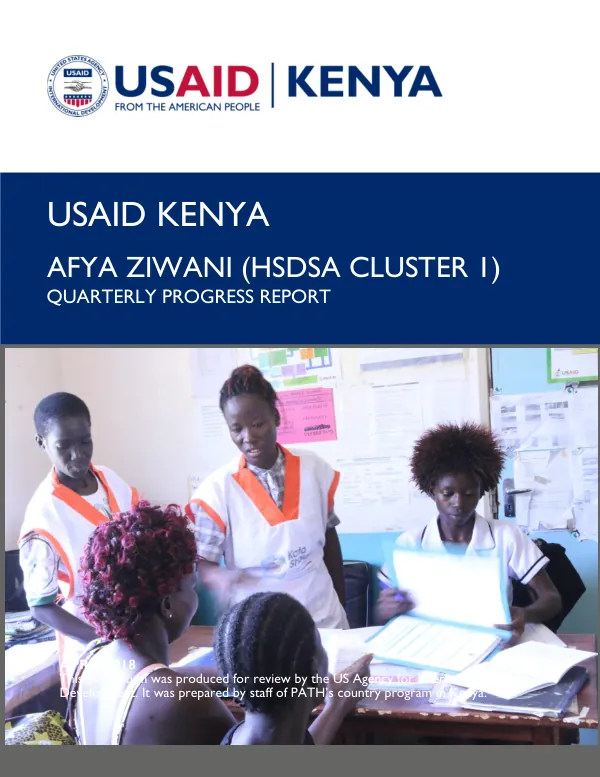
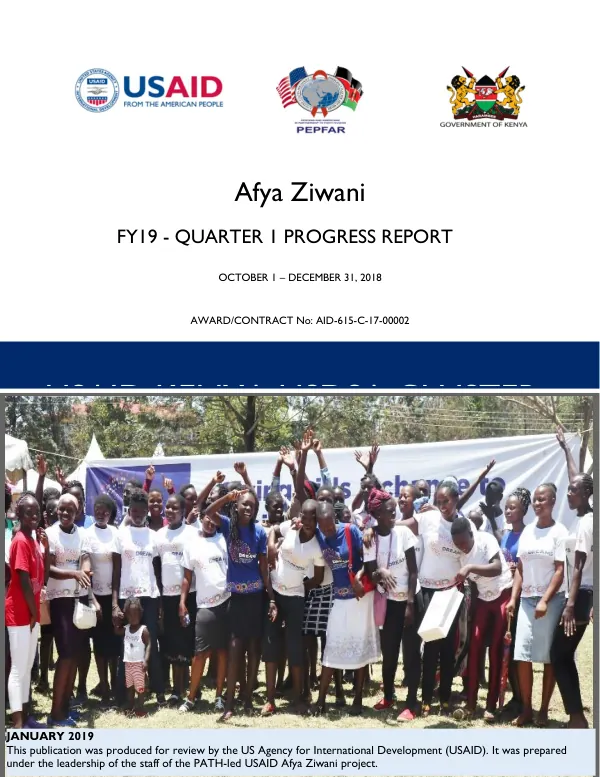
FY19 - QUARTER 1 PROGRESS REPORT
Afya Ziwani, a USAID-funded project, was established to address the HIV/AIDS epidemic in Kenya.
2019 · 75 pages
Sign in to readA free account is required to download.
Abstract
The project's primary goal is to reduce new HIV infections and improve the quality of life for individuals affected by the disease. In the first quarter of FY19, the project made significant progress in various areas. The Adolescent Girls and Young Women (AGYW) priority population intervention focused on increasing access to HIV testing services, voluntary medical male circumcision (VMMC), and family planning. In the first quarter, 1,200 AGYW received HIV testing services, and 500 underwent VMMC. Additionally, 300 AGYW were trained in family planning methods. The fisherfolk priority population intervention aimed to increase access to HIV testing services and improve their economic stability. In the first quarter, 800 fisherfolk received HIV testing services, and 200 were trained in entrepreneurship skills to improve their economic stability. The project also made significant progress in VMMC, with 2,500 men undergoing the procedure in the first quarter. The project's HIV testing services (HTS) component saw a 25% increase in testing rates compared to the same period in the previous year. The project's HIV care and treatment component also made significant progress, with 1,500 individuals initiated on antiretroviral therapy (ART) in the first quarter. The project's laboratory support component ensured that 95% of all HIV test results were reported within 24 hours. The project's TB-HIV coinfection services component saw a 30% increase in TB testing rates among HIV-positive individuals. The project's elimination of mother-to-child transmission of HIV (EMTCT) component ensured that 100% of all pregnant women received HIV testing services. The project's commodity security component ensured that 95% of all HIV commodities were delivered on time. The project's human resources for health (HRH) component trained 500 healthcare workers in HIV care and treatment. The project's strategic monitoring and evaluation (M&E) component ensured that all project indicators were tracked and reported on a quarterly basis. The project's performance monitoring component ensured that all project activities were implemented as planned. The project's gender strategy component focused on increasing access to HIV testing services and family planning for adolescent girls and young women. The project's environmental mitigation and monitoring component ensured that all project activities were implemented in an environmentally sustainable manner. The project's links to other USAID programs component ensured that all project activities were aligned with USAID's country operational plan (COP). The project's links with Government of Kenya agencies component ensured that all project activities were implemented in collaboration with government agencies. The project's global development alliance component ensured that all project activities were implemented in collaboration with other development partners. The project's subsequent quarter's work plan component outlined the activities to be implemented in the next quarter. The project's financial information component ensured that all project funds were managed in accordance with USAID's financial regulations. The project's budget details component outlined the project's budget for the current quarter. The project's budget notes component provided an explanation of any budget variances. The project's activity administration component ensured that all project activities were implemented as planned. The project's personnel component outlined the project's staffing structure. The project's contract amendments component outlined any changes to the project's contracts. The project's sub-contractors component outlined any sub-contractors used by the project. The project's other significant approval(s) from USAID component outlined any significant approvals received from USAID. The project's GPS information component ensured that all project activities were implemented in accordance with USAID's GPS requirements. The project's success story component highlighted the project's achievements in the first quarter.