FINTRAC
Technical Bulletin #04: Agrochemical General Information Sheet - Chlorothalonil
Chlorothalonil is a broad-spectrum, contact, or protectant fungicide with long residual activity.
2011 · 2 pages
Sign in to readA free account is required to download.
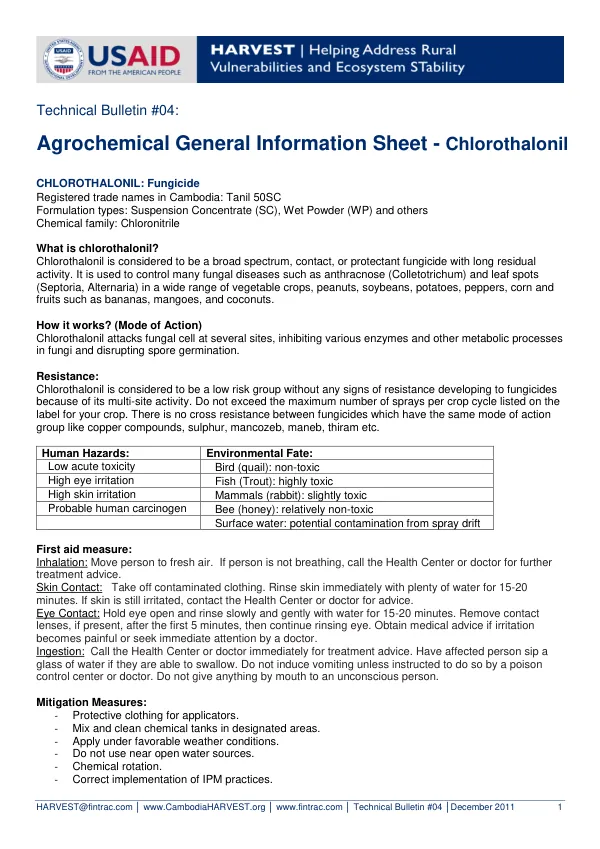
Abstract
It is used to control various fungal diseases in a wide range of vegetable crops, including tomatoes, cucumbers, and peanuts, as well as fruits such as bananas, mangoes, and coconuts. Chlorothalonil attacks fungal cells at multiple sites, inhibiting enzymes and disrupting spore germination. The fungicide is considered to be a low-risk group with no signs of resistance developing due to its multi-site activity. However, it is essential to follow the recommended maximum number of sprays per crop cycle to prevent the development of resistance. Chlorothalonil does not exhibit cross-resistance with fungicides that have the same mode of action, such as copper compounds, sulphur, mancozeb, maneb, and thiram. Chlorothalonil has low acute toxicity to birds and mammals but is highly toxic to fish. It also causes high eye and skin irritation in humans and is classified as a probable human carcinogen. The fungicide can contaminate surface water through spray drift, posing a potential environmental hazard. Proper handling and application of chlorothalonil are crucial to minimize risks to human health and the environment. Protective clothing for applicators, proper mixing and cleaning of chemical tanks, and application under favorable weather conditions are essential mitigation measures. Additionally, avoiding the use of chlorothalonil near open water sources and implementing integrated pest management (IPM) practices can help reduce the risks associated with its use. Chlorothalonil is registered for use in Cambodia under the trade name Tanil 50SC, and its recommended rate is 30-35 milliliters per tank of 16 liters, sufficient to spray 500 square meters. The fungicide can be applied every 7-10 days if necessary, targeting young leaves on the underside of the plant in the vegetative stage. Chlorothalonil is effective against various fungal diseases, including leaf blotch, downy mildew, and fruit necrosis.
Related documents