CORE GROUP
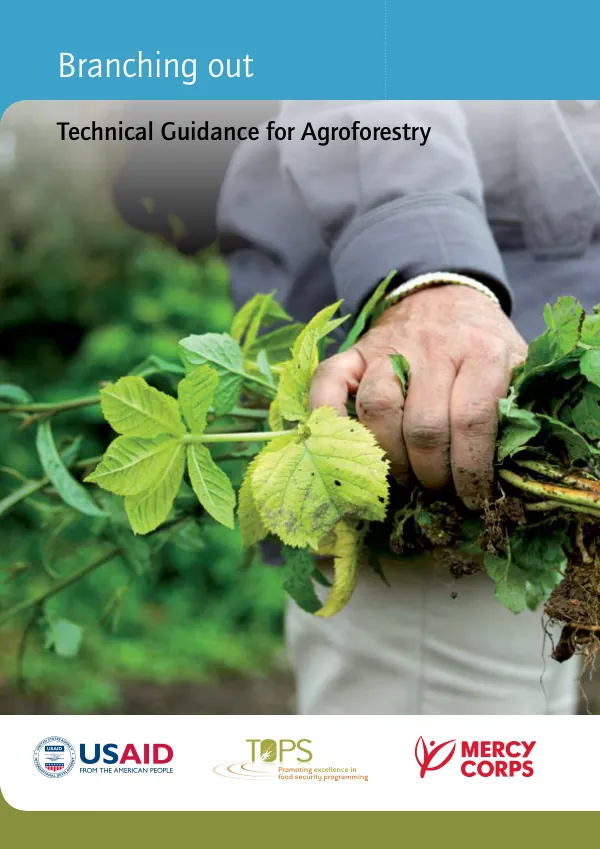
Technical Guidance for Agroforestry
The Technical and Operational Performance Support (TOPS) Program is a USAID/Food for Peace-funded learning mechanism that generates, captures, disseminates, and applies the highest quality information, knowledge, and promising practices in development food assistance programming.
2016 · 16 pages
Sign in to readA free account is required to download.
Abstract
The program empowers food security implementers and the donor community to make lasting impact for millions of the world's most vulnerable people. Agroforestry is a key component of the TOPS Program, and it involves the combining of agriculture and forestry in farming systems. Agroforestry has many benefits, including increased and diversified products, reduced input costs, increased financial returns, and more resilient, diversified systems for crop production and animal grazing. Environmental benefits include improved soil fertility, reduced soil erosion, improved water conservation, and increased crop and livestock protection from wind. Social benefits include improved health and nutrition, labor and cost savings for firewood and fodder, and adoption of successful agroforestry systems. To promote agroforestry, it is essential to ensure that smallholder farmers understand the long-term benefits of trees in farming. This can be achieved by promoting the benefits to farmers, encouraging short-, medium-, and long-term tree crops, and providing technical advice on planting and caring for seedlings. Sustainable local nurseries are also a critical element of a good agroforestry program, as they provide farmers with access to the species they prefer and that are appropriate for the local environment. Farmer-owned, self-supporting nursery businesses are a key component of a successful agroforestry program. These nurseries must offer the species that farmers prefer and that are appropriate for the local environment. Fruit trees are often the most popular, especially if they are grafted, and where there is a strong market for timber, wood species are popular. An agroforestry program is not likely to succeed where farmers are not willing to pay for seedlings, unless demand can be stimulated. When choosing the right location for planting, it is essential that the people caring for the trees have ownership or harvesting rights. Planting on communal land can be an option, but it has its challenges, and tree planting works best on private land where the trees are cared for by the owners. Farmers without land tenure are often discouraged from tree planting and care, as they have no guarantee of reaping benefits. Before planting, farmers may want clear and public recognition of their rights to the trees they plant from relevant authorities, even if they do not hold a formal land title. The TOPS Program has developed several key tools to support agroforestry, including a good nursery practices guide, a training manual for applied agroforestry practices, and an agroforestry guide for field practitioners. These resources provide practical advice on promoting and supporting agroforestry, and key resources for further reading. By promoting agroforestry and providing farmers with the knowledge and resources they need to succeed, the TOPS Program aims to improve the livelihoods of smallholder farmers and contribute to the global effort to reduce hunger and poverty.