USAID
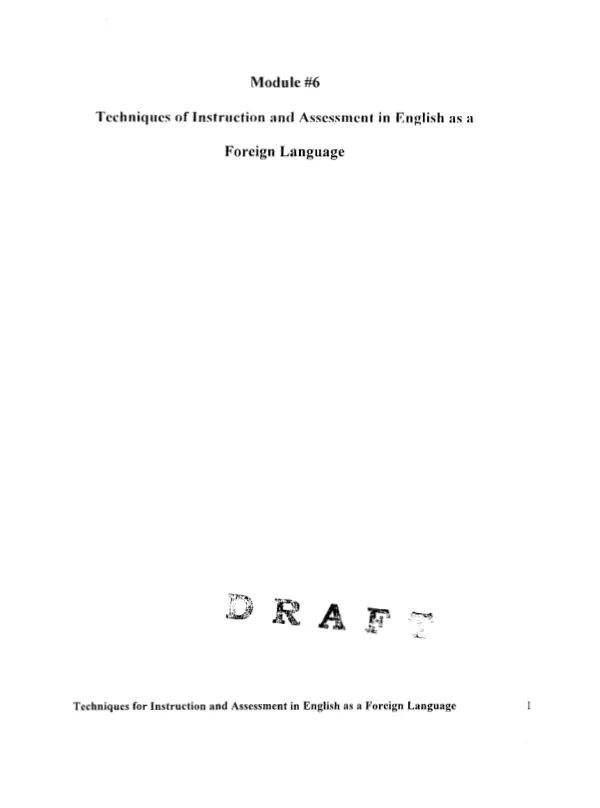
Techniques for Instruction and Assessment in English as a Foreign Language
The constructivist approach to learning emphasizes the importance of active engagement and participation in the learning process.
62 pages
Sign in to readA free account is required to download.
Abstract
This approach suggests that students learn best when they are able to connect new information with their personal lives and experiences, as well as with what they already know. The constructivist framework for learning and teaching consists of three phases: Activate Background Knowledge, Construct Meaning, and Evaluate and Apply. In the first phase, Activate Background Knowledge, the teacher helps students recall what they already know about a topic through discussion and other activities. This phase is designed to encourage students to develop a real purpose for learning new information and to show them how English can be connected to their everyday lives. The second phase, Construct Meaning, involves the teacher presenting new knowledge or skills and helping students discover what the knowledge or skills mean to them. This phase is an opportunity for students to find answers to questions in textbooks, questions from the teacher, and to learn to answer their own questions. The third phase, Evaluate and Apply, includes techniques that help the teacher and the student work together to evaluate the learning that has taken place. This phase is designed to help students remember and reorganize important information, ideas, and their relationships that they have learned from the lesson. The teacher should also help students connect what they have learned to their daily lives and reflect on their learning. Several techniques are used to support the constructivist approach, including the use of graphic organizers, jigsaw activities, think-alouds, and projects and demonstrations. Graphic organizers are visual representations of knowledge, concepts, or ideas that help engage students and relieve boredom. Jigsaw activities involve students working in groups to gather information on a subset of questions or topics and then sharing their knowledge with the rest of the class. Think-alouds involve a teacher or student "thinking out loud" and talking through their ideas as they complete a task or solve a problem. The cluster map is a technique that helps students organize ideas and information and see similarities and differences between different ideas or different pieces of information. The KWL strategy is a technique that helps students activate what they already know before beginning a lesson, think about what they would like to know about a topic, and then reflect on what they have learned after the lesson. Inquiry is a strategy in which students conduct independent research about a topic, using a variety of sources such as the internet, encyclopedias, books, or magazines. Projects and demonstrations are strategic activities that students undertake to learn new knowledge, skills, or concepts. These activities generally ask students to gather and present knowledge or concepts in an interesting way, such as creating or building something. The purpose of this module is to introduce teachers to a variety of teaching techniques and strategies that can be used to support lessons in teaching English as a Foreign Language. The module draws on principles of reflective practice and constructivist models of teaching and is designed to encourage students to become more active and independent learners.
Related documents