TETRA TECH
Territorial Development Strategy of Fier Municipality
In the Republic of Albania, the Municipality of Fier has developed a strategic plan for territorial development.
2016 · 219 pages
Sign in to readA free account is required to download.
Abstract
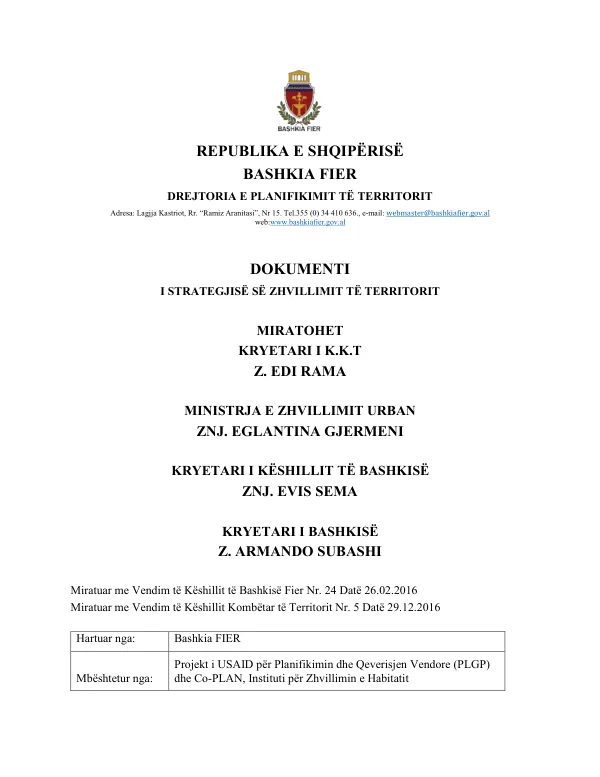
The plan was approved by the Municipal Council on February 26, 2016, and by the National Territorial Council on December 29, 2016. The plan was prepared by the Municipality of Fier, with support from the USAID Local Governance Project and Co-PLAN, the Institute for Habitat Development. The plan identifies several challenges facing the Municipality of Fier, including soil degradation, limited market access, and inadequate infrastructure. The municipality is located in a region with a rich cultural and natural heritage, including archaeological sites, forests, and agricultural land. The plan emphasizes the importance of sustainable development, economic growth, and social welfare. The plan outlines several key objectives, including the development of a regional concept for territorial development, the implementation of a territorial management plan, and the promotion of economic growth and social welfare. The plan also identifies several priority projects, including the development of infrastructure, the promotion of agriculture and tourism, and the protection of the environment. The Municipality of Fier is located in a region with a diverse geography and climate, with a range of ecosystems and natural resources. The plan emphasizes the importance of preserving the natural environment and promoting sustainable development. The plan also highlights the need for improved infrastructure, including roads, water supply, and sanitation systems. The plan was developed through a participatory process involving local stakeholders, including residents, businesses, and community groups. The plan emphasizes the importance of community engagement and participation in the development process. The plan also identifies several key indicators for measuring progress and evaluating the effectiveness of the plan. The plan emphasizes the importance of sustainable development, economic growth, and social welfare. The plan also highlights the need for improved infrastructure, including roads, water supply, and sanitation systems. The plan was developed through a participatory process involving local stakeholders, including residents, businesses, and community groups. The plan identifies several key indicators for measuring progress and evaluating the effectiveness of the plan. The plan also outlines several key strategies for achieving its objectives, including the development of a regional concept for territorial development, the implementation of a territorial management plan, and the promotion of economic growth and social welfare.