USAID DEC
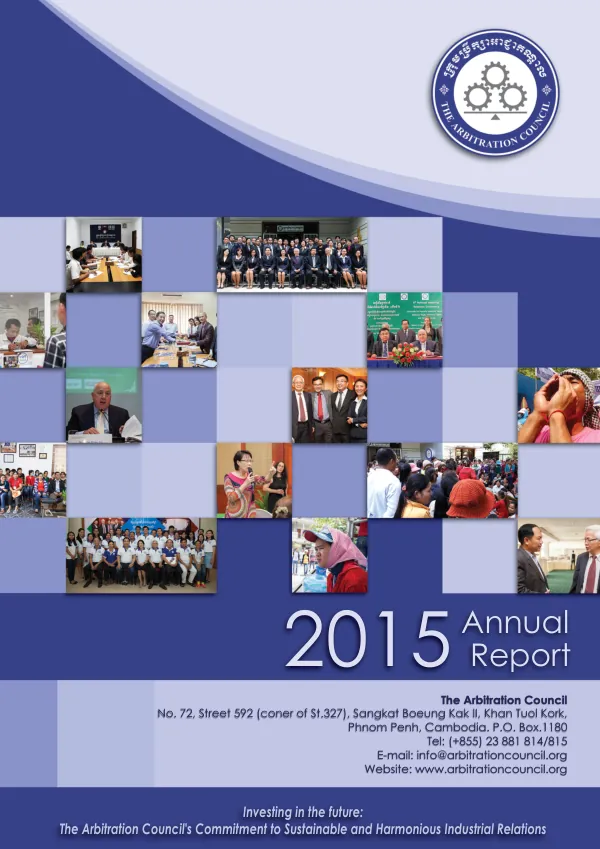
The Arbitration Council Annual Report 2015
The Arbitration Council's commitment to sustainable and harmonious industrial relations is a key focus of its operations.
2015 · 41 pages
Sign in to readA free account is required to download.
Abstract
The council's caseload has consistently increased over the years, with a significant proportion of cases related to the garment and footwear industry. In 2015, the council handled 88% of industry disputes, with a resolution success rate of 76%. The Arbitration Council's history dates back to 2003, with a total of 2,408 registered cases and 1,648 arbitral awards issued between 2003 and 2015. The council's services have benefited over 9 million workers, with a significant proportion of cases resolved through agreements reached between employers and employees. The council's commitment to professionalism and independence has been recognized by international organizations, including the Asia Development Bank and the International Labour Organization. The council's services are provided free of charge to employers and employees, with the Arbitration Council Foundation (ACF) responsible for fundraising, administration, training, and providing legal and technical support. The ACF has initiated fee-based training activities and publications to support longer-term sustainability, but the institutions are far from self-sufficient. Concerns have been raised about the sustainability of the current financing system for the future of the Arbitration Council. The council's commitment to dispute prevention and workplace cooperation is a key aspect of its operations. The council's services are designed to promote industrial peace and a more just and economically vibrant Cambodia. The council's goal is to provide quality dispute resolution services to employers and employees, with a focus on promoting sustainable and harmonious industrial relations. The Arbitration Council's sustainability challenges are a key focus of its operations. The council's Executive Management Team (EMT) is confident in calling on all stakeholders to consider participating in implementing the ACF Sustainability Action Plan to sustain the council for the foreseeable future. The council's commitment to continual improvement of Cambodia's industrial relations system is a key aspect of its operations, with a focus on promoting quality dispute resolution services to employers and employees.