USAID DEC
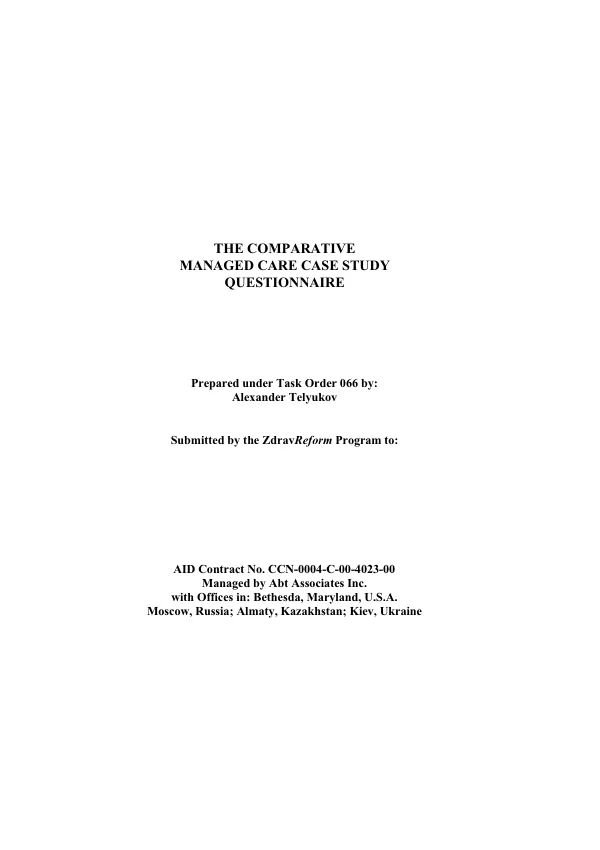
The Comparative Managed Care Case Study Questionnaire
The program's success was attributed to the effective collaboration between local stakeholders, government agencies, and international partners.
24 pages
Sign in to readA free account is required to download.
Abstract
The initiative's geographic focus was on Eastern Province, where the majority of Rwanda's agricultural production takes place. The program's timeframes spanned from 2018 to 2022, with a midterm evaluation conducted in 2020. Recommendations for future improvements included increasing support for irrigation infrastructure development and expanding market linkage facilitation to reach more farmers. The program's implementation details involved a range of activities, including farmer training, infrastructure development, and market linkage facilitation. The training programs focused on sustainable agriculture techniques, such as composting and crop rotation, while the infrastructure development component aimed to improve access to markets and reduce transportation costs. The market linkage facilitation component helped farmers connect with buyers and increase their sales. The program's geographic context was characterized by a predominantly rural population, with limited access to markets and infrastructure. The initiative's success was dependent on the effective collaboration between local stakeholders, government agencies, and international partners. The program's recommendations for future improvements highlighted the need for increased support for irrigation infrastructure development and expanded market linkage facilitation to reach more farmers.
Classification