USAID DEC
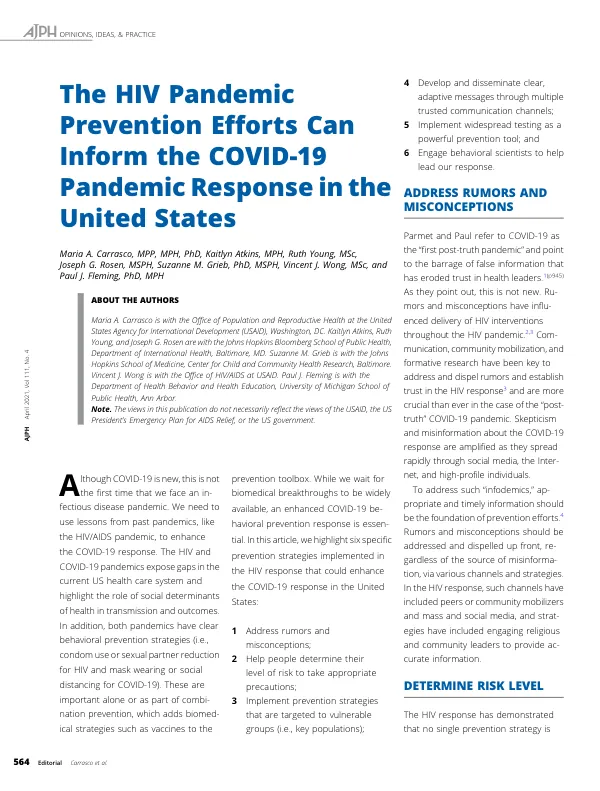
The HIV Pandemic Prevention Efforts Can Inform the COVID-19 Pandemic Response in the United States
Sign inJOHNS HOPKINS UNIVERSITY BLOOMBERG SCHOOL OF PUBLIC HEALTH/INFO PROJECT
The HIV Pandemic Prevention Efforts Can Inform the COVID-19 Pandemic Response in the United States
The HIV pandemic has provided valuable lessons for the COVID-19 pandemic response in the United States.
2021 · 5 pages
Sign in to readA free account is required to download.
Abstract
The HIV and COVID-19 pandemics share commonalities, including gaps in the current US healthcare system and the role of social determinants of health in transmission and outcomes. Both pandemics have clear behavioral prevention strategies, such as condom use or sexual partner reduction for HIV and mask wearing or social distancing for COVID-19. The HIV response has demonstrated that no single prevention strategy is universally acceptable, appropriate, and effective. Instead, policymakers should contextualize prevention strategies in consultation with medical, public health, and health behavior experts. Prevention measures should also acknowledge the spectrum of COVID-19 risk, recognizing that abstaining from nonhousehold contacts is not possible for many and may present further risks. Targeted interventions have been successful in addressing HIV prevention and treatment among key populations who remain disproportionately affected by HIV. Similarly, COVID-19 has made economic and racial disparities highly visible, and targeted interventions should prioritize resource allocation based on need and allow focused messaging addressing population-specific concerns. For example, community testing sites can provide access to quick testing, letters documenting testing date and negative results, supplies such as masks, and information about relevant community resources. Throughout the HIV response, community-led initiatives have played a key role in curbing outbreaks. To reach vulnerable communities and ensure strategies are trusted, appropriate, and effective, COVID-19 prevention efforts should be similarly community-led. Clear, adaptive messaging through multiple channels has been crucial in promoting intervention uptake in the HIV response. Successful HIV prevention campaigns have identified and engaged trusted information sources, from religious leaders to peers, in combination with other outlets such as mass media. The HIV response has also highlighted the importance of widespread testing as a powerful prevention tool. HIV testing has remained at the core of global efforts to end the HIV pandemic, and similar elements of HIV testing programs can be drawn upon for COVID-19 testing. Widespread access to quality rapid diagnostics, appropriate algorithms, and immediate results and self-testing are essential for effective COVID-19 testing programs. In the context of the COVID-19 pandemic, addressing rumors and misconceptions is critical to preventing the spread of misinformation. The HIV response has demonstrated that communication, community mobilization, and formative research are key to addressing and dispelling rumors and establishing trust in the response. Similarly, determining an individual's level of risk and providing targeted prevention strategies are essential for effective COVID-19 prevention efforts. The HIV response has also shown that prevention strategies should be tailored to the specific needs and characteristics of different populations. Targeted interventions should prioritize resource allocation based on need and allow focused messaging addressing population-specific concerns. For example, community testing sites can provide access to quick testing, letters documenting testing date and negative results, supplies such as masks, and information about relevant community resources. Ultimately, the HIV pandemic has provided valuable lessons for the COVID-19 pandemic response in the United States. By applying these lessons, policymakers and health authorities can develop effective prevention strategies that address the unique needs and challenges of different populations and promote widespread intervention adoption.
Related documents
Documents in this collection
USAID DEC
Design, Implementation, Monitoring, and Evaluation of Cross-Cultural HIV-Related Mental Health and Psychosocial Assistance Programs: A User’s Manual for Researchers and Program Implementers (Adult Version)
Open record
USAID DEC