USAID DEC
The impact of quality improvement projects on TB treatment outcomes in Piggs Peak Hospital, Swaziland
Sign inENCOMPASS, LLC
The impact of quality improvement projects on TB treatment outcomes in Piggs Peak Hospital, Swaziland
TB is the most common opportunistic infection for people living with HIV in Swaziland.
2016 · 2 pages
Sign in to readA free account is required to download.
Abstract
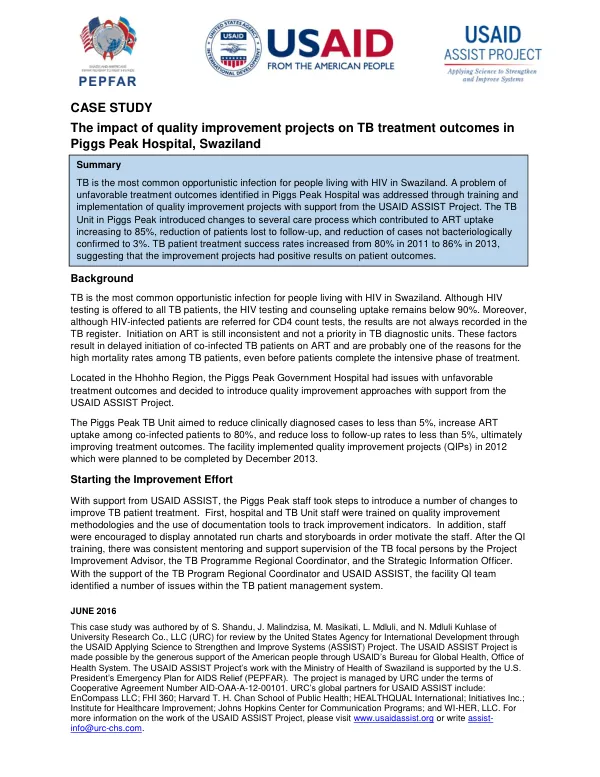
The Piggs Peak Hospital, located in the Hhohho Region, had issues with unfavorable treatment outcomes, including high mortality rates among TB patients. To address these challenges, the hospital introduced quality improvement projects with support from the USAID ASSIST Project. The Piggs Peak TB Unit aimed to reduce clinically diagnosed cases to less than 5%, increase ART uptake among co-infected patients to 80%, and reduce loss to follow-up rates to less than 5%. The facility implemented quality improvement projects in 2012, which were planned to be completed by December 2013. The QIPs focused on improving TB patient treatment outcomes through several key interventions. The TB Unit introduced several changes to address unfavorable treatment outcomes, including strengthened documentation, nurse-led ART initiation, the introduction of the GeneXpert Machine, and improved patient follow-up and adherence. The hospital management assigned a medical officer to examine TB patients on completion of treatment, and collaborative learning and sharing sessions were established to provide feedback and identify gaps in performance. Data were collected for patients enrolled on TB treatment between January and December 2012, and treatment outcomes were routinely collected into a QI team documentation journal to monitor trends over time. The key variables collected were treatment outcomes, including cured, completed, died, lost to follow-up, or defaulted and treatment failure. The treatment success rates showed improvement over time from 80% in 2011 to 86% in 2013, achieving the WHO recommendation of 85%. The cure rates ranged from 70% to 76%, and the loss to follow-up rate remained at 0% during the period of evaluation. The introduction of QI methods led to improved treatment outcomes, and the TB Unit found that successfully implementing and sustaining better performance was crucial for achieving good treatment outcomes. The facility staff also emphasized the importance of ensuring that the majority of patients enrolled on treatment are bacteriologically confirmed and that smear follow-up is done for good treatment outcomes. A motivated and committed staff was vital to initiate improvement efforts and sustain good TB-HIV treatment performance.
Related documents