ICF
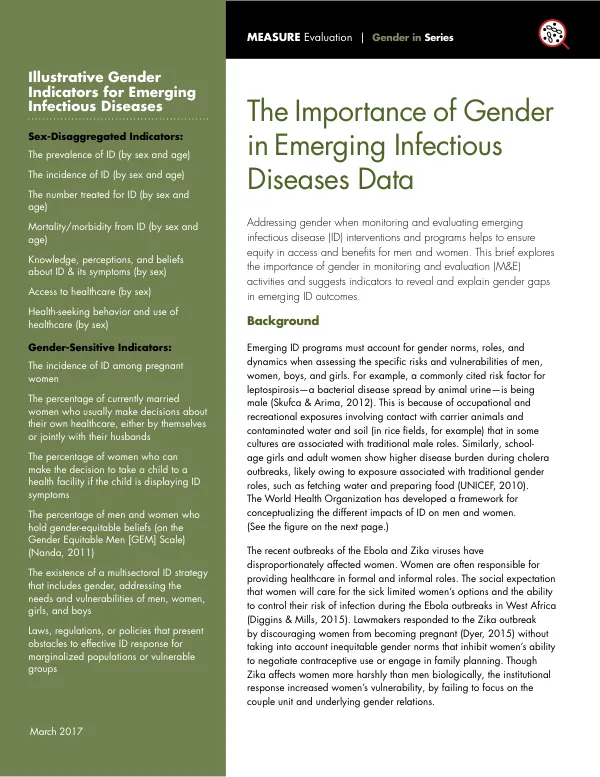
The Importance of Gender in Emerging Infectious Diseases Data
Emerging infectious disease (ID) programs must account for gender norms, roles, and dynamics when assessing the specific risks and vulnerabilities of men, women, boys, and girls.
2017 · 4 pages
Sign in to readA free account is required to download.
Abstract
For example, a commonly cited risk factor for leptospirosis is being male, due to occupational and recreational exposures involving contact with carrier animals and contaminated water and soil. Similarly, school-age girls and adult women show higher disease burden during cholera outbreaks, likely owing to exposure associated with traditional gender roles, such as fetching water and preparing food. The World Health Organization has developed a framework for conceptualizing the different impacts of ID on men and women. This framework highlights the importance of considering economic and productive activities, social activities, and personal factors when assessing the effects of ID on different populations. For instance, women's roles in household health and their access to healthcare services can affect their vulnerability to ID. Recent outbreaks of the Ebola and Zika viruses have disproportionately affected women. Women are often responsible for providing healthcare in formal and informal roles, and social expectations can limit their options and ability to control their risk of infection. Lawmakers' responses to the Zika outbreak, such as discouraging women from becoming pregnant, have also increased women's vulnerability by failing to focus on the couple unit and underlying gender relations. Sex-disaggregated indicators, such as the prevalence and incidence of ID by sex and age, are essential for monitoring and evaluating ID programs. However, these indicators alone may not capture the full significance of sex and gender factors. Gender-sensitive indicators, such as the percentage of women who can make decisions about their own healthcare, can provide a more nuanced understanding of the effects of ID on different populations. The redirection of routine health services for emergency response can also affect men and women differently. For example, efforts to contain and respond to emerging epidemics often divert resources away from routine health services, which can particularly affect women who access health services more regularly than men do. Future international responses to IDs call for more research examining the effects of gender in public health emergencies to avoid exacerbating existing inequities. The World Health Organization's framework on gender variables highlights the importance of considering economic and productive activities, social activities, and personal factors when assessing the effects of ID on different populations. This framework includes indicators such as the sexual division of labor, available substitute labor when ill, and cultural norms affecting exposure to ID. Questions to assess how gender affects ID outcomes include examining differences in exposure or risk between men and women and boys and girls, as well as differences in access to information or knowledge about an ID. Additionally, researchers can investigate gender differences in who accesses treatment for an ID and when they seek services, as well as gender constraints related to who has the authority to access health services.