USAID DEC
The Job Interview
The job interview is a valuable opportunity for both the candidate and the interviewer to learn about each other.
2013 · 3 pages
Sign in to readA free account is required to download.
Abstract
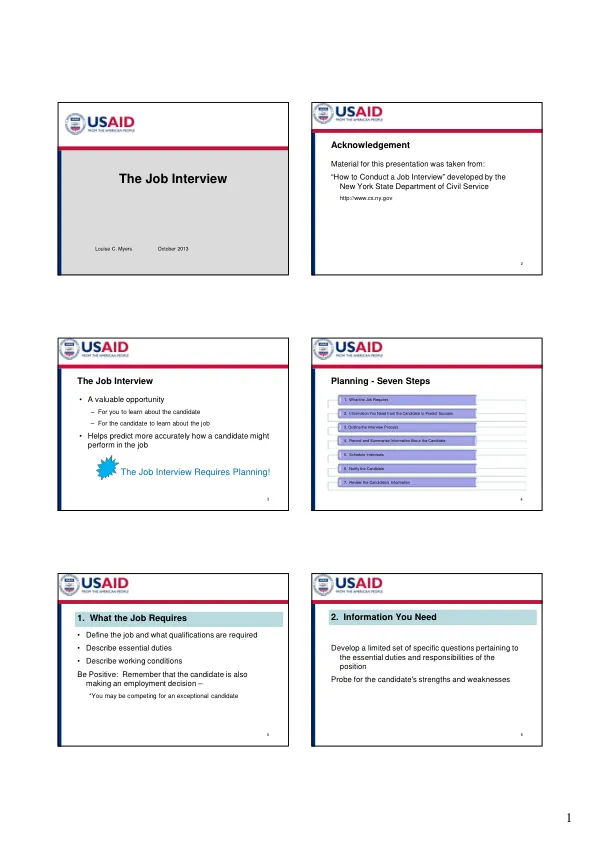
It helps predict how a candidate might perform in the job, making it a crucial step in the hiring process. The job interview requires careful planning to ensure that the candidate is thoroughly assessed and that the interviewer gathers all necessary information. To plan a job interview, seven key steps must be followed. The first step is to define the job and its requirements, including the essential duties and working conditions. This information should be used to develop a set of specific questions that will help assess the candidate's qualifications and potential for success. The interviewer should also consider the candidate's strengths and weaknesses, as well as their ability to adapt to the new job environment. The interview process should be outlined in advance, including the introduction, review of the application, description of the job, candidate self-assessment, candidate clarification, and closing. A standardized format should be used to record interview notes, including skills for meeting job requirements, factors such as confidence and communication skills, and any other relevant information. Scheduling interviews is also crucial, as it is essential to allow enough time for each candidate and to avoid overwhelming the interviewer with too many candidates in one day. The location of the interview should also be carefully considered, and the schedule should be coordinated with other interviewers to ensure a smooth process. Once the interview is scheduled, the candidate should be notified with all relevant details, including the title of the position, salary, and any other important information. The interviewer should also be prepared to review the candidate's information, including their employment history, education, and any other relevant details. During the interview, the candidate should be allowed to do most of the talking, and the interviewer should focus on asking open-ended questions that encourage the candidate to share their experiences and qualifications. Effective listening is essential, and the interviewer should avoid letting negative reactions become obvious. The interviewer should also be prepared to handle "problem" candidates, such as those who are extremely nervous or who waste time. In addition to individual interviews, group interviewing can also be used to assess a candidate's skills and qualifications. This type of interview requires careful planning, including specifying roles, organizing questions, and selecting a leader. The evaluation scoring process should also be clearly defined to ensure that all candidates are assessed fairly. After the interview, the interviewer should complete the interview form immediately and narrow the field to identify the top 3-5 candidates. The interviewer should also check the candidate's references and make a decision based on their ability to do the work, interest in doing the job, potential for growth, and ability to adjust to the new job environment. The selected candidate should be notified by telephone with written follow-up instructions, including details about their new role and any necessary documentation.
Related documents