LINKAGES
The Nexus of Gender and HIV among People Who Inject Drugs in Kenya
The harmful gender-related beliefs most relevant to people who inject drugs in Kenya include the notion that it is more acceptable for men to use drugs or be high than for women.
2016 · 9 pages
Sign in to readA free account is required to download.
Abstract
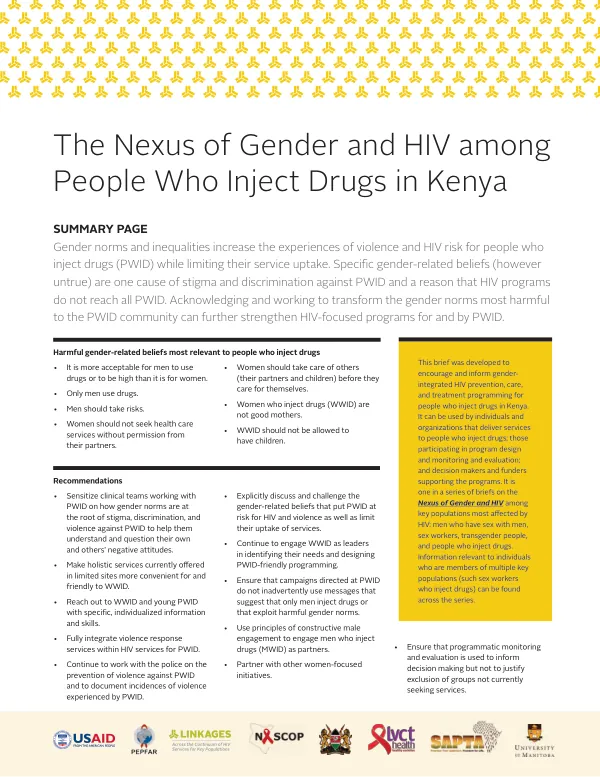
This belief is closely tied to the idea that men should take risks, while women should prioritize caring for others before themselves. Additionally, women are often expected to seek healthcare services only with the permission of their partners, and only men are believed to use drugs. These gender-related beliefs contribute to stigma and discrimination against people who inject drugs, particularly women, and limit their access to HIV services. The beliefs also perpetuate violence against women who inject drugs, as they are often expected to prioritize the needs of their partners and children over their own. A gender analysis conducted by the LINKAGES project in Nairobi, Kenya, aimed to examine how gender norms and inequalities affect people who inject drugs' HIV risk and uptake of services. The analysis involved a desk review of relevant literature and policies, a scan of people who inject drugs programming in Nairobi, and 23 qualitative interviews with representatives from people who inject drugs-led organizations, government officials, program managers and funders, and healthcare workers. The analysis identified five key gender-related beliefs that contribute to the HIV risk and limited access to services among people who inject drugs in Kenya. These beliefs include the notion that it is more acceptable for men to use drugs or be high than for women, that women should take care of others before themselves, that women should not seek healthcare services without permission from their partners, that men should take risks, and that only men use drugs. The analysis also highlighted the importance of addressing these gender-related beliefs in HIV programming for people who inject drugs. Recommendations include sensitizing clinical teams to the root causes of stigma and discrimination, making holistic services more convenient and friendly to women who inject drugs, and fully integrating violence response services within HIV services for people who inject drugs. In Kenya, 3.8 percent of new HIV infections are among people who inject drugs, and 19 percent of people who inject drugs in Nairobi are living with HIV. The analysis aimed to inform HIV programming for people who inject drugs of all genders, including women, men, and transgender individuals. The analysis identified the need to address gender-related beliefs that contribute to stigma and discrimination against people who inject drugs, particularly women. Recommendations include sensitizing clinical teams to the root causes of stigma and discrimination, making holistic services more convenient and friendly to women who inject drugs, and fully integrating violence response services within HIV services for people who inject drugs. The analysis also highlighted the importance of engaging women who inject drugs as leaders in identifying their needs and designing people who inject drugs-friendly programming. Additionally, the analysis recommended using principles of constructive male engagement to engage men who inject drugs as partners and ensuring that campaigns directed at people who inject drugs do not inadvertently use messages that suggest only men inject drugs or exploit harmful gender norms. In conclusion, the harmful gender-related beliefs most relevant to people who inject drugs in Kenya include the notion that it is more acceptable for men to use drugs or be high than for women, that women should take care of others before themselves, that women should not seek healthcare services without permission from their partners, that men should take risks, and that only men use drugs. Addressing these beliefs is crucial to reducing stigma and discrimination against people who inject drugs, particularly women, and improving their access to HIV services.