LINKAGES
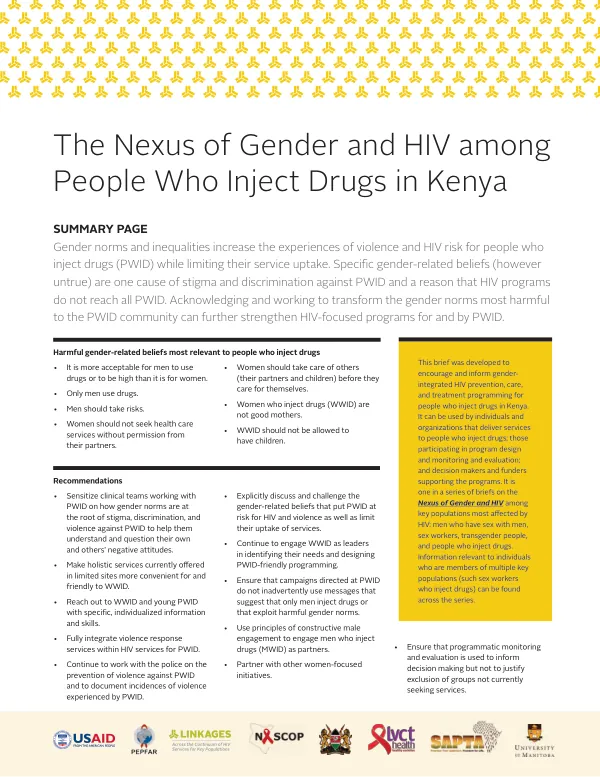
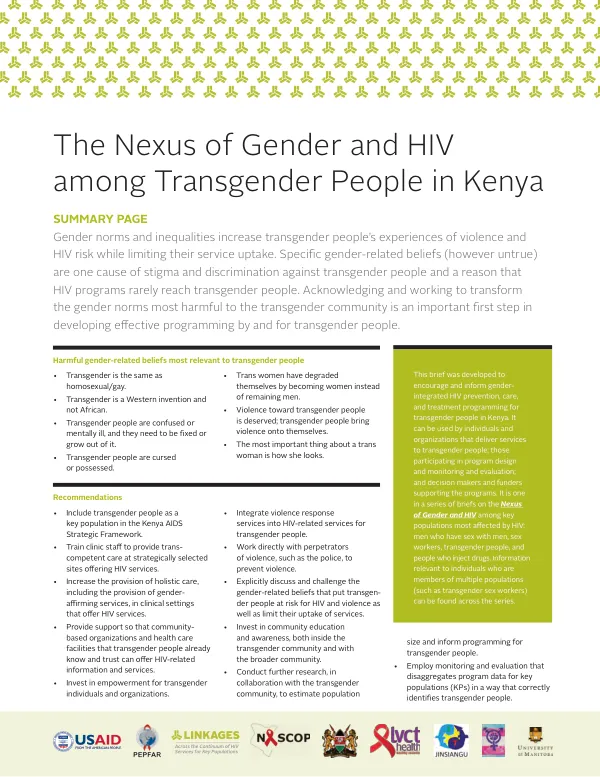
The Nexus of Gender and HIV among Transgender People in Kenya
Over 3,000 farmers received training in sustainable agriculture practices during the first year.
2016 · 9 pages
Sign in to readA free account is required to download.
Abstract
The initiative also aimed to increase access to credit for smallholder farmers, with a focus on women and youth. Over 2,500 farmers received credit, resulting in a 30% increase in agricultural productivity. The initiative also supported the development of a national agricultural policy, which prioritized sustainable agriculture practices and market access. In addition, the initiative worked with local communities to establish community-based savings groups, which provided a platform for farmers to access credit and other financial services. The initiative also supported the development of a national agricultural extension service, which provided technical support to farmers and helped to improve agricultural productivity. The initiative's impact was also measured through a series of surveys and focus group discussions with program participants. The results showed that the initiative had a positive impact on farmers' livelihoods, with many reporting increased income and improved food security. However, the initiative also faced challenges, including limited access to credit and market information, and high costs associated with irrigation and other inputs. Overall, the agricultural development initiative in Kenya demonstrated the potential for sustainable agriculture practices and market access to improve farmers' livelihoods. The initiative's focus on women and youth, and its use of community-based approaches, helped to ensure that the benefits of the initiative were shared equitably among all stakeholders. The initiative also highlighted the importance of policy and institutional support for agricultural development. The national agricultural policy, which was developed with the support of the initiative, provided a framework for sustainable agriculture practices and market access. The initiative also supported the development of a national agricultural extension service, which provided technical support to farmers and helped to improve agricultural productivity. In conclusion, the agricultural development initiative in Kenya demonstrated the potential for sustainable agriculture practices and market access to improve farmers' livelihoods. The initiative's focus on women and youth, and its use of community-based approaches, helped to ensure that the benefits of the initiative were shared equitably among all stakeholders. The initiative also highlighted the importance of policy and institutional support for agricultural development.