USAID DEC
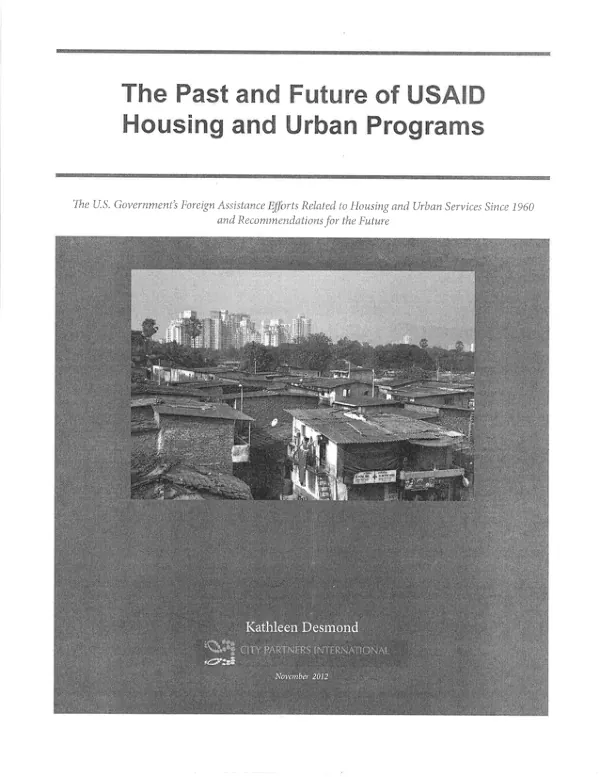
The Past and Future of USAID Housing and Urban Programs
The US Government's Foreign Assistance Efforts Related to Housing and Urban Services Since 1960 and Recommendations for the Future.
2012 · 108 pages
Sign in to readA free account is required to download.
Abstract
The international donor community, private foundations, and governments increasingly recognize the rapid urbanization occurring in developing countries. Urbanization can alleviate poverty and promote economic growth if well planned and managed. However, ignoring its implications can lead to increased urban poverty and expanding slums and inhuman living conditions. The US Agency for International Development (USAID) was a leader in developing innovative policy, financing, and technical assistance approaches to address urban issues. The agency's Housing Guarantee (HG) Program and its Office of Housing and Urban Programs implemented these approaches. However, the HG program was terminated, and USAID's technical expertise and involvement in urban issues declined. It is timely and important that USAID restore its urban development capacity and make urban concerns a priority. The International Housing Coalition commends City Partners International for publishing this history of USAID's housing and urban programs from 1961 to the present. The publication documents USAID's experience in designing and implementing housing and urban development programs worldwide, providing important lessons learned. These findings can be helpful if USAID regains its leadership role in addressing the challenges and opportunities posed by urbanization. The publication results from a collaborative effort among experts who participated in the programs described. They shared their memories and visions for the future with the author, providing an invaluable perspective on the successes and failures of USAID's housing and urban programs. The publication aims to provide direction and food for thought for those responsible for and engaged in US foreign assistance in the future. The Builder Developer Period (1961-1965) was characterized by the construction of housing and infrastructure projects in developing countries. The Savings and Loan Period (1965-1972) focused on providing financial assistance to developing countries for housing and urban development projects. The Basic Human Needs Period (1973-1980) emphasized the importance of meeting basic human needs, including housing and sanitation. The Public Private Partnership Period (1981-1989) involved partnerships between the public and private sectors to address urban issues. The Office of Housing and Urban Programs was established within USAID in 1973 to oversee the agency's housing and urban development programs. However, the office was abolished in 1989 due to budget cuts. The Debt Crisis of the 1980s had a significant impact on USAID's housing and urban development programs, leading to a decline in funding and a shift in focus towards debt reduction. In the 1990s, USAID's housing and urban development programs underwent significant changes. The agency shifted its focus towards policy-focused programs, including the FIRE/D Project in India, which aimed to improve housing and urban development in the country. However, the Housing Guarantee Program faced challenges, including the fall of the Berlin Wall, the Clinton Administration's reorganization of USAID, and the "Revolution" of the 1990s. The Development Credit Authority was established in response to concerns about the Housing Guarantee Program. The authority provided financing for housing and urban development projects in developing countries. However, the program faced challenges, including the decline of the Housing Guarantee Program and the growth of the Development Credit Authority. In the 2000s, USAID's housing and urban development programs continued to evolve. The agency's focus shifted towards making cities work, including the development of urban services delivery strategies. The Urban Team within USAID implemented programs aimed at improving housing and urban development in developing countries. The team's efforts included the development of new policies, institutions, and policies in developing countries. The publication highlights several successful examples of housing and urban development programs in developing countries, including successful slum upgrading in Latin America, Africa, and Eastern Europe. The publication also highlights the importance of measuring the success of slum upgrading and municipal infrastructure finance initiatives.
Related documents