ABT ASSOCIATES
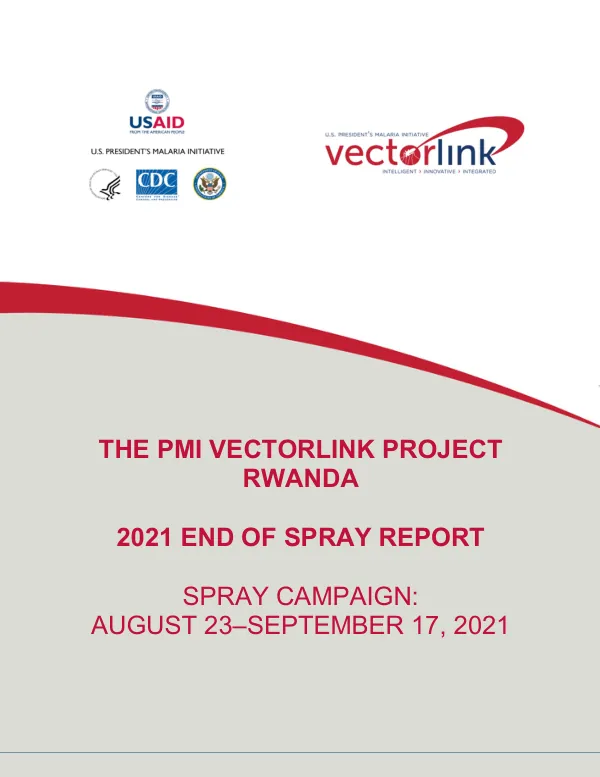
The PMI VectorLink Rwanda 2021 End of Spray Report
The PMI VectorLink Project in Rwanda conducted an indoor residual spraying (IRS) campaign from August 23 through September 17, 2021, in Kirehe, Ngoma, and Nyagatare Districts.
2021 · 55 pages
Sign in to readA free account is required to download.
Abstract
The project targeted 327,712 structures in 40 sectors in the three districts for blanket coverage using Actellic 300CS insecticide. The spray campaign lasted 20 operational days in each district. Implementation of IRS activities involved planning and partner collaboration, district planning meetings, training, and spray operation and supervision. People hired to support the IRS campaign included Spray Operators, Team Leaders, and Supervisors, as well as Sector and District Information, Education, and Communication (IEC) Assistants. Operations sites were established in the three districts, and IRS supervision was conducted to ensure the quality of the spray campaign. Key operations details included insecticide procurement and use, IEC/SBC activities, capacity building, gender mainstreaming, and the use of new digitalization tools. Entomological monitoring was conducted to assess the quality of the spray campaign. Spray quality assessment and insecticide susceptibility were evaluated to ensure the effectiveness of the IRS campaign. The project also conducted environmental compliance assessments to ensure that the IRS campaign was conducted in accordance with best management practices (BMPs). The project achieved a high level of IRS coverage, with 346,277 out of 347,963 structures sprayed, accounting for an IRS coverage rate of 99.5%. The project also protected 1,340,280 people, including 19,507 pregnant women and 186,521 children under 5. In addition, the project sprayed 6,710 structures in Mahama Refugee Camp, protecting 45,447 people. The project trained 3,080 people, including 1,525 males and 1,555 females, to deliver IRS. The project also conducted post-season review meetings to evaluate the effectiveness of the IRS campaign and identify areas for improvement. The project's achievements and highlights include high IRS coverage rates, protection of a large number of people, and effective use of new digitalization tools. The project's success can be attributed to the effective planning and implementation of IRS activities, as well as the use of new digitalization tools. The project's achievements demonstrate the effectiveness of IRS in reducing the burden of malaria in Rwanda. The project's results will inform future IRS campaigns and contribute to the elimination of malaria in Rwanda. The project's environmental compliance assessments and incident reports indicate that the IRS campaign was conducted in accordance with BMPs. The project's demobilization and waste management activities ensured that the IRS campaign did not have a negative impact on the environment. The project's monitoring and evaluation activities ensured that the IRS campaign was effective and efficient. The project's challenges and lessons learned highlight the importance of effective planning and implementation of IRS activities, as well as the need for continued capacity building and training. The project's recommendations for future IRS campaigns include the use of new digitalization tools, effective planning and implementation, and continued capacity building and training.
Related documents