ABT ASSOCIATES
Rwanda End of Spray Report
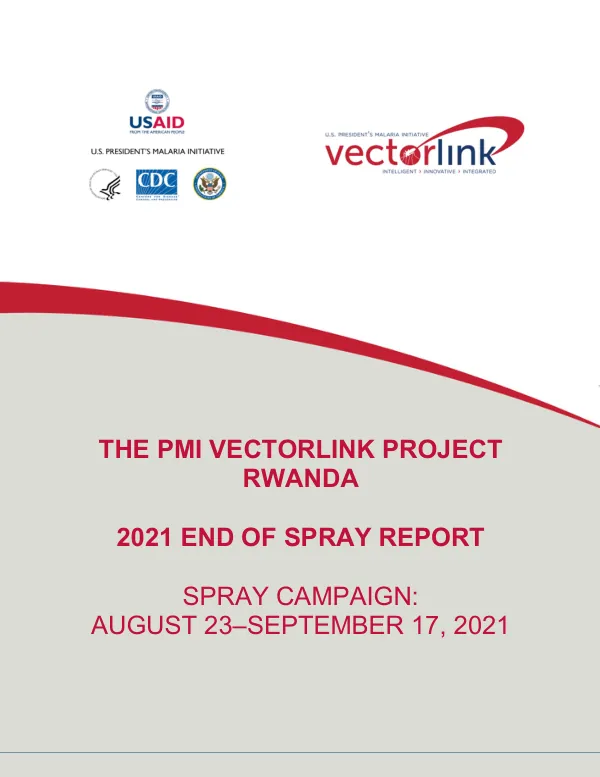
The PMI|Africa IRS (AIRS) Project Indoor Residual Spraying (IRS 2) Task Order Four Rwanda End of Spray Report documents the implementation of an indoor residual spraying (IRS) campaign in Rwanda from August 20-21 and September 17-October 18, 2012.
2012 · 48 pages
Sign in to readA free account is required to download.
Abstract
The campaign aimed to control malaria transmission by spraying insecticides on the interior walls and ceilings of structures in three target districts: Gisagara, Huye, and Nyamagabe. The selection of IRS districts was based on the presence of high malaria transmission rates and the availability of resources for the campaign. District planning meetings were held to discuss logistics, human resource requirements, and environmental assessment. The insecticide used for the campaign was selected based on its efficacy and safety profile. Environmental assessments were conducted to ensure that the insecticide did not pose a risk to the environment or human health. Logistics needs and procurement were critical components of the campaign. The procurement process involved the purchase of insecticides, equipment, and other necessary materials. Human resource requirements included the recruitment and training of IRS staff, who were responsible for conducting the spraying activities. IRS trainings were conducted to ensure that staff were equipped with the necessary skills and knowledge to implement the campaign safely and effectively. Information, education, and communication (IEC) activities played a crucial role in the campaign. Training was provided to IRS staff, community leaders, and other stakeholders on the importance of IRS and how to implement it effectively. Door-to-door mobilization and enumeration of structures were conducted to ensure that all eligible structures were sprayed. IEC coordination involved the development and dissemination of IEC materials, such as posters, leaflets, and radio messages, to raise awareness about the campaign and its benefits. The implementation of IRS activities involved the supervision of spraying activities, logistics, safety and environmental compliance, and the management of insecticide adverse effects. IRS supervision ensured that the spraying activities were conducted in accordance with the campaign plan and that any issues or challenges were addressed promptly. Logistics involved the transportation of equipment and personnel to the target areas. Safety and environmental compliance were critical components of the campaign, as the insecticide used could pose a risk to human health and the environment if not handled properly. The post-spray activities involved the review of the campaign, environmental assessment, IRS waste disposal, and inventory management. Post-spray review meetings were held to discuss the campaign's outcomes and identify areas for improvement. Environmental assessments were conducted to ensure that the insecticide did not pose a risk to the environment or human health. IRS waste disposal involved the proper disposal of empty insecticide containers and other hazardous materials. Monitoring and evaluation were critical components of the campaign. Data management involved the collection, analysis, and interpretation of data on the campaign's outcomes. Data quality assurance and control ensured that the data collected were accurate and reliable. IRS results showed a significant reduction in malaria transmission rates in the target districts. Capacity building of the Ministry of Health was an important component of the campaign. The Ministry of Health was trained on IRS implementation, and its staff were equipped with the necessary skills and knowledge to implement the campaign effectively. Entomology training was provided to IRS staff on the biology and behavior of mosquitoes, which was essential for the effective implementation of the campaign. The challenges faced during the campaign included the availability of resources, the complexity of the logistics, and the need for additional training for IRS staff. Lessons learned from the campaign included the importance of proper planning, the need for additional resources, and the importance of community engagement and participation. Recommendations for future campaigns included the need for more effective communication with stakeholders, the importance of proper planning and resource allocation, and the need for additional training for IRS staff.