INTERNATIONAL ALERT
Sources of Conflict in Walungu Territory
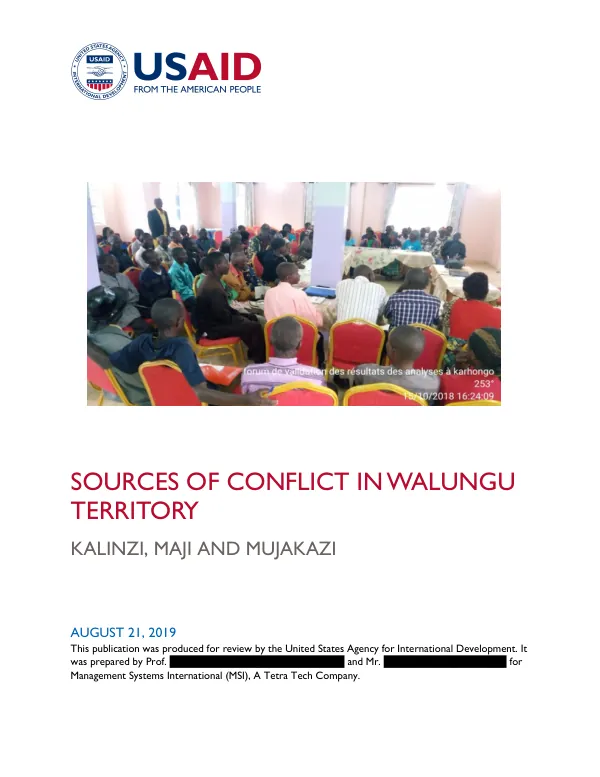
The research conducted in Walungu territory, South Kivu province, eastern Democratic Republic of the Congo, aimed to identify and analyze the key drivers of multiform conflicts in Kamisimbi, Karhongo, and Lurhala groupements.
2019 · 66 pages
Sign in to readA free account is required to download.
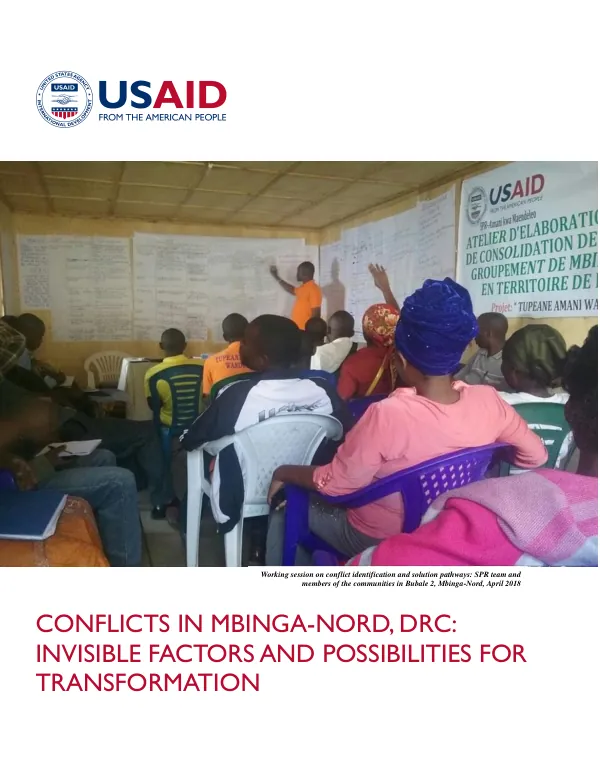
Abstract
The study was part of the Solutions for Peace and Recovery (SPR) project, which was implemented by the Diocesan Justice and Peace Commission (DJPC) with financial backing from International Alert and USAID. The research involved participatory action research (PAR) conducted in the three groupements, which identified 15 major conflicts. One conflict per groupement was prioritized for in-depth analysis, resulting in the identification of key drivers of conflict. The conflicts analyzed included land disputes related to traditional usage fees, conflicts over inheritance, leadership disputes between traditional authorities and civil society, economic conflicts, and intercommunity conflicts. The study found that poor local governance, particularly with regard to insecurity, illegal detention, and the circulation of light arms and low-caliber weapons, was a major driver of conflict. Additionally, the unequal sharing and distribution of basic socioeconomic assets and natural resources, such as land and cows, contributed to conflicts. The payment of the school bonus, conflicts related to inheritance, and the weak authority of the Congolese State were also identified as key drivers of conflict. From a socioeconomic and cultural perspective, land, cows, and children are considered the main assets in Shi culture. The ownership or lack of ownership of these assets creates significant conflicts and is a key driver of many other conflicts. The traditional usage fee called kalinzi and conflicts between crop farmers and livestock farmers are examples of these phenomena. The study recommends that political will and good agricultural practices centered on responsible leadership and good local governance, ongoing consolidation of the gains made by the SPR project through peace committees, and the creation and establishment of community and intercommunity safety nets would contribute to reducing conflicts and leading to peace and harmonious coexistence throughout Walungu territory. The research highlights the importance of addressing the root causes of conflict, including poor governance, inequality, and cultural practices, to achieve sustainable peace and development in the region. The study's findings and recommendations provide valuable insights for policymakers, practitioners, and researchers working to address conflict and promote peace in Walungu territory and beyond. The study's methodology involved participatory action research (PAR) conducted in the three groupements, which involved the participation of local stakeholders, including community members, traditional authorities, and civil society organizations. The PAR process involved the identification, analysis, and prioritization of conflicts, as well as the development of solutions and recommendations for addressing these conflicts. The study's findings have implications for the implementation of the SPR project and other peacebuilding initiatives in the region. The study's recommendations for addressing the root causes of conflict, including poor governance, inequality, and cultural practices, are particularly relevant for policymakers and practitioners working to promote peace and development in Walungu territory. The study's methodology and findings provide a valuable contribution to the field of peacebuilding and conflict resolution, highlighting the importance of participatory approaches and the need to address the root causes of conflict to achieve sustainable peace and development.