U.S. DEPARTMENT OF DEFENSE
The Tactical Conflict Assessment Framework
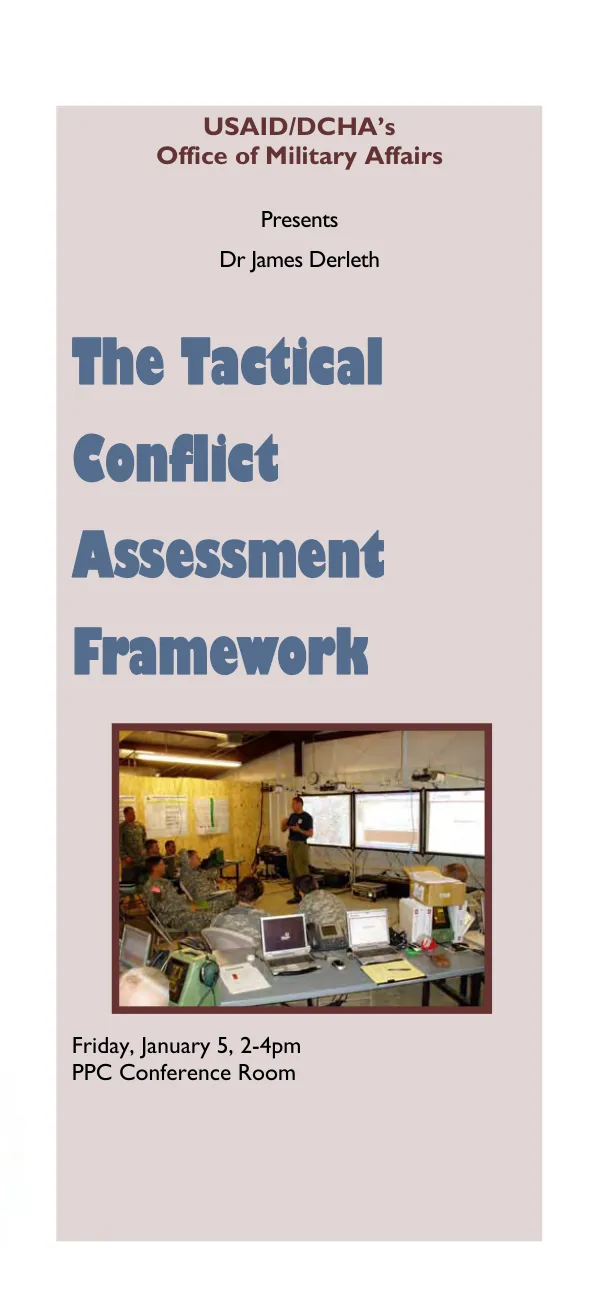
The Tactical Conflict Assessment Framework (TCAF) is a standardized diagnostic framework for assessing the causes of instability or conflict in an area of operation.
2009 · 6 pages
Sign in to readA free account is required to download.
Abstract
This framework is designed to help development specialists understand the instability or conflict environment, identify the causes of instability or conflict, and implement programs that diminish these causes. The TCAF framework identifies four primary causes of instability or conflict: insecurity, societal factors, lack of government capacity, economic inequality, and lack of economic opportunity. To address these causes, programming objectives should focus on addressing grievances of frustrated populations, denying or limiting resources that sustain conflict, identifying and diminishing vulnerabilities, increasing the capability of government and society to recognize and respond to vulnerabilities, and decreasing outside pressures that increase vulnerabilities. The TCAF framework emphasizes the importance of considering various factors when designing and implementing programs in areas of instability or conflict. These factors include the mission, enemy, troops/resources, time, terrain, and locals. The framework also highlights the need for a culturally sensitive and consistent approach to data collection, as well as the importance of understanding the local population's perception of the effectiveness and legitimacy of their government. The Office of Military Affairs (OMA) at USAID/DCHA plays a critical role in supporting an integrated interagency approach to national security programming. Established in 2005, OMA serves as the focal point for interactions between USAID and the Department of Defense, improving USAID's capacity to work with federal government and other actors in synchronized national security programming. OMA staff includes military officers, Foreign Service officers, and subject matter specialists. The TCAF framework is designed to be used by a range of stakeholders, including civil and government leadership, local tribal, clan, and religious leaders, and local and international NGOs. The framework provides a structured approach to assessing the causes of instability or conflict and developing effective programs to address these causes. By considering the various factors and causes of instability or conflict, development specialists can design and implement programs that are tailored to the specific needs of the local population and environment. The TCAF framework is part of a broader effort to support USAID's national security programming. USAID recognizes the need for a coordinated and integrated approach to addressing instability and conflict, and the TCAF framework provides a critical tool for achieving this goal. By using the TCAF framework, development specialists can help to reduce conflict and increase stability in areas of operation, ultimately contributing to the achievement of USAID's development objectives.
Related documents