USAID DEC
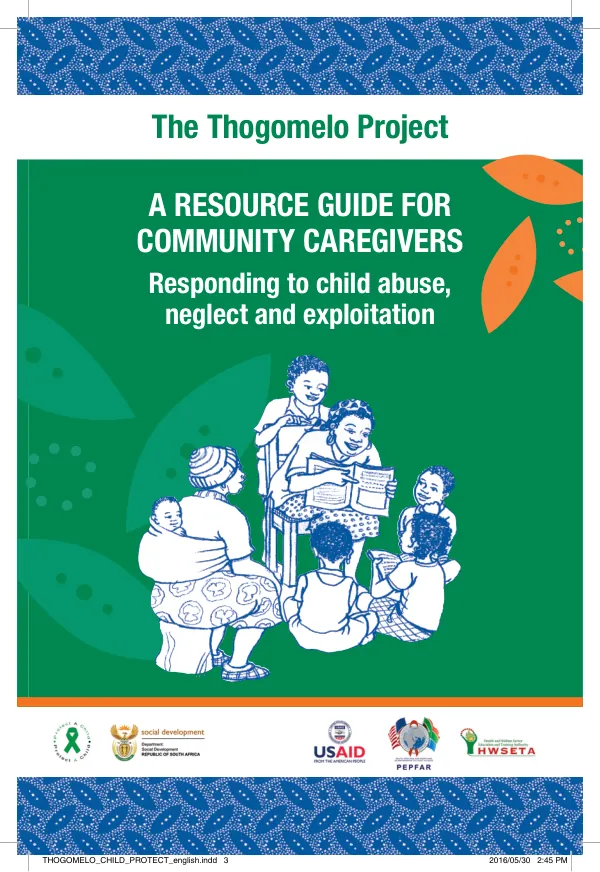
The Thogomelo Project: A Resource Guide for Community Caregivers Responding to Child Abuse, Neglect and Exploitation
Sign inUSAID DEC
The Thogomelo Project: A Resource Guide for Community Caregivers Responding to Child Abuse, Neglect and Exploitation
Child protection is a critical aspect of ensuring the well-being and safety of children.
2016 · 28 pages
Sign in to readA free account is required to download.
Abstract
It involves preventing and responding to child abuse, neglect, and exploitation. Child protection makes sure that children's developmental needs are met, including physical, social, emotional, mental, spiritual, cultural, and economic needs. Child abuse can take many forms, including physical, emotional, and psychological abuse. Physical abuse involves inflicting harm or injury on a child, such as hitting, beating, or poisoning. Emotional and psychological abuse involves a pattern of behavior that harms or limits a child's emotional development or sense of self-worth, such as criticism, threats, or rejection. Neglect is a form of child abuse that involves deliberately not providing for a child's physical needs, such as food, warmth, shelter, or protection from danger. Neglect can result in continuous hunger, malnutrition, bad hygiene, or poor living conditions. Child exploitation involves exposing a child to situations that harm their developmental needs, such as child labor, slavery, sexual exploitation, or child trafficking. As a community caregiver, it is essential to recognize the warning signs of child abuse, such as physical signs like bruising, head injuries, or malnutrition, or behavioral signs like withdrawal, poor concentration, or fear. If a child reports child abuse, it is crucial to believe the child, thank them for their courage, and explain confidentiality. The child should be told that it was not their fault and that you will find support for them. When reporting child abuse, it is essential to provide as much information as possible, including the child's name, age, and address, as well as the type of abuse suspected. The report should be made to a social worker, who will investigate the abuse and take necessary action to protect the child. The social worker will contact the person who made the report to discuss the referral and any unclear issues. Reporting child abuse is a legal and moral responsibility, and it is essential to do so in good faith to protect the best interest of the child. The investigating social worker will take the case further, and the police will also investigate the abuse. Both the police and social workers are responsible for the safety of the child, which may involve removing the child to safe care or removing the perpetrator. Confidentiality is crucial when dealing with child abuse, and it is essential to discuss the situation only with the police or social worker. The child must be informed about the situation and know what to expect. If a child discloses abuse, it is not possible to promise to keep it a secret, as there is a legal or moral obligation to report the abuse. A referral is the process of providing for the continuum of care when a child is cared for over time and in a range of ways. This may involve providing temporary or permanent care, as well as support services to help the child and their family. The goal of child protection is to ensure that children are safe and their developmental needs are met, and that they receive the care and support they need to thrive.