THE UNITED STATE CENTERS FOR DISEASE CONTROL AND PREVENTION
The Zambia Violence Against Children Survey Report
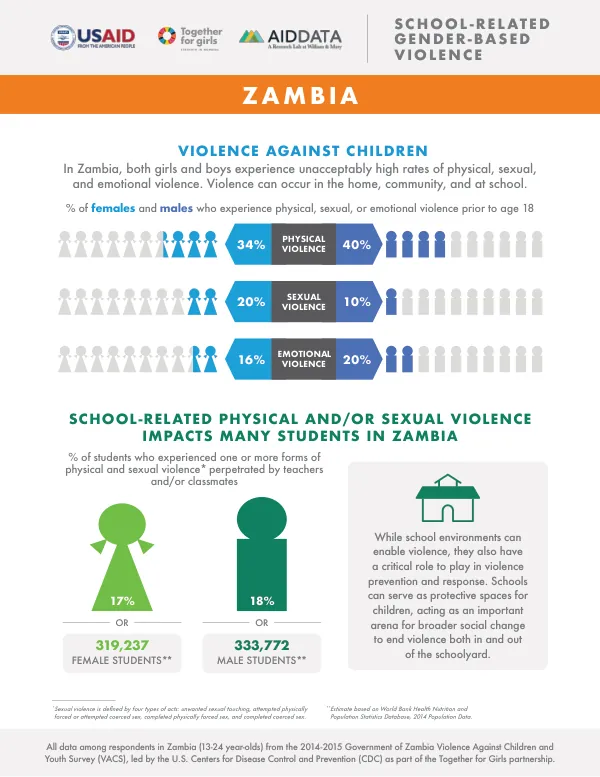
School-related physical and sexual violence impacts many students in Zambia.
2021 · 4 pages
Sign in to readA free account is required to download.
Abstract
According to the 2014-2015 Government of Zambia Violence Against Children and Youth Survey, led by the U.S. Centers for Disease Control and Prevention, a significant percentage of students experience physical and sexual violence perpetrated by teachers and classmates. The survey found that 17% of students experienced one or more forms of physical and sexual violence, with female students experiencing higher rates of violence perpetrated by teachers. The data indicates that 34% of students experienced physical violence, 20% experienced sexual violence, and 16% experienced emotional violence. School-related physical and sexual violence can have severe consequences, including bruises, cuts, scratches, sprains, dislocations, blistering, broken bones, permanent injury, and disfigurement. Among students who experienced physical violence by teachers, 9% missed school due to the violence, while among students who experienced sexual violence, 12% missed school. The survey also found that few students who experience violence in school settings disclose their experiences, fewer seek services, and only a small proportion receive services. Among students who experienced physical violence, 8% told someone about the violence, 9% received services, and 2% sought services. Among students who experienced sexual violence, 0% told someone about the violence, 1% received services, and 1% sought services. The Government of Zambia launched their Violence Against Children and Young Women Survey Report in 2018, which provides nationally representative household surveys of children and young adults ages 13 to 24 years. The report measures the prevalence and circumstances surrounding emotional, physical, and sexual violence against males and females in childhood, adolescence, and young adulthood. Through USAID's Higher Education Solutions Network, AidData conducted a secondary analysis of the data to identify the prevalence of school-related gender-based violence, as well as details on violence perpetration, victimization risk, and post-violence behaviors for girls and boys in Zambia. Schools can play a critical role in preventing and responding to school-related gender-based violence. By creating protective spaces for children, schools can act as an important arena for broader social change to end violence both in and out of the schoolyard. To prevent school-related gender-based violence, evidence-based interventions and research are necessary. The Together for Girls partnership provides resources and information on school-related gender-based violence and its prevention.