USAID
Tingathe Fiscal Year 19 Annual Progress Report
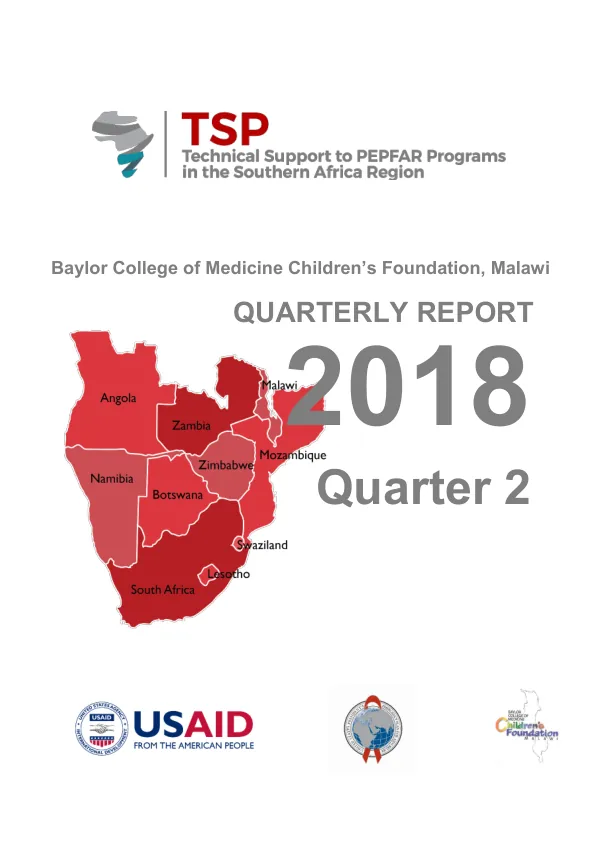
The Tingathe Program, a Technical Support to PEPFAR Programs in the Southern Africa Region project, is a cooperative agreement between Baylor College of Medicine Children's Foundation Malawi and the United States Agency for International Development (USAID).
2019 · 59 pages
Sign in to readA free account is required to download.
Abstract
The program's fiscal year 2019 annual progress report highlights key achievements and challenges in the Southern Africa Region. The program's strategic objectives for fiscal year 2019 included implementing Prevention of Mother-to-Child Transmission (PMTCT) of HIV, increasing HIV testing and counseling, and improving linkage and retention in care for individuals living with HIV. The program also aimed to strengthen health systems, prevent gender-based violence, and mitigate environmental impacts. In terms of PMTCT, the program implemented a range of interventions, including the distribution of HIV self-test kits and the provision of antiretroviral therapy (ART) to pregnant women. The program also conducted active case finding, which involved testing individuals who were not previously known to be HIV-positive. The results of active case finding efforts showed a significant increase in the number of new HIV-positive cases identified, particularly among males and youth. The program also made significant progress in increasing HIV testing and counseling. The number of HIV tests conducted increased by 25% compared to the previous year, and the proportion of new HIV-positive cases identified through HIV self-testing increased to 15%. The program also implemented a range of interventions to improve linkage and retention in care, including the provision of ART and the use of differentiated models of care. In addition to these achievements, the program also faced several challenges, including a shortage of HIV self-test kits and difficulties in accessing certain populations, such as adolescents and key populations. The program responded to these challenges by implementing a range of strategies, including the distribution of HIV self-test kits to community-based organizations and the provision of targeted interventions for adolescents and key populations. The program also made significant progress in strengthening health systems, including the implementation of quality assurance and quality improvement projects. The program also conducted operational research, including the publication of several articles in peer-reviewed journals. The program's management and operations were also strengthened, including the development of a new financial management system. Overall, the Tingathe Program's fiscal year 2019 annual progress report highlights the program's significant achievements in the Southern Africa Region. The program's efforts to implement PMTCT, increase HIV testing and counseling, and improve linkage and retention in care have had a positive impact on the lives of individuals living with HIV. The program's challenges and responses also demonstrate its commitment to addressing the complex issues facing the region. The program's geographic focus was the Southern Africa Region, with a specific emphasis on Malawi. The program's activities were implemented in several districts, including Machinga and Mangochi. The program's timeframes were from October 1, 2018, to September 30, 2019. The program's recommendations for future activities include continuing to implement PMTCT and HIV testing and counseling interventions, as well as strengthening health systems and addressing the challenges faced by adolescents and key populations. The program also recommends continuing to conduct operational research and publishing the results in peer-reviewed journals.