CHEMONICS
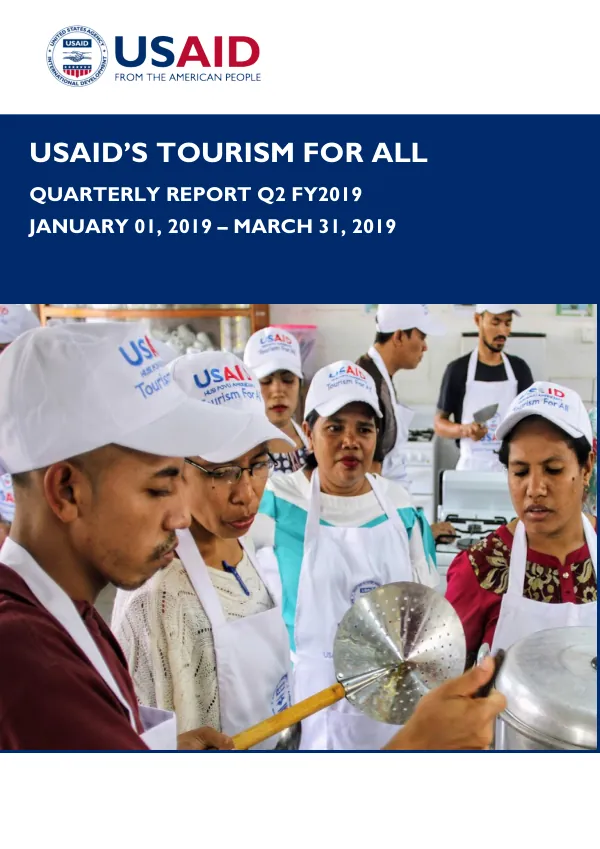
Training in Hospitality & Tourism in Timor-Leste
The Technical and Vocational Education and Training (TVET) system in Timor-Leste has undergone significant progress since the country's independence in 2002.
2019 · 36 pages
Sign in to readA free account is required to download.
Abstract
The National Development Plan 2002-2007 (NDP 2002-07) and the Strategic Development Plan 2011-2030 (SDP 2011-30) have played crucial roles in shaping the country's TVET landscape. The NDP 2002-07 aimed to promote economic growth and poverty reduction, while the SDP 2011-30 focused on sustainable development and human capital development. The National Institute for Labour Force Development (INDMO) has been instrumental in regulating the TVET system in Timor-Leste. Established in 2008, INDMO is responsible for ensuring that all training activities in the country adhere to a standard of qualifications and quality. The institute has developed 32 National Qualifications, 8 National Certificates, and around 280 units of competency, which have been accredited according to INDMO's National Database with National Codes. The mapping exercise conducted as part of the USAID's Tourism for All Project identified 14 training providers that have been accredited by INDMO to provide training programs in tourism and hospitality. Six of these providers are based in Dili, the capital of Timor-Leste, and offer training in General Hospitality (Certificate 1 & 2), Hospitality (Food Production Certificate 2), and Tourism (Tour Guide). The training providers have undergone a long process to achieve accreditation, which has taken almost two decades. The TVET system in Timor-Leste is regulated by a legal framework and policies, including the country's Constitution, Article 59, which guarantees equal opportunities and education and vocational training for all citizens. The Secretariat of State of Professional Training and Employment (SEFOPE) has been instrumental in addressing critical issues in the early stages of state building, including the establishment of a qualification framework and an autonomous body to register, assess, and accredit trainers, curriculum, and training providers. The development of the Timor-Leste National Qualification Framework (TL NQF) based on the Decree Law No. 36/2011 has provided a standardized framework for TVET in the country. INDMO has made significant progressions, including the accreditation of 73 vocational and technical training providers between 2015 and 2018. The accredited training providers have been categorized as registered and accredited in delivering training in various areas, including hospitality and tourism. The mapping exercise has provided valuable insights into the TVET system in Timor-Leste, highlighting the progress made in regulating the system and ensuring quality training programs. The findings of the exercise will inform the development of policies and programs aimed at improving the TVET system in the country.