CHEMONICS
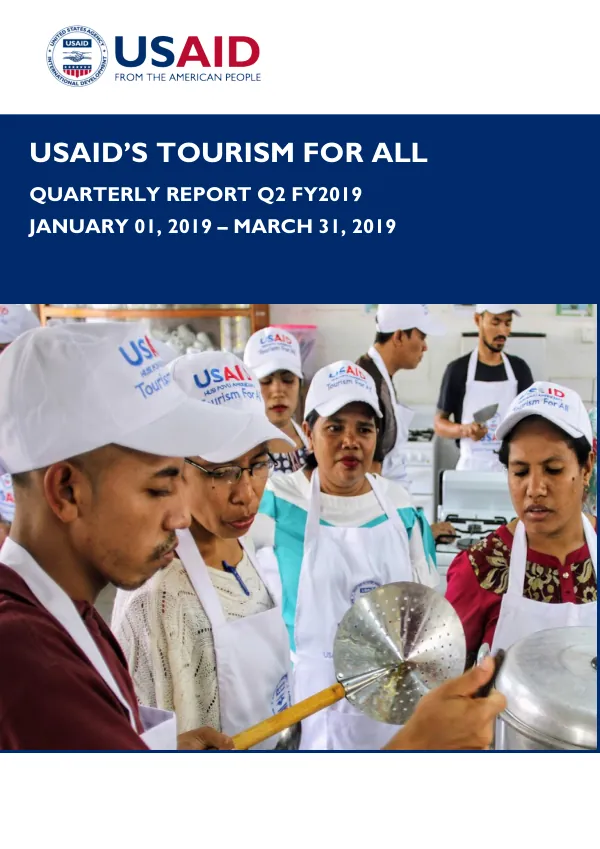
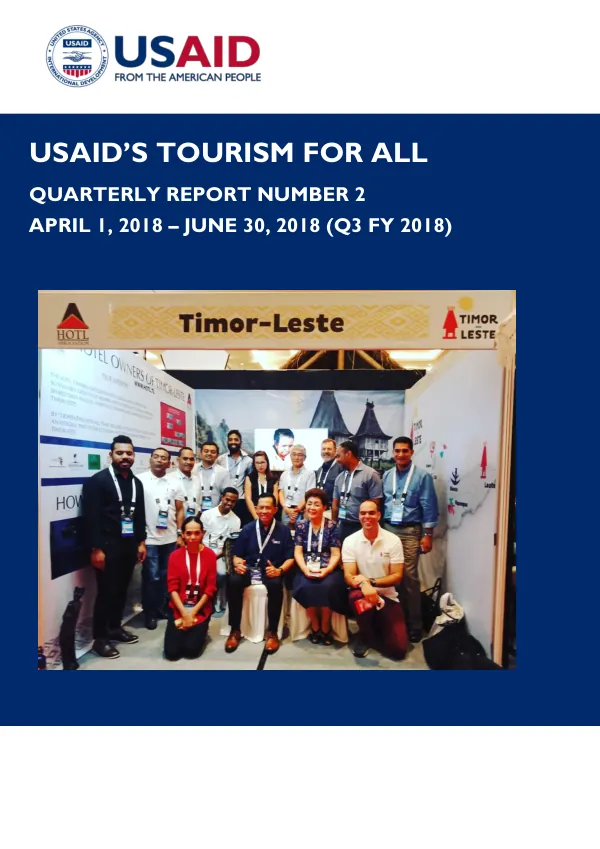
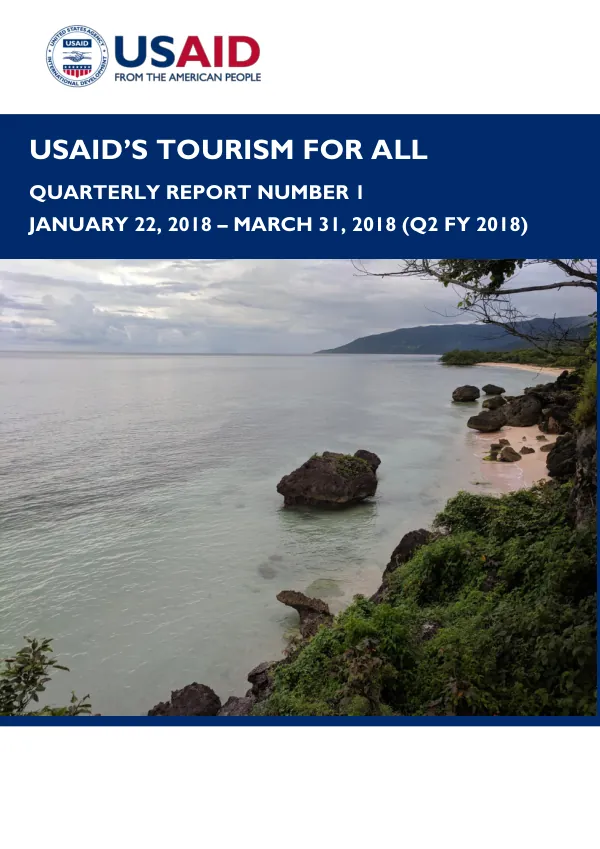
USAID's Tourism for All - Quarterly Report No. 1 - FY2018
In Timor-Leste, the tourism sector faces significant challenges in meeting the goal of 200,000 tourists by 2030.
2018 · 27 pages
Sign in to readA free account is required to download.
Abstract
The current core tourism sector consists of only six tour operators, four dive shops, two hostels, and some 30 hotels in Dili, with hundreds of auxiliary service providers. Most of these businesses have opened since independence, and the quality of service is mixed, with information about attractions difficult to find and infrastructure underdeveloped. The Timor-Leste Strategic Development Plan 2011-2030 identifies five different tourism niches, including eco and marine, historical and cultural, adventure and sports, religious and pilgrimage, and conference and convention. The USAID's Tourism for All project will focus on these niches and products generated by Timorese tourism activities associated with them, in order to augment receipts to the local economy. Activities in the initial three-year project will support public and private cooperation to market Timor-Leste as an "off-the-beaten-path" destination for adventure travelers and eco-tourists. The project aims to promote Timor-Leste's competitiveness as an international tourism destination while preserving its unique environmental and cultural heritage. The project will work to improve industry governance and promote sustainable investment, with a focus on creating inclusive tourism. The project will also help to create favorable conditions for management of public assets such as protected natural or cultural sites and promote private sector investments in localities nearby such public areas. Implementation of the project will involve working with government to establish incentives and obligations that are more private sector-friendly, promoting steady and sustainable tourism growth, and safeguarding and conserving the environment and social characteristics of Timor-Leste's local communities. The project will also support the development of new and upgraded facilities, particularly outside of Dili, where the lack of travelers discourages further investment and development of the hospitality industry.
Related documents