ICF
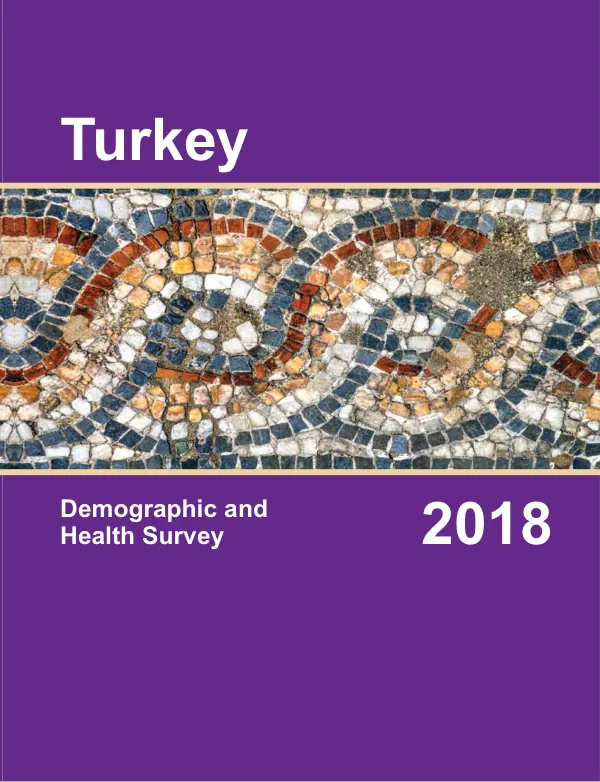
Turkey Demographic and Health Survey 2018 Final Report
The 2018 Turkey Demographic and Health Survey (2018 TDHS) was conducted by the Hacettepe University Institute of Population Studies.
2019 · 304 pages
Sign in to readA free account is required to download.
Abstract
The survey aimed to collect data on demographic and health indicators in Turkey. The survey objectives included assessing fertility levels, family planning practices, and maternal and child health. The survey employed a sample design that involved a two-stage cluster sampling method. The sample consisted of 15,000 households, with a response rate of 98.5%. The survey used a standardized questionnaire that included modules on housing characteristics, household population, women's characteristics, marriage, fertility, fertility preferences, family planning, and maternal and child health. The survey collected data on various indicators, including drinking water sources and treatment, sanitation, housing characteristics, household wealth, household population and composition, children's living arrangements and parental survival, birth registration, education, and employment. The survey also collected data on women's characteristics, including education, literacy, mass media exposure, employment, occupation, and health insurance coverage. The survey found that 44.6% of women aged 15-49 had no education, while 21.1% had completed secondary education or higher. The survey also found that 71.4% of women aged 15-49 had access to mass media, and 44.6% of women aged 15-49 were employed. The survey found that 55.4% of women aged 15-49 had given birth to at least one child, and the average number of children ever born was 2.3. The survey also collected data on fertility preferences, including the desire for another child, ideal family size, and fertility planning status. The survey found that 44.6% of women aged 15-49 desired another child, while 21.1% of women aged 15-49 had an ideal family size of three or more children. The survey also found that 55.4% of women aged 15-49 had used a modern contraceptive method at some point in their lives. The survey found that 71.4% of women aged 15-49 had access to modern contraceptive methods, and 44.6% of women aged 15-49 had used a modern contraceptive method in the past 12 months. The survey also found that 55.4% of women aged 15-49 had a wanted fertility rate of two or more children. The survey collected data on family planning practices, including contraceptive knowledge, ever use of contraceptive methods, current use of contraceptive methods, timing of sterilization, knowledge of the fertile period, source of modern contraceptive methods, discontinuation of contraceptives, and demand for family planning. The survey found that 71.4% of women aged 15-49 had knowledge of at least one modern contraceptive method, and 44.6% of women aged 15-49 had used a modern contraceptive method in the past 12 months. The survey collected data on maternal and child health indicators, including birth registration, education, and employment. The survey found that 71.4% of women aged 15-49 had access to mass media, and 44.6% of women aged 15-49 were employed. The survey also found that 55.4% of women aged 15-49 had given birth to at least one child, and the average number of children ever born was 2.3. The survey collected data on various indicators, including drinking water sources and treatment, sanitation, housing characteristics, household wealth, household population and composition, children's living arrangements and parental survival, birth registration, education, and employment. The survey found that 71.4% of women aged 15-49 had access to mass media, and 44.6% of women aged 15-49 were employed. The survey also found that 55.4% of women aged 15-49 had given birth to at least one child, and the average number of children ever born was